-

Scientific use of chemical control technology in cotton can effectively increase yield
Scientific chemical control of cotton is an important scientific measure for increasing cotton yield. Chemical regulation technology has three benefits: first, it helps strong seedlings to develop early, controls height and stabilizes growth, making it easier to give play to the yield-increasing advantage; second, it simplifies cotton field management, saving labor and cost; third, it promotes the transformation of second- and third-grade cotton seedlings, achieving balanced development and increasing yield and efficiency. The principle of chemical control is "small amounts, many times; light control, frequent adjustment." One should master "spray every time, control every time" or "control once at every interval" (flexibly according to soil fertility, rainfall, and growth condition), and it is best to "divide the amount for one application into three applications," ensuring the plant grows steadily and robustly "strong but not excessive" from beginning to end. If chemical control is done poorly, it can cause excessive growth or stiff seedlings that do not develop, affecting the normal growth of cotton. Therefore, in the process of implementing chemical control, the dosage of the chemical control agent must be strictly controlled.
-
Detailed Explanation of Key Points of Scientific Irrigation Technology for Cotton
Cotton is a taproot crop, with the main root penetrating relatively deep into the soil, making it a relatively drought-tolerant crop. The period from squaring to boll opening is the critical period for water demand. 1. Conventional irrigation: Irrigate 3-4 times throughout the growth period. The first irrigation is at the squaring stage, i.e., mid-to-late June; the second irrigation is at the full flowering stage, i.e., mid-July; the third is at the flowering and boll-setting stage, i.e., from late July to early August; by the initial boll-opening stage, if the weather is dry or the soil is sandy and prone to leakage, one more irrigation may be applied. If there is abundant rainfall and no sign of drought, watering may be discontinued. Apart from 120 cubic meters per mu for the pre-planting water, the irrigation quota for each application during the growth period is 6
-
What to do about cotton bud and boll shedding? Scientific fertilization can reduce it
The incoordination between the vegetative growth (growth of roots, stems and leaves) and reproductive growth (growth of buds, bolls and lint) of cotton causes an imbalance in the supply, transport and distribution of photosynthetic products within the cotton plant, which is an important cause of cotton bud and boll shedding. Through comprehensive measures centered on fertilization, controlling cotton growth is an important means of reducing cotton bud and boll shedding. Practice has proved that controlling stem and leaf growth in the early stage of cotton, building a good high-yield framework in the middle stage so that it grows steadily, and preventing premature senescence in the late stage are effective ways to reduce shedding of middle and lower buds and bolls. Therefore, in addition to rational close planting and strengthened water
-
How to fertilize cotton for high yields? Scientific fertilization methods shared
In cotton cultivation, it is common that plenty of fertilizer is applied, yet cotton yields decline instead. This is because farmers do not understand the fertilizer requirements of cotton and fertilize irrationally, which not only wastes fertilizer but also causes low cotton yields and poor quality. Cotton farmers should grasp the following key points in fertilization: 1. Choose the right fertilizer types: on the basis of applying nitrogen fertilizer well, increase the amount of phosphorus and potassium fertilizer to enhance cotton's disease resistance, prevent premature aging in the late stage, and increase cotton yields. 2. Determine a reasonable fertilization amount: it is best to combine this with soil testing and formula fertilization technology,
-
How to fertilize cotton scientifically? Remember these seven key points
1. Base the fertilization mainly on organic fertilizer and apply sufficient base fertilizer. When preparing the soil, promptly spray a disinfectant plus 800-fold Xingaozhimo solution to disinfect the soil, and apply sufficient base fertilizer, applying 2000-3000 kg of farmyard manure per mu, to improve the root system's ability to absorb nutrients, activate the soil, prevent compaction, and maintain the ecological balance in the rhizosphere. 2. Reduce the application of diammonium phosphate. Nitrogen, phosphorus, and potassium ternary compound fertilizer should be used, or 40 kg of a 15-15-15 nitrogen, phosphorus, and potassium compound fertilizer can be used as base fertilizer. When using compound fertilizer, combine it with spraying
-
Detailed Explanation of Key Points of Scientific Chemical Topping Technology for Cotton
Chemical topping of cotton is one of the most difficult techniques for cotton farmers to master. According to research by relevant departments, chemical topping of cotton can affect 30% of cotton yield, but most cotton farmers apply chemical topping blindly, so it is very necessary to promote a simple and easy-to-understand cotton chemical topping technique. The experience accumulated over many years is introduced below. The following is only reference data for Switzerland Reach TM cotton pruning Zhenbuluo; cotton farmers should use it flexibly according to soil fertility, climate and actual growth conditions. 7~10 days after topping (around July 25): use 40 ml per mu diluted in 15
-
Detailed Explanation of Key Points of Scientific Chemical Regulation Technology for Cotton
Chemical regulation must be flexibly applied according to cotton growth conditions and weather conditions, focusing on vigorously growing cotton fields; when the soil is short of water and cotton growth is inhibited, it should be used sparingly or not at all. For cotton fields showing a tendency toward excessive growth at the full bud stage and early flowering stage, use 1.5-2.5 grams of mepiquat chloride per mu, diluted in 20-35 kg of water for spraying. For vigorously growing cotton fields at the full flowering stage, use 2-3.5 grams of mepiquat chloride per mu, diluted in 30-35 kg of water, sprayed on the surface of the cotton plants to control plant growth, so that the daily growth of the main stem is kept below 3 cm
-
Scientific Methods for Feeding Cotton Stalks to Ruminant Livestock
With the current year-on-year increase in cattle and sheep populations, along with large-scale land development and cultivation, the original grazing pastures have sharply decreased. Therefore, solving the winter and spring forage problem for cattle and sheep is the primary issue for developing animal husbandry on all farming and herding farms. Faced with large areas of cotton stalks after picking is complete, livestock raisers can only follow the old method of letting cattle and sheep loose in the fields to graze freely, resulting in massive resource waste. In order to better utilize cotton stalks and achieve the effect of returning them to the field through the animal's digestive tract, a set of scientific methods for feeding cotton stalks to ruminant livestock has been summarized. After trial feeding and observation by livestock raisers on our farm
-
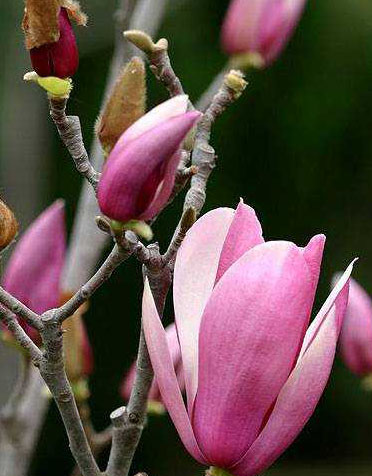
How to plant Magnolia liliiflora? A full analysis of scientific cultivation techniques
1. Soil. You can mix leaf mold and garden soil in equal amounts as the growing medium, and add 50-150 grams of bone meal or NPK compound fertilizer to the soil. The pot should be slightly deeper and larger, and put some broken hard plastic foam blocks at the bottom of the pot to enhance air permeability and drainage and prevent root rot. Repot and change the soil once every year or every other year after flowering
-
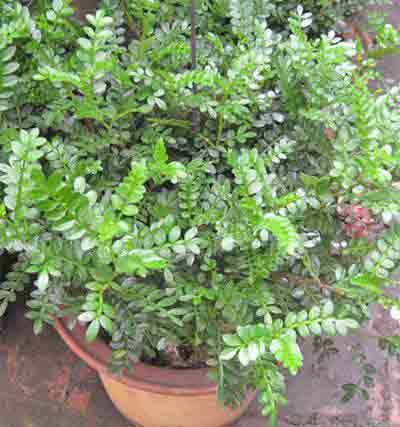
A detailed guide to the propagation techniques of Chinese pistache (Pistacia chinensis), teaching you to scientifically cultivate seedlings
Chinese pistache is a sun-loving tree, though it also tolerates slight shade; it prefers warmth and requires deep soil. It has strong sprouting ability, grows slowly, and lives long, but its seedlings are not very cold-resistant and need protection in North China. The plant can withstand low temperatures of -10°C and prefers soil with ample sunlight and good drainage. It can be used for garden shrubs and cut branches.
条件筛选