-
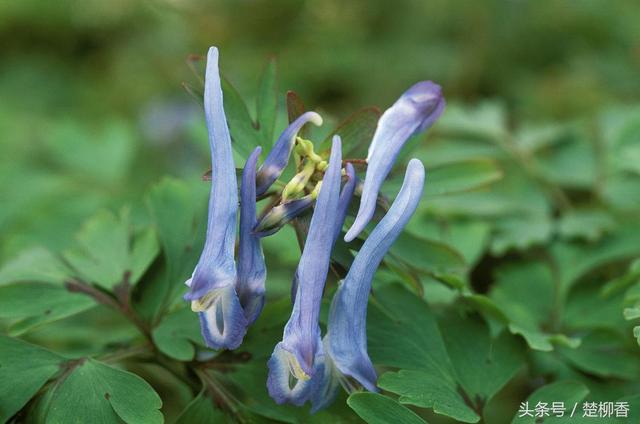
Millennia-old "miracle herb" becomes a wealth-building herb, 80 yuan per kg helps farmers escape poverty
Millennia-old "miracle herb" becomes farmers' poverty-fighting "wealth herb," 80 yuan per kg!
-

Caoling Landscape Center in Yunlin Unveiled on the 21st, Scenic Beauty Officially Debuts
Under the joint efforts of the Forestry Bureau of the Council of Agriculture, Executive Yuan, the Yunlin County Government and the Gukeng Township Office, the Caoling Landscape Center held its unveiling ceremony yesterday (1/21). The plan to establish a landscape center at the Caoling Visitor Information Center aims to provide locals...
-

Red-leaf cherry blossom is a colorful-leaf landscape tree species with high ornamental value.
Red-leaf cherry blossom: a variety of the magnificent cherry blossom (Prunus serrulata), a deciduous small tree with large pink double flowers. Its leaves are purple-red for three seasons: in early spring the emerging leaves are deep red, from May to July they are bright red, then the older leaves gradually turn deep purple, and in late autumn when frost comes the leaves turn orange-red. The cherry blossom is a famous flowering tree; the red-leaf cherry blossom offers both flowers and foliage to admire, making it a precious ornamental colorful-leaf tree species for landscape gardens and urban greening, and also the most promising tree species to recommend first.
-
What are the main storage-period diseases of garlic scapes and garlic bulbs?
In Jinxiang County, Shandong Province, the garlic planting area has been around 500,000 mu in recent years, accounting for 40% of the county's cultivated land area. The county has 700 large and small constant-temperature warehouses, with a storage capacity of 450,000 t. Every year from late April to early-to-mid May, garlic scapes and garlic bulbs are harvested in a concentrated period. Apart from a small amount consumed locally or shipped out, most of the garlic scapes and garlic bulbs are stored. Losses occur during storage, and rot caused by various diseases is the main cause of loss during the storage of garlic scapes. 1 Diseases of garlic scapes during storage 1.1 Gray mold 1.1.1
-
What should be noted when harvesting garlic scapes?
Generally, when the garlic scape emerges from the leaf sheath and begins to bend, it is the suitable time to harvest the garlic scape. Harvesting early or late has a great impact on the yield and quality of the garlic scape. If harvested too early, the yield is not high, it breaks easily, and its marketability is poor. If harvested too late, although the yield can be increased, it consumes too many nutrients and affects the growth and development of the garlic bulb, and the garlic scape tissue ages and its fiber increases; especially the base of the garlic scape ages and becomes inedible. Therefore, it is best to harvest garlic scapes at noon and in the afternoon on sunny days. At this time the plants are somewhat wilted, the leaf sheath and the garlic scape separate easily, and the leaves are tough and not easy to break, which can
-
What causes secondary branching and deformed scapes in garlic? Here's how to prevent it
Every year during the scape-elongation stage of garlic, a certain proportion of garlic plants develop secondary branching and deformed scapes, seriously affecting the yield and quality of garlic scapes. In recent years, we have carried out investigations and research, and have explored effective agricultural measures to control the occurrence of secondary branching and deformed scapes in garlic, which have played a very significant role in improving the economic benefits of garlic growers. 1 The harm caused by secondary branching and deformed scapes in garlic. Secondary branching in garlic is also called secondary growth or branching, and growers call it "horsetail garlic". There are generally two phenomena: first, branches differentiate from the outer leaf sheath,
-
Control Methods for the Pryeria sinica Moth on the Ornamental Landscape Tree Euonymus japonicus
Distribution and Damage The Pryeria sinica Moore, also known as the Euonymus japonicus long-haired moth and the Euonymus japonicus moth, belongs to the order Lepidoptera, family Zygaenidae. It is distributed in Shanghai, Nanjing, Wuxi, Suzhou, Hangzhou, Wuhan, Lianyungang and Hefei, among other places. It damages Euonymus japonicus, silver-edged Euonymus japonicus, golden-heart Euonymus japonicus, Euonymus grandiflorus, Euonymus fortunei and Euonymus bungeanus, among others. The larvae feed on the host leaves, and when the infestation is severe they eat all the leaves, affecting the normal growth of the plants. Morphological characteristics The adult is flat and round, with a black body dorsum and thoracic dorsum
-
How to Store and Keep Garlic Scapes Fresh: Methods and Techniques Explained
Garlic scapes, commonly known in some places as garlic sprouts, are the flower stems that bolting garlic produces after vernalization, and they are an important by-product of garlic production. Garlic scapes are rich in crude protein, a variety of vitamins and minerals, and have a delicious flavor, making them a high-quality, premium vegetable. (1) Storage conditions 1. Temperature 0-0.5°C. 2. Relative humidity 90%-95%. 3. Gas composition O2: 2%-4%, CO2: 6%-8%. (2) Storage methods 1. Ice cellar storage method: trim the selected garlic scapes
-
The Su-style bonsai: crafting methods and landscape design techniques
Su-style bonsai consists of five major parts: first the roots, second the trunk, third the nodes, fourth the new branches, fifth the crown. Simply process and shape each of the five parts separately, and it becomes a living work of art. 1. Raising the roots: according to the distribution of the roots, lift the root system above the soil surface, placing it in all four directions. Roots that coil and rise boldly above the pot surface are considered superior; those with buttress roots exposed above the soil are also good. They may be upright, slanting, or lying flat. "The head must form layers, the feet must form lines," achieving "suspended roots and exposed claws" to show antiquity. Root raising must be done year by year and step by step; it is best not to raise too much at once, to prevent damaging
-
What control measures should be taken when pathological changes occur in garlic scapes during storage?
Abnormal changes of the scape tip 1. Browning of the scape tip (1) Symptoms The scape tip changes from yellow-green to yellow-brown or dark brown, dehydrates and shrinks into a thin flake-like form, is prone to decay, and is easily infected by mold, losing its toughness; dry-affected ones break easily, and wet-affected ones rot easily and are infected by mold. (2) Causes The tissues of the scape tip undergo physiological aging and death, and lose water and shrink. High temperature and high oxygen promote browning, and high humidity aggravates the degree of browning. (3) Control Harvest at the proper time, and strictly prevent high temperature, air-drying, or smothering during harvest and transport.
条件筛选