-
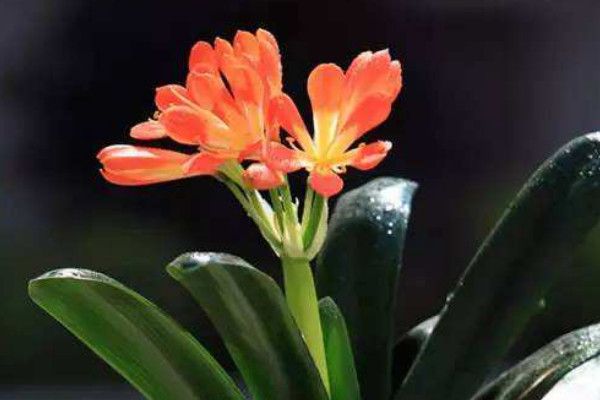
What to do when a clivia flower scape is trapped? Solutions for a flower scape stuck in the middle and unable to grow out
What to do when a clivia flower is stuck in the middle and cannot grow out
-

Red-leaf cherry blossom is a colorful-leaf landscape tree species with high ornamental value.
Red-leaf cherry blossom: a variety of the magnificent cherry blossom (Prunus serrulata), a deciduous small tree with large pink double flowers. Its leaves are purple-red for three seasons: in early spring the emerging leaves are deep red, from May to July they are bright red, then the older leaves gradually turn deep purple, and in late autumn when frost comes the leaves turn orange-red. The cherry blossom is a famous flowering tree; the red-leaf cherry blossom offers both flowers and foliage to admire, making it a precious ornamental colorful-leaf tree species for landscape gardens and urban greening, and also the most promising tree species to recommend first.
-
Control Methods for the Pryeria sinica Moth on the Ornamental Landscape Tree Euonymus japonicus
Distribution and Damage The Pryeria sinica Moore, also known as the Euonymus japonicus long-haired moth and the Euonymus japonicus moth, belongs to the order Lepidoptera, family Zygaenidae. It is distributed in Shanghai, Nanjing, Wuxi, Suzhou, Hangzhou, Wuhan, Lianyungang and Hefei, among other places. It damages Euonymus japonicus, silver-edged Euonymus japonicus, golden-heart Euonymus japonicus, Euonymus grandiflorus, Euonymus fortunei and Euonymus bungeanus, among others. The larvae feed on the host leaves, and when the infestation is severe they eat all the leaves, affecting the normal growth of the plants. Morphological characteristics The adult is flat and round, with a black body dorsum and thoracic dorsum
-
The Su-style bonsai: crafting methods and landscape design techniques
Su-style bonsai consists of five major parts: first the roots, second the trunk, third the nodes, fourth the new branches, fifth the crown. Simply process and shape each of the five parts separately, and it becomes a living work of art. 1. Raising the roots: according to the distribution of the roots, lift the root system above the soil surface, placing it in all four directions. Roots that coil and rise boldly above the pot surface are considered superior; those with buttress roots exposed above the soil are also good. They may be upright, slanting, or lying flat. "The head must form layers, the feet must form lines," achieving "suspended roots and exposed claws" to show antiquity. Root raising must be done year by year and step by step; it is best not to raise too much at once, to prevent damaging
-
Detailed Explanation of Rhododendron Cultivation Techniques and Landscape Application
China has a long history of rhododendron cultivation, with records of artificial cultivation dating back to the Han Dynasty. In the Tang Dynasty, rhododendrons began to be used in private gardens, and because of their graceful plant form and brilliant flower colors, they were deeply loved by people. Rhododendron generally refers to plants of the genus Rhododendron in the family Ericaceae, with about 960 species worldwide. China is the birthplace and distribution center of rhododendrons, with about 542 species, mainly distributed in the Hengduan Mountains area of the three provinces and regions of Southwest China, Yunnan, Tibet and Sichuan. Rhododendrons prefer cool conditions and fear scorching sun,
-
The yew is a landscape tree species recommended for the Beijing Olympics
The yew, also known as the Chinese yew, is an ancient relict plant of the Taxaceae family, enjoying the reputation of "living fossil" and "golden tree." It has a very small natural distribution in both northern and southern China and is listed among China's eight rarest and most endangered first-class protected plants. The yew is not only rare but also has extremely high ornamental and medicinal value. Its trunk is straight, and in pots, pinching the top controls it to a suitable height, with numerous dense branches; planted in the ground, it can reach up to 20 m tall, with a handsome tree form, branches evenly and orderly distributed, and needle-shaped leaves that are thick and glossy, evergreen year-round, symmetrically arranged on the branchlets, elegant and
-
Variety Characteristics and Cultivation Key Points of Yellow Magnolia Landscape Seedlings
Morphological characteristics of yellow magnolia: A deciduous small shrub. It is a very precious ornamental plant. The flower colors of Magnolia genus plants are mostly white, pink, and purplish red. But yellow magnolia flowers are extremely rare. Growth habits: Blooms in late spring. The growing environment ranges from sunny to semi-shady; ordinary garden soil is sufficient, with good drainage, and no pruning is needed. It can be planted in both north and south; the yellow magnolia flowers are golden yellow and bloom late, so there is no need to worry about damage from early spring frost. Garden uses: The flowers are for ornamental viewing, fragrance appreciation, and women's head
条件筛选