-

Experimental Study on Factory-Scale Rapid Propagation Technology of Potato Test-Tube Plantlets
For many years, farmers' own propagation, self-breeding and seed retention have caused potato yields to decline year by year during production, quality to deteriorate, and commercial appearance to worsen. Scientists have proven through research that virus infection and its accumulation in tubers are the main causes of potato "degeneration." To solve the problem of severe degeneration and reduced yield of the main potato cultivars in our city, our institute made virus-free potato production a key experimental project and conducted experimental research on the problems existing in virus-free production, thereby utilizing resources and reducing production costs.
-
Fish scales turned from waste into treasure, processed into fertilizer
Currently, a new type of high-quality organic fertilizer - fish scale fertilizer - is being highly praised by many fruit growers in provinces such as Fujian and Guangdong. This product was first developed by a woman in Chishiwan Village, Meiling Town, Zhao'an County, Fujian Province. Over the past two years, she has processed recovered fish scales into fish scale fertilizer, which has both opened up a source of agricultural fertilizer, reduced environmental pollution from waste fish scales, and increased her personal income. Zhao'an Bay is one of the fine fishing grounds in Fujian Province, among which Gongkou Port trades about 30,000 tons of fresh fish annually from Jinjiang and local light boats. Around the port there are more than 40 fish cargo
-
What are the control methods for the jujube tree tortoise wax scale?
(1) Manual removal of the pest source: during winter and in early spring in March of the following year, use a stiff-bristled brush to scrape the insects off the branches and collect and kill them. If snow or fog freezes on the branches with a thick layer of ice, you can directly strike the branches to shake off the ice, and the insects will fall with it. (2) Protect and utilize natural enemy resources: this pest has many natural enemies; a single predatory Chilocorus kuwanae can prey on thousands of these insects in its lifetime; the larvae of the long-shield golden small wasp can parasitize under the pest's abdomen and feed on the scale eggs. The larvae of the long-shield golden small wasp can parasitize under the pest's abdomen and feed on the scale eggs. (3) Chemical control:
-
Harm and Control Methods of the White Peach Scale
Distribution area: Morphological characteristics: The female adult is orange-yellow, broadly oval, with a body length of 1-1.3 mm; the body surface is covered by a scale cover, which is 2-2.5 mm long, grayish white, nearly circular, convex on the back, with the shell point yellowish brown. The male adult is 0.65-0.7 mm long, orange, with grayish white wings. The male scale cover is about 1 mm long, grayish white, long cylindrical, with 3 ridges on the back; the shell point is orange-yellow and located at the front end. Eggs are oval, orange. Nymphs are flat and round, orange.
-
Many difficulties in large-scale farming of yellow catfish, polyculture models work better
The yellow catfish is a benthic omnivorous fish, with tender flesh, rich nutrition and extremely high economic value, making it a farming species with great market potential. The yellow catfish has strong adaptability and grows slower than cyprinid fish, but grows relatively fast for the species itself; fry bred in the same year can reach marketable size within that year, and the population yield is relatively high. Because large-scale artificial farming currently faces certain difficulties, carrying out polyculture has become imperative. Polyculture of yellow catfish in fish ponds has the following advantages: first, it can feed on low-value small miscellaneous fish and shrimp in the pond,
-
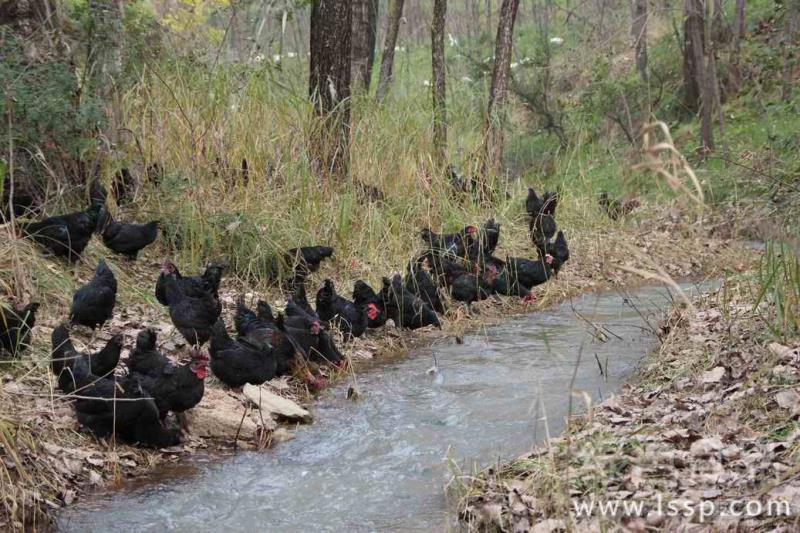
Silkie chickens are not suited to indoor cage-free rearing on wire netting; how can they be raised free-range at scale in woodland?
How to raise Silkie chickens, which are not suited to indoor wire-net rearing, free-range at scale in woodland
-
Large-scale leaf-rolling of the central leaves of rice may be related to excessive application of quinclorac
For some time recently, hundreds of readers across our province have called to report large-scale leaf-rolling of the central leaves of rice seedlings, which is even more common in direct-seeded rice production. Many readers brought in diseased plants. The root systems of the diseased plants are generally fairly normal, and there are no obvious disease spots or other symptoms on the leaves. After examining the submitted diseased plants, relevant experts from the Institute of Plant Protection of the Provincial Academy of Agricultural Sciences and other units preliminarily diagnosed that the leaf-rolling of the central leaves of rice is not caused by viruses or other pathogenic microorganisms, but may be phytotoxicity caused by herbicides such as 2,4-D and quinclorac, or may be caused by physiological
-
Detailed Explanation of Lily Scale Propagation Methods and Operation Steps
There are four lily propagation methods: scales, bulbs, bulbils, and seeds. Propagation by seeds and bulbils flowers late and is prone to variation. Bulb seedling raising flowers early, but the propagation coefficient is low, the amount of planting material used is large, and the cost is high. Therefore, for large-scale seedling raising, scale propagation is mostly used. 1. Seed selection. For lily scale propagation, select excellent varieties, choose fully mature, pest- and disease-free bulbs with plump scales, and peel off the thick, intact outer scales as seed material. 2. Seedbed preparation. For lily scale seedling raising, the seedbed requires
-
How to control the Japanese wax scale on goldenrain tree? First understand its occurrence pattern
The Japanese wax scale (Ceroplastes japonicus Gr.) belongs to the order Homoptera, family Coccidae. Also known as the Japanese wax scale and the jujube armored wax scale, commonly called the jujube louse. When it breaks out over large areas on goldenrain trees, in severe cases the entire tree's branches and leaves are covered with the insects, and female insects attached to the twigs look like snow from a distance. The nymphs suck sap on the leaves, and their excrement covers the whole tree, weakening the tree's vigor and seriously affecting the landscaping appearance. Through two years of investigation and study, the occurrence pattern of this pest was clarified, and a satisfactory control method was found. This pest
-
Techniques for large-scale rearing of bream summer fry, suitable for triangular bream and blunt snout bream
Bream (triangular bream, blunt snout bream) are high-quality freshwater fish. They are not only excellent species for pond culture but also suitable for stocking in large water bodies, where their tendency to readily form natural populations can be used to achieve resource protection and enhancement. The techniques for large-scale rearing of bream summer fry are described below: 1. Conditions of the summer fry rearing pond. The summer fry rearing pond requires an abundant water source, unpolluted water quality, and convenient filling and drainage. The area should not be too large, generally 1-3 mu, with a water depth of 1-1.2 m being suitable. The pond must not leak,
条件筛选