-

Why do mushrooms grow as freakish "water-rust spot mushrooms"?
If the mushroom house and the surface of the growing medium are not ventilated promptly after watering, the humidity in the mushroom house becomes too high, small water droplets form on the mushroom surfaces, and over time rust-colored spots appear. Prevention measures: after each watering, open the doors and windows for 30 to 60 minutes to ventilate.
-
What are the control methods for mushroom rust spot disease?
Mushroom rust spot disease, also called brown spot disease or bacterial blotch, is caused by Pseudomonas tolaasii, an acidophilic species of the genus Pseudomonas. It spreads through insects, tools, the hands of workers and other carriers. The disease is severe when the casing soil of the mushroom bed has a pH below 5.5, when ventilation is poor, when humidity is too high, and when the mushroom caps remain constantly moist and sticky after watering. Its symptoms are: it generally infects only the epidermal layer of the mushroom cap, causing spots of varying size that are initially yellowish-brown and rust-like in appearance, which later gradually turn brown or black, and sometimes scars with mucus also appear on the caps.
-
How to prevent rust-colored spots on mushroom caps
This is generally caused by failing to open doors and windows promptly for ventilation after watering, which makes the humidity in the mushroom house too high; water droplets then collect on the cap surface for a long time, producing rust-colored spots in localized areas. Rust-colored spots resemble bacterial spots, but they are limited to the surface. Preventive measures: open doors and windows for ventilation on schedule or when the weather is suitable, bring in fresh air, and evaporate the moisture on the surface of the mushrooms.
-
Harm and Control Methods of Angelica Rust
The pathogen is Puccinia angelicae (P. angelicae). Urediniospores are oval to oblong-elliptical, yellowish-brown, (25-42) micrometers x (22-30) micrometers, with small spines on the surface and 3 germ pores. Teliospores are elliptical to club-shaped, chestnut-brown, (32-49) x (17-26) micrometers, with rounded ends and slightly constricted at the septum; the stalk is colorless and deciduous. Single-spored teliospores sometimes occur. 1. Damage symptoms: It damages leaves, and also damages petioles and fruit stalks. Uredinial pustules are scattered or clustered on the underside of leaves, exposed, brown. Telio
-
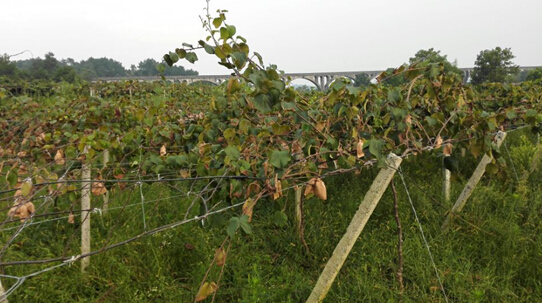
Kiwifruit becomes Xinshao's fruit of poverty alleviation and prosperity; entrusted assistance advances industrial poverty alleviation
Xinshao advances industrial poverty alleviation through entrusted assistance; kiwifruit becomes the local "fruit of poverty alleviation and prosperity"
-

Three-rights separation for rural land transfer is hard to implement; land trusts come to the rescue
Three-rights separation for rural land transfer is hard to achieve, so let trusts lend a hand
-
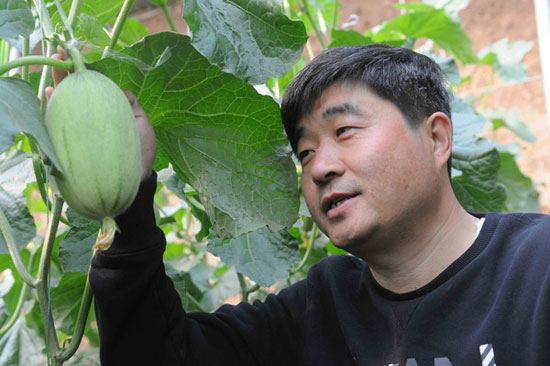
Gourds and vegetables grown with traditional farming methods gain popularity as trusted food
Traditionally farmed gourds and vegetables win favor as "trusted food"
-

College students sell free-range eggs, using IoT to pass the trust test
College students sell free-range eggs, IoT passes the trust test
-
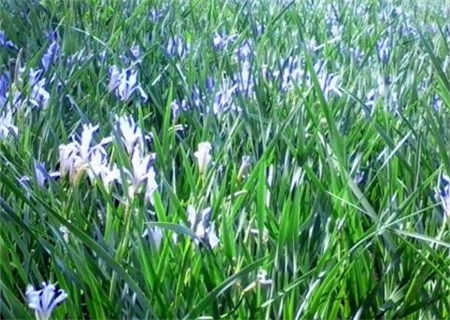
Control Methods and Medicinal Benefits of Rust Disease on Iris lactea Flowers
Iris lactea, also known as Chinese iris and iris lactea flower, is a perennial herbaceous plant of the Iridaceae family. Its flowers, seeds and roots are used as medicine. Iris lactea flowers have the effects of clearing heat and cooling blood, and promoting diuresis and reducing swelling. It is distributed throughout the country. So do you know what the control methods for iris lactea flower rust disease are? What are its effects and medicinal value? Control methods for iris lactea flower rust disease
-
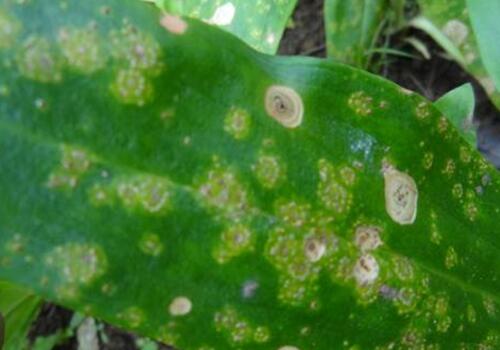
How to control the main pests and diseases of Gentiana macrophylla such as leaf rust, root rot, and aphids?
Gentiana macrophylla, also known as large-leaf gentian, large-leaf Qinjiao, and West Qinjiao, is a perennial herbaceous plant and one of the main medicines for treating rheumatism, joint pain, tuberculosis, tidal fever, jaundice, and other conditions. So what are the main pests and diseases of the herbaceous plant Gentiana macrophylla, such as leaf rust, root rot, and aphids, and what are the control measures? Let's find out together below.
条件筛选