How to control the main pests and diseases of Gentiana macrophylla such as leaf rust, root rot, and aphids?
Gentiana macrophylla, also known as large-leaf gentian, large-leaf Qinjiao, and West Qinjiao, is a perennial herbaceous plant and one of the main medicines for treating rheumatism, joint pain, tuberculosis, tidal fever, jaundice, and other conditions. So what are the main pests and diseases of the herbaceous plant Gentiana macrophylla, such as leaf rust, root rot, and aphids, and what are the control measures? Let's find out together below.
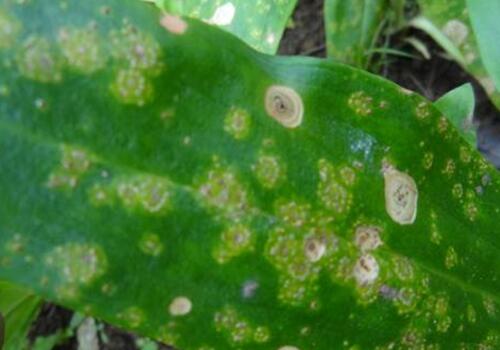
I. Main diseases of Gentiana macrophylla and control measures
1. Leaf rust: High temperature and high humidity in the field easily induce this disease, which mainly infects the leaves. In the early stage, yellow dot-like protrusions appear on the front of the leaves, and later the lesions spread, expand, and merge. On the back are yellow raised spots, namely the spore piles. When the disease is severe, the leaves turn yellow and die.
Control measures: After autumn, thoroughly remove diseased residues from the field and burn them in a centralized manner. For sporadic occurrence, choose 25% triadimefon 200-fold solution, myclobutanil 800-fold solution, 50% kresoxim-methyl 800-fold solution, and other agents, and spray them in rotation.
2. Viral disease: This disease is mainly spread by thrips. In the early stage of the disease, faded green-yellow spots appear on the leaves, and as the disease gradually becomes more severe. In the later stage, the lesions expand and increase, covering the leaves with yellow-green round spots, and finally the entire leaf turns yellow until the plant dies.
Control measures: Strengthen field management, and promptly clean up remaining plants in the field after harvest to eliminate the initial source of virus infection. Before early spring, thoroughly remove dead branches, fallen leaves, and weeds in the field and burn them in a centralized manner to eliminate overwintering eggs. In the early stage of the disease, choose 20% Virus A, 1.5% Zhibingling, 20% moroxydine hydrochloride wettable powder, 7.5% Junduqing, and other agents for spray control, and at the same time spray potassium dihydrogen phosphate foliar fertilizer.
3. Root rot: This disease is prone to occur when plant roots are injured, under continuous cropping, and when there is water accumulation in the field. It mainly damages the roots. After the roots are infected, they gradually turn black and later rot. The lower leaves of the plant turn yellow, and in severe cases the plant withers and dies.
Control measures: Implement crop rotation, drain water promptly after rain, and apply decomposed farmyard manure. In the early stage of the disease, choose 70% thiophanate-methyl 600-fold solution, 75% chlorothalonil 600-fold solution, and 50% chlorobromoisocyanuric acid 800-fold solution for alternating root drenching.
II. Main insect pests of Gentiana macrophylla and control measures
The insect pests are mainly aphids and thrips.
The damage is most severe during the flowering period. When they occur, natural enemies such as ladybugs and hoverflies can be used for biological control, or yellow-blue sticky boards can be used for trapping and killing, or 10% imidacloprid and 5% acetamiprid can be sprayed for control. For underground pests, emamectin benzoate poison bait can be used for trapping and killing.