-
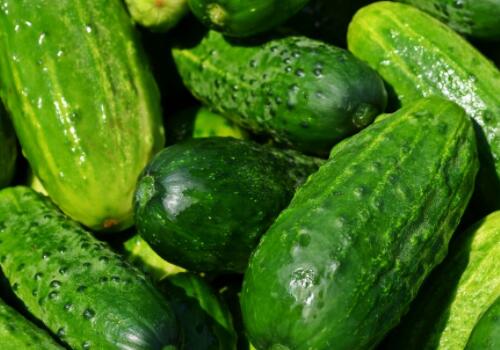
How many jin per mu does grafted cucumber generally yield, and the best rootstock and step-by-step seedling method
Cucumber is also known as Huzhua, Cigua, Wanggua, Qigua, Qinggua, Tanggua and Diaogua. It is commonly cultivated throughout China, and in many areas it is grown in greenhouses or plastic tunnels. So how many jin per mu does grafted cucumber yield? What is best for grafting? How do you graft? What are the cucumber seedling methods? We learned from cucumber grower Mr. He
-

When do pear trees bloom and what are the common grafting rootstocks?
The pear tree is a perennial deciduous fruit tree of the genus Pyrus in the Rosaceae family. It is a tree that is widely distributed around the world. The fruit of the pear tree is edible and has high nutritional and medicinal value. So, when do pear trees generally bloom? What are the common grafting rootstocks? When do pear trees generally bloom? Because pear trees have a wide distribution range
-
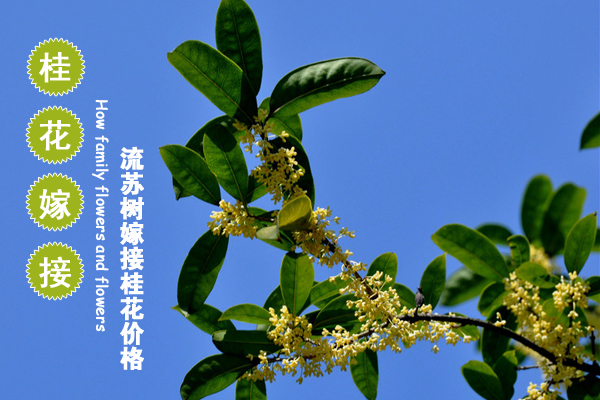
What tree is best used as a rootstock for grafting osmanthus?
What trees can osmanthus be grafted onto? The rootstocks that can be used for grafting osmanthus include small-leaf privet (Ligustrum quihoui), large-leaf privet (Ligustrum lucidum), water wax (Ligustrum obtusifolium), white wax (Fraxinus chinensis), and osmanthus seedlings grown from seed or cuttings. (1) Small-leaf privet: a deciduous or semi-evergreen shrub, 2-3 m tall, with spreading branches and twigs bearing short pubescence
-
How to make the rootstock and scion when grafting peach saplings
How to make the rootstock and scion for grafting peach saplings
-

Key Technical Points for Planting Birchleaf Pear Rootstock Seedlings in the Rainy Season
Birchleaf pear (Pyrus betulifolia) is an excellent rootstock for grafting pear cultivars, being drought-resistant, cold-resistant and tolerant of poor soil. It is generally planted in spring and autumn, but in remote mountainous areas short of water, the difficulty of transporting water and spring drought often affect the survival rate of planting. Fruit growers in our region have experience with planting birchleaf pear rootstock seedlings in the rainy season, which gives a high survival rate, rapid orchard establishment and low cost. The specific methods are as follows. 1 Plant after the continuous rainy season arrives, when the underground water content is close to saturation; planting in the rain or rushing to plant before the rain is best. 2 Dig up birchleaf pear sucker seedlings from nearby hillsides; generally a seedling diameter of 0
-
Schisandra chinensis asexual propagation and seedling raising: Rootstock method for green-branch cleft grafting
For the cultivation of rootstocks for green-branch cleft grafting, refer to open-field direct seeding for seedling raising. If the rootstocks are not dug out before winter arrives, pruning must be carried out before the ground freezes. Leave 3 to 4 buds on each rootstock and cut at about 5 cm, then water thoroughly with winter-protection water to prevent freeze damage and drying out. If the rootstock seedlings are to be planted out the following year, the seedlings can be dug out and stored in cellars or trenches, which is more beneficial for rootstock seedling management. When planting out the following year, they also need to be cut back to 3 to 4 buds to establish the trunk. Rootstock seedlings that overwinter in place should be irrigated promptly after the ground thaws the following year and given a topdressing of quick-acting nitrogen fertilizer to promote new shoot growth. Keep 1 to
-
Producing Rhododendrons for Landscaping: Topiary Is the Direction, Don't Use Wild-Collected Rootstock
Regarding the phenomenon of some nursery growers using wild rhododendrons as rootstock to cultivate topiary rhododendrons for landscaping projects, Li Yong, secretary-general of the Rhododendron Branch of the China Flower Association, recently stated: topiary is currently an effective way to increase the added value of landscaping rhododendrons, but the practice of using wild-collected rootstock for grafting is not advocated. It is understood that although there are not many nurseries in China mainly growing rhododendrons for landscaping projects, many places in the south have already achieved year-round supply. Therefore, in the absence of disasters, the domestic supply of landscaping rhododendrons is currently basically saturated
-
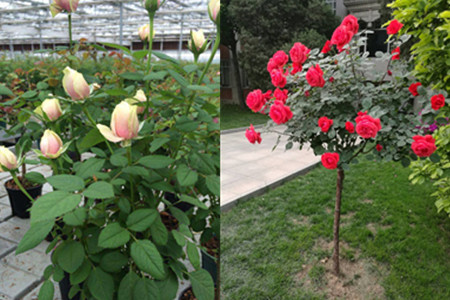
What are the rootstocks for grafting roses? You need to understand these precautions
In real life, the common garden roses are all grafted. Through grafting, the variety can be improved, and it is easier to view and manage. Which rootstocks are generally chosen for grafting roses? What precautions should be taken during grafting? Let me introduce this in detail below.
-
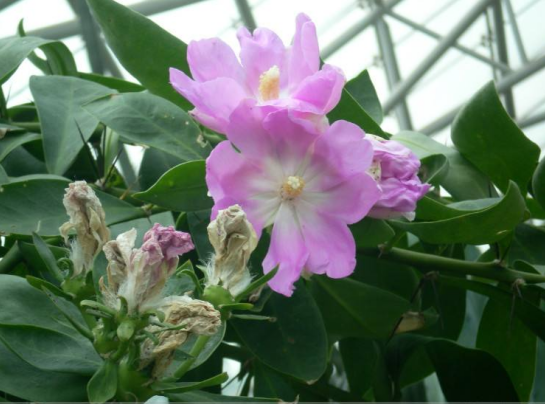
This plant can be used as a rootstock for grafting other plants
Pereskia, a primitive type of cactus, can be used to graft Christmas cactus, epiphyllum and ball cacti. Because of its strong cold resistance, well-developed root system and vigorous growth, it is often used as a rootstock for Gymnocalycium mihanovichii and other colorful cacti. However, since its stem is too thin, it is only suitable for grafting ball cacti of no great diameter. Grafting can improve the ornamental value of plants
-

条件筛选