-

Detailed Guide to Identifying and Controlling Peach Aphids on Peach Trees
The peach aphid, also known as the peach red aphid, cabbage aphid, or greasy bug, among other names. Its main hosts include broccoli, purple cabbage, cauliflower, Chinese cabbage, radish and other cruciferous vegetables as well as other vegetables. Adults and nymphs pierce and suck sap on the leaves, causing the leaves to curl and deform, affecting head formation. They damage the tender stems, tender leaves, flower stalks and tender pods of seed-producing plants, causing the flower stalks to twist and become deformed, so they cannot bolt, flower and set seed normally. In addition, aphids also transmit a variety of viral diseases. Occurrence characteristics: generation overlap is extremely severe. In heated greenhouses, they reproduce parthenogenetically on vegetables throughout the year. In the open field: in late April of the following spring
-
Methods and Key Technical Points for Controlling Peach Shoot Growth and Promoting Flower Formation
Many peach growers have called to ask how to stop peach shoot growth and form more flower buds. The main factor affecting flower bud differentiation is the conflict between reproductive growth and vegetative growth. When vegetative growth is too vigorous, it seriously affects reproductive growth, that is, flower bud differentiation. Therefore, during the flower bud differentiation period (late May to before leaf fall), attention must be paid to the balance between the two in order to ensure normal flower bud differentiation. 1. From late May to June, pinch off the shoot tips at the 10-12 leaf position on autumn shoots to promote flower bud differentiation and branching, or spray Shoot Control Ling (Kongshao Ling).
-
Detailed Guide to Controlling Several Major Diseases of Alliums
The main diseases of alliums include downy mildew, rust, and purple blotch. In recent years, the occurrence and damage of these diseases have tended to worsen in various regions, and this is especially pronounced under protected cultivation, greatly affecting the yield and quality of alliums. Below is an introduction to the main symptoms, disease conditions, and control methods of these 3 diseases. 1. Downy mildew (1) Main symptoms. Downy mildew is an important disease of Welsh onion and bulb onion. In addition to damaging Welsh onion and bulb onion, it also damages garlic, Chinese chives, and others. Downy mildew mainly infects leaves and flower stalks,
-
Application methods of Shangnong Iprobenfos for controlling rice blast
Shangnong Iprobenfos is a systemic fungicide with a pre-harvest interval of more than 20 days and low toxicity to humans and livestock. Its formulation is a 40% emulsifiable concentrate. Shangnong Iprobenfos is mainly used to control rice neck blast, and is also effective against rice sheath blight (small sclerotium disease), small grain sclerotium disease, rice sheath blight, and planthoppers, and also has insecticidal and lodging-resistant effects. Application methods: To control rice blast, sheath blight, and small sclerotium disease, dilute 600-1200 times with water and spray. Precautions: (1) This agent is also a cotton defoliant, so when applying
-
Fuyang's stretcher-type high-pressure sprayers achieve remarkable results in controlling brown planthopper
This year is the most severe year for late rice brown planthopper infestation in Fuyang City in more than a decade. Doing a good job in controlling late rice brown planthopper concerns food production security, farmers' income growth and rural social stability. Government departments at all levels in Fuyang City attach great importance to this, truly treating the control of late rice brown planthopper as the top priority in current agriculture and rural work, and making concerted efforts to fight this battle against brown planthopper. The Fuyang City Agricultural Machinery Extension Station introduced and promoted a new type of stretcher-type high-pressure sprayer that had once made great contributions to increasing the yield and income of Dongqiao Chinese torreya (Torreya grandis), and now it has once again rendered outstanding service in brown planthopper control.
-
What are some simple methods for controlling pig lice?
Pig lice can be eliminated with the following methods: 1. 50% tobacco powder and 95% water, boiled into a decoction and sprayed on the pig's body to achieve the lice-killing effect. 2. 750 parts kerosene, 27 parts soap, 378 parts water; melt the soap in hot water, then mix in the kerosene and stir thoroughly; when using, dilute with 10 times the amount of water, then spray or rub onto the pig's body. 3. 5 grams of Stemona root (Baibu) and 500 grams of liquor, applied to the pig's body once a day for 2-3 consecutive days. To thoroughly eliminate pig lice, no matter which
-
Methods for Controlling Underground Pests of Codonopsis pilosula and Key Technical Points
The main underground pests harming Codonopsis pilosula are white grubs, cutworms and mole crickets; the above-ground pest is spider mites. Control methods for underground pests: use poisoned soil and poisoned bait to lure and kill them. Poisoned soil preparation: use 0.5-1.5 kg of 35% endosulfan per mu, 15 kg of soil, mix and scatter among the seedling roots; poisoned bait preparation: use 1 kg of roasted cake meal per mu, add 35 g of trichlorfon, mix well with water, scatter on the bed surface and beside the beds, in the furrows or on the ridges. Control methods for above-ground pests: the above-ground pest of Codonopsis pilosula is spider mites, generally
-
Preventing and controlling winter pepper diseases starts at the seedling stage
Pepper is one of the major winter vegetables in Guangdong. In recent years, seedling death in peppers grown in winter or early spring in protected and open-field cultivation has become increasingly serious, severely affecting the economic returns of farmers growing peppers. Investigations have found that pepper seedling death is generally caused by Fusarium wilt, Phytophthora blight, sclerotinia rot, bacterial wilt and other diseases. According to many years of investigation and research, in addition to factors such as continuous cropping and climate, pepper seedling death is also closely related to seedlings already carrying pathogens before transplanting to the field. If seedlings carry pathogens, the disease is more severe; if they do not carry pathogens, the disease is milder even under continuous cropping
-
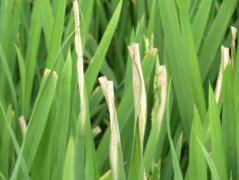
Success in Controlling Rice Bacterial Leaf Blight: Xingda Releases 2 Disease-Resistant Rice Varieties
Rice bacterial leaf blight, be gone! Xingda releases 2 disease-resistant rice varieties. Do you know which two rice varieties they are? Let's take a look. When farmers grow rice, what they fear most is encountering bacterial leaf blight, rice blast and sheath blight. The appearance of these diseases means reduced yields and affected rice qual
-

What are the methods for preventing and controlling pests and diseases in gromwell (Lithospermum)?
Pest and disease prevention and control methods for gromwell
条件筛选