-

Latest Tutorial on Rice Blast Prevention and Control Techniques in Rice Cultivation
Rice blast is mainly divided into leaf blast and neck blast, and is one of the important diseases of rice, which can cause large-scale yield reduction, in severe cases 40%-50%, or even total crop failure. Prevention and control of leaf blast: use 20% tricyclazole wettable powder 100 g/Mu, or 75% tricyclazole wettable powder
-
Latest Guide to Common Rice Disease Prevention and Control Techniques
1. Rice blast. Rice blast, also known as rice fever, can be divided according to the damage period and plant part into seedling blast, leaf blast, neck blast, branch blast, grain blast, and so on. Seedling blast: the base is grayish black, the upper part turns brown, curls and dies; when humidity is high, the diseased part produces a large amount of grayish black mold.
-
What Is Rice Leaf Blast? A Detailed Guide to Prevention and Control
Rice blast that occurs on rice leaves is called leaf blast. The prevention and control of rice leaf blast should run through the entire rice growth period, because leaf blast can occur throughout the whole growth period, with damage being more severe from tillering to jointing. An outbreak of leaf blast directly affects the normal growth of rice, and in severe cases the plants wither and die, causing rice yield reduction or even total crop failure.
-
How to prevent and control rice neck blast? Master the best application timing and judgment methods
According to recent field monitoring results from rice blast rural monitoring sites across Heilongjiang Province, combined with comprehensive analysis of rice planting varieties, resistance, field growth, cultivation management and meteorological conditions, it is expected that rice neck blast in Heilongjiang Province this year has a risk of severe recurrence. So
-
Identification and Control of Rice Leaf Blast Symptoms
What is rice leaf blast? How to control it? Rice leaf blast is a common disease, and farmers should identify it carefully. This disease occurs on the leaves of seedlings after the three-leaf stage or on adult plants, generally breaking out heavily from the tillering stage to the jointing stage. The lesions on the leaves often differ in shape, size and color due to differences in weather and varietal disease resistance,
-
Application methods of Shangnong Iprobenfos for controlling rice blast
Shangnong Iprobenfos is a systemic fungicide with a pre-harvest interval of more than 20 days and low toxicity to humans and livestock. Its formulation is a 40% emulsifiable concentrate. Shangnong Iprobenfos is mainly used to control rice neck blast, and is also effective against rice sheath blight (small sclerotium disease), small grain sclerotium disease, rice sheath blight, and planthoppers, and also has insecticidal and lodging-resistant effects. Application methods: To control rice blast, sheath blight, and small sclerotium disease, dilute 600-1200 times with water and spray. Precautions: (1) This agent is also a cotton defoliant, so when applying
-
Occurrence of Rice Blast and Rice Planthopper and Their Control Methods
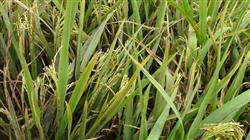
I. OccurrenceRice blast: Rice leaf blast has now appeared in Helan, Qingtongxia and other places. The first appearance date was June 13, about 10 days earlier than last year. Especially after the rainfall on July 7 and 12, the field humidity was relatively high, which was very favorable for the development of leaf blast. A recent general survey in Qingtongxia showed an average diseased field rate of 16.7%, a diseased plant rate of 2.2%, and a diseased leaf rate of 0.68%. In Helan, it occurred sporadically in some drill-seeded fields. Ear-neck blast will appear at the end of July and the beginning of August. The meteorological forecast shows that in August the temperature across the region will be relatively high and precipitation in the irrigation area will be relatively low, which is unfavorable for the occurrence and development of ear-neck blast. It is expected that ear-neck blast will generally occur at a mild-to-moderate level, with moderate to severe occurrence in fields where large areas of susceptible varieties are planted in some localities. Even so, all rice-growing counties still must not take it lightly and should strengthen monitoring. For fields with disease centers, farmers should immediately be organized to spray pesticides to block the disease centers and control the spread of fungal spores. In mid- and late July, general control should be carried out in fields where leaf blast has already occurred and in fields with high density and vigorous growth, to control the development of leaf blast and prevent the occurrence of ear blast. In early and mid-August, fields where ear-neck blast has already occurred should be sprayed promptly to control the spread of the disease. Rice planthopper: A survey in Wuzhong on July 10 found a 42% insect-hole rate; in 50 sweep-net passes, there were 32 adult brown-backed planthoppers, 10 white-backed planthoppers, 37 long-winged forms, and 5 short-winged forms. There were 60 white-backed planthopper nymphs and 151 brown-backed planthopper nymphs. A survey in Qingtongxia on July 10 found 24 insects per 100 hills.
-
Detailed Explanation of the Grading Standards and Control Methods for Rice Blast
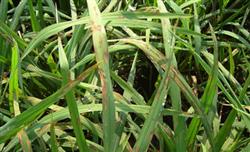
Grading standards Leaf blast: Grade 1 occurs sporadically, and disease can only be seen upon careful investigation. Grade 2 has slightly more incidence, with diseased leaves concentrated in the lower part. Grade 3 has widespread incidence, with diseased leaves concentrated in the middle and lower parts. Grade 4 has relatively severe incidence, with diseased leaves concentrated in the middle and upper parts, and a small number of patches appearing. Grade 5 has severe incidence, with obvious patches...
-
Detailed Explanation of Rice Blast Resistance Breeding Techniques
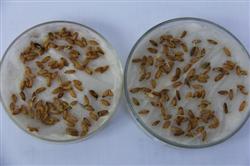
The main diseases transmitted by rice seeds include bakanae disease, rice blast, rice false smut, bacterial leaf blight, and striped virus disease transmitted by the small brown planthopper at the seedling stage. Currently, it is time for soaking rice seeds in Qilin District. When soaking rice seeds, all demonstration households must insist on soaking seeds with fungicides, the main purpose of which is to kill the pathogens carried by rice seeds...
-
Symptom Identification and Control Methods of Rice Blast Leaf Spot on Water Bamboo
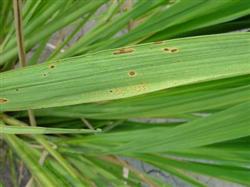
Rice blast leaf spot is a major disease of water bamboo, widely distributed and commonly occurring, found in all water bamboo growing areas, with more severe incidence in summer and autumn, diseased plants often reaching 80%-100%, significantly affecting water bamboo production. [Symptoms] This disease mainly affects the leaves. The lesions initially appear as small brown necrotic spots, which later develop into nearly oval to spindle-shaped...
条件筛选