-
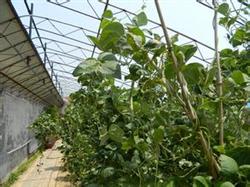
For kidney beans, remove leaves first, then pinch the growing tips: earlier harvest brings higher returns
Currently, greenhouse-cultivated kidney beans are in the vine-extension and flowering stage. How can you ensure a bumper harvest? Here, the reporter suggests that vegetable growers grasp the following key measures for management. First, pinch the tips at the right time. Greenhouse kidney beans and open-field kidney beans have different cultivation environment conditions. Because the temperature inside the greenhouse is higher, the growth rate...
-
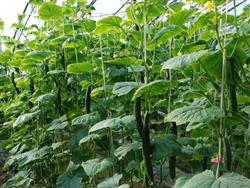
High returns from using the five-change planting method for overwintering cucumbers
Change dense planting of seedlings to rational sparse planting. In winter, temperatures are low and light is weak, so crop photosynthesis is relatively poor, and only rational sparse planting can achieve high yields. If plants are too dense, they will also grow tall and spindly as they compete for light, and the fruit-setting rate will decline. Poor ventilation also makes them prone to infection by multiple diseases, and dense leaves make spraying difficult. Once the disease spreads, it is very hard to cure completely. Flat beds...
-

What Are the Benefits of Returning Wheat Straw to the Field? Methods and Precautions Explained in Detail
I. Benefits of Returning Wheat Straw to the Field. Returning wheat straw directly to the field not only reduces the number of tillage operations in the wheat field and lowers the cost of @#@245@#@ production, but also achieves rational use of the high-stubble wheat straw resource, avoids the practice of burning wheat straw, and helps conserve soil and water. After wheat straw is returned directly to the field, the straw covering the plow layer can reduce surface runoff during the rainy season, lessen soil compaction and cracking, and improve the soil's capacity to store water and conserve moisture; after the wheat straw decomposes, it can increase soil organic matter content, improve soil physical and chemical properties, and provide crops with various nutrient elements
-
Rice straw return technology is being vigorously promoted and applied.
Vigorously promoting rice straw return is one of the most economical and effective ways to recycle nutrients through the soil-crop-soil cycle. It not only plays a very important role in improving soil and building up soil fertility, but also has great significance for improving soil potassium and silicon nutrient conditions, balancing crop nutrition, and alleviating the contradiction between the shortage of potassium fertilizer resources in our country and the excessively rapid rise in chemical fertilizer prices. 1. Increasing soil organic matter content. Rice straw has a high organic matter content. Generally, dry rice straw has an organic matter content of 40%. After being returned to the field, it is beneficial to the
-
Correct Methods and Technical Key Points for Returning Rice Straw to the Field
1. Rice straw mulching in wheat fields. After wheat sowing is completed, use 250-300 kg of rice straw per mu, cut into 10-20 cm straw segments, and spread evenly over the field so that the straw does not form piles and the soil is not left exposed. 2. Rice straw mulching in rapeseed fields. When transplanting rapeseed, plant the seedlings according to the specified spacing into holes with sufficient basal fertilizer, cover with soil, and then evenly spread rice straw over the whole field at 300 kg/mu, so that the straw does not cover the holes (seedlings) and the soil is not left exposed, while also applying integrated chemical weed control and necessary field management measures. 3. Drainage and
-
How to Return Rice Straw to the Field? A Detailed Guide to Five Practical Techniques
1. Short-cut rice straw incorporation by plowing technique. Cut the rice straw by hand or machine into lengths of 15-20 cm, and spread it evenly over the paddy field. Generally, the amount of dry rice straw spread per mu is 200-250 kg; if early rice straw is used for return, the amount spread per mu of main field is 1/2 or 2/3 of the total rice straw per mu. After the rice straw is spread, on the basis of the original fertilizer amount, apply an additional 8-12 kg of ammonium bicarbonate or 5-6 kg of urea per mu as base fertilizer; if it is a cold-waterlogged field, apply 15-25 kg of lime per mu in combination to accelerate the softening and rotting of the rice straw. The final
-
Garlic-Ginger Intercropping Brings Good Returns: A Full Analysis of the Planting Advantages
In the history of Zhucheng City, Shandong Province, ginger was mostly grown as a sole crop. Trials and demonstrations of garlic-ginger intercropping began in the 1980s and achieved relatively good economic returns. However, because the intercropping techniques were not fully matched, for example no intercropping rows were left, the intercropped ginger bulbs became smaller, and some even failed to meet export standards, which dampened ginger growers' enthusiasm for intercropping. In order to explore the cultivation techniques for garlic-ginger intercropping, the author carried out multiple trials and survey analyses from 1992 to 1995 in Chengguan Town, Lubiao Township and other places, and summarized a matched set of techniques suitable for local garlic-ginger intercropping. After extension, a double
-
Detailed Explanation of the Technical Key Points for Returning the Full Amount of Wheat Straw to the Field
Crop straw is an important by-product of crops. It is also an important production resource for agriculture and industrial production. Returning crop straw to the field not only avoids the environmental pollution problems caused by rotting and burning, and achieves feeding the land with the land itself, but also consolidates the foundation of soil fertility for greatly increasing soil organic matter content, improving soil structure, building up soil fertility, strengthening the quality construction of cultivated land, and raising crop yield and quality. In every agriculturally developed country in the world, great attention is paid to the scientific rationality of the fertilization structure and the
-
Key Technical Points for No-Till Planting with Rice Straw Return
No-till technology with rice straw return refers to a simple planting method in which, after the rice harvest, the rice straw is spread evenly over the field, no plowing is done, and only chemical weed control is carried out before wheat can be sown. This technology was successfully developed in May 2000 through dedicated experimental research by the Chengdu Second Institute of Agricultural Sciences. The no-till wheat planting technology with rice straw return fully combines the advantages of straw return, no-till, and broadcasting, and scientifically assembles them into a complete new technology package, which has not yet been formally reported at home or abroad. Experimental research shows that this comprehensive supporting technology not only increases
-
Sweet potato starch is in high demand in the market, and timely processing yields high returns.
Sweet potato starch occupies an increasingly important position in people's daily diet. Potato-based chemical products have now become the main raw materials for chemical products such as lactic acid, citric acid, disposable tableware and degradable agricultural mulch film. It is understood that the current price of refined white potato starch has risen by nearly 10% compared with last year, and the reason for this price trend is undoubtedly the supply-demand gap for sweet potato starch. Relevant data show that at present, the demand for sweet potato starch in the domestic market alone is more than 1 million tons, while the production volume is far less than this number.
条件筛选