-

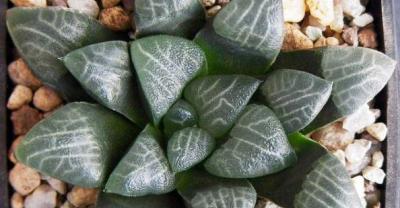
How to Grow and Care for the Succulent Red Leaf Festival (Hongyeji)
Red Leaf Festival (Hongyeji) thrives in a warm, dry, sunny environment and is drought-tolerant. It can withstand indoor low temperatures down to -4°C as long as the potting soil is kept dry; at -4°C the leaves will look slightly...
-
Alocasia amazonica care guide, plus yellowing, softening, rotting leaves, dropped leaves, and withered leaf tips
How do you care for Alocasia? Anyone who loves flowers and plants cares about this kind of question. People who like growing Alocasia are probably drawn to its lotus-like shape, ...
-
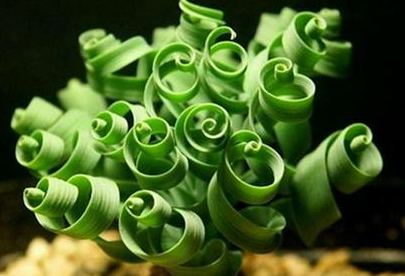
How to grow Albuca namaquensis? Causes of and solutions for withered leaf tips
When it comes to this Albuca namaquensis, it is very good-looking, and it really does look remarkably like a spring. Let's take a look at how to grow Albuca namaquensis? What to do when the leaf tips of Albuca namaquensis dry up: How to grow Albuca namaquensis: Albuca namaquensis, also known as spiral grass, gets its name because its leaves grow in a spiral, with a shape closely resembling a spring
-

Red-leaf cherry blossom is a colorful-leaf landscape tree species with high ornamental value.
Red-leaf cherry blossom: a variety of the magnificent cherry blossom (Prunus serrulata), a deciduous small tree with large pink double flowers. Its leaves are purple-red for three seasons: in early spring the emerging leaves are deep red, from May to July they are bright red, then the older leaves gradually turn deep purple, and in late autumn when frost comes the leaves turn orange-red. The cherry blossom is a famous flowering tree; the red-leaf cherry blossom offers both flowers and foliage to admire, making it a precious ornamental colorful-leaf tree species for landscape gardens and urban greening, and also the most promising tree species to recommend first.
-
Variety Characteristics and Planting Methods of the Red-Leaf Cherry Blossom
The red-leaf cherry blossom is a variety of the magnificent cherry blossom. After many years of selective breeding abroad, its traits have become stable. The flowers are very large, pale red, double-petaled, and have long stalks. In Shandong, it blooms in April and May, with the flowers opening before the leaves or at the same time as the leaves, and the blooms are large and showy. After the leaves emerge, they are dark red in early spring, bright red from May to July, gradually turning deep purple in the hot and rainy season, and the leaves are large and thick, turning orange-red when frost arrives in late autumn. The red-leaf cherry blossom is best propagated by grafting and cuttings. Grafting can be done between March and April or between July and August
-
What to do when cotton develops red leaf blight during the boll-setting stage
Control measures for cotton red leaf blight: 1. Apply fertilizer reasonably, and skillfully apply the cotton topping fertilizer; nitrogen, phosphorus and potassium should be applied together or foliar fertilizer should be applied. 2. Strengthen field management, cultivate frequently, improve root respiration conditions, promote root development, prune and remove side branches in time, remove old leaves and control pests and diseases. 3. Spray for protection, using 70% mancozeb or 75% chlorothalonil 600-800 times solution or 70% thiophanate-methyl 800-1000 times solution plus foliar fertilizer (potassium dihydrogen phosphate, Lvzhiyuan, etc.) for spraying, once every 5-
-
Occurrence Patterns and Control Methods of Cotton Red Leaf and Stem Blight
Disease symptoms and occurrence patterns: Cotton red leaf and stem blight is an explosive disease that frequently occurs in the middle and late stages of cotton growth. It can cause leaves to turn red from bottom to top until they drop off. The leaf veins remain green, the leaf mesophyll turns red, and the leaves become thicker, brittle, and wilted before finally dropping. When the stem is cut open, it does not change color, which distinguishes it from cotton Fusarium and Verticillium wilt. Generally, in old cotton-growing areas, the disease is more severe in cotton fields with continuous cropping year after year, sandy soil, too shallow a plow layer, or insufficient fertilizer lacking potassium fertilizer. Drought in the middle and late stages, along with severe potassium and zinc deficiency in the soil, can also easily accelerate the occurrence of this disease.
-
What are the three main causes of cotton red leaf stem blight?
Cotton red leaf stem blight is a physiological disease caused by potassium deficiency. It occurs in the middle and late stages of cotton growth, and in dry years the occurrence and severity of damage are more serious. In the field, cotton generally begins to show symptoms at the bud stage, and the disease is most severe during the boll-setting and boll-opening stages. Symptoms mainly appear on the leaves. Diseased leaves develop from top to bottom and from the outside inward. Diseased leaves begin to lose green color from the edges, first turning yellow, then producing red spots, and finally the whole leaf turns red, the mesophyll thickens, wrinkles and becomes brittle, while the veins remain green. In severe cases, the leaves of the whole plant lose green color, then turn red and brown, the leaves scorch and fall off, leaving bare stems, and the plant
-
How to prevent cotton red leaf stem blight? These integrated measures must be mastered
Cotton red leaf stem blight is a physiological disease. In recent years, it has occurred in large amounts in the cotton region of the Yangtze River Basin in our area. It begins at the early flowering stage, and is more severe and widespread from the full flowering stage to the boll-setting stage. In our area specifically, it occurs sporadically in July and August. It reaches its peak from mid-to-late September to October. Lightly affected plants are yellow and thin, with few and small bolls, short fiber, and poor boll opening; severely affected plants die prematurely, and the bolls cannot mature, greatly affecting yield. 1. Disease symptoms. At the early stage of the disease, red and purple spots appear on the leaves, gradually spreading until the whole leaf turns red
-
How to prevent and control cotton red leaf stem blight? A full analysis of control measures
I. Symptom identification After the plant is affected, the leaves turn dark green and become thick and brittle, then small red dots are scattered on the leaves, and finally the whole leaf turns red while the veins remain green, which is red leaf stem blight. When the disease is severe, the base of the petiole becomes soft, loses water and shrinks, causing the leaves to wither and fall off, and the top of the stem becomes scorched and dry. At the same time, it easily triggers repeated infection by target spot and brown spot, causing the diseased plant to scorch and die. Some plants can still grow adventitious buds after the diseased leaves fall off. Plants with severe and early onset are short, with poor root development, and both the main root and lateral roots are
条件筛选