-

Yellow-brown patches on Cymbidium sinense leaves and withered leaf tips: disease or unsuitable soil and water?
The leaves of Cymbidium sinense have irregular yellow-brown patches and the leaf tips are withered and dry. Is it disease or failure to adapt to the soil and water?
-

What to do about yellowing, withered leaves on a fiddle-leaf fig? Here are the right remedies
What to do about yellowing, withered leaves on a fiddle-leaf fig
-
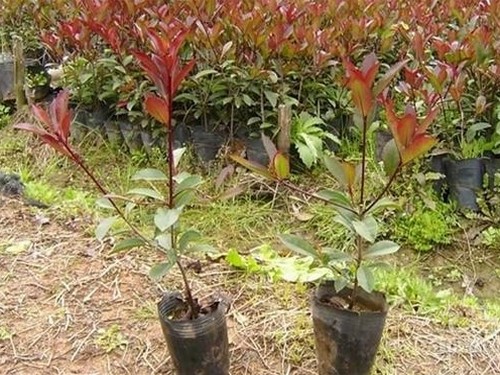
Detailed Guide to Making and Managing Red-Leaf Barberry Bonsai
Red-leaf barberry blooms with yellow flowers in spring and bears red berries in autumn; it is an ornamental shrub beautiful in leaf, flower and fruit alike. It is suitable for use in gardens as a flowering hedge, planted in groups at the corners of garden paths, edging large flower beds, or pruned into symmetrical spherical shapes for companion planting. It can also be dotted among rocks or beside ponds. It can also be made into bonsai; widely used in landscaping, it delivers excellent greening results.
-
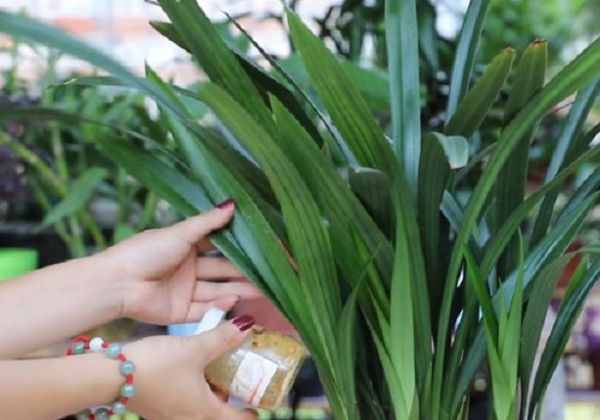
How to fix yellowing orchid leaves and scorched, withered leaf tips
What to do when orchid leaves turn yellow and leaf tips wither and scorch
-

Detailed Guide to Making a Red Leaf Barberry Bonsai
Red leaf barberry is a deciduous shrub with red-brown branches and leaves. It likes light and tolerates shade, is not demanding about soil, has strong sprouting ability, and tolerates pruning. It is one of the greening tree species in northern China. In gardens it is often used with evergreen tree species for block color arrangements, and can be used to arrange flower beds and flower borders. It is an important tree species for color block combinations in landscape greening.
-

How do you distinguish the appearance of the Gold and Silver Scale Tancho Koi from the Red Pine Leaf Koi?
Introduction to the Gold and Silver Scale Tancho Koi As is well known, the Tancho Koi represents the meaning of good fortune descending upon one's head and a career in officialdom advancing smoothly, making it deeply favored by those in official circles. However, with the appearance of the Silver Scale Tancho Koi, a new favorite in the world of Tancho Koi was born. The Gold and Silver Scale Tancho...
-
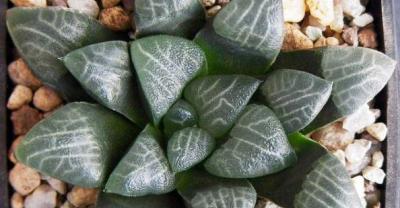
Alocasia amazonica care guide, plus yellowing, softening, rotting leaves, dropped leaves, and withered leaf tips
How do you care for Alocasia? Anyone who loves flowers and plants cares about this kind of question. People who like growing Alocasia are probably drawn to its lotus-like shape, ...
-
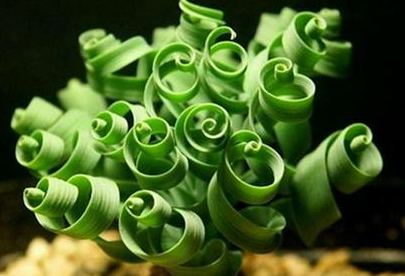
How to grow Albuca namaquensis? Causes of and solutions for withered leaf tips
When it comes to this Albuca namaquensis, it is very good-looking, and it really does look remarkably like a spring. Let's take a look at how to grow Albuca namaquensis? What to do when the leaf tips of Albuca namaquensis dry up: How to grow Albuca namaquensis: Albuca namaquensis, also known as spiral grass, gets its name because its leaves grow in a spiral, with a shape closely resembling a spring
-
How to prevent and control cotton red leaf stem blight? A full analysis of control measures
I. Symptom identification After the plant is affected, the leaves turn dark green and become thick and brittle, then small red dots are scattered on the leaves, and finally the whole leaf turns red while the veins remain green, which is red leaf stem blight. When the disease is severe, the base of the petiole becomes soft, loses water and shrinks, causing the leaves to wither and fall off, and the top of the stem becomes scorched and dry. At the same time, it easily triggers repeated infection by target spot and brown spot, causing the diseased plant to scorch and die. Some plants can still grow adventitious buds after the diseased leaves fall off. Plants with severe and early onset are short, with poor root development, and both the main root and lateral roots are
-
Golden Locust is an excellent colored-leaf tree species
Robinia pseudoacacia 'Frisia', of the Fabaceae family, genus Robinia, is a broadleaf deciduous tree. The twigs are thorny, with pinnate compound leaves; the foliage is golden yellow in spring, turning yellow-green in summer and orange-yellow in autumn, with rich and extremely beautiful color changes. It blooms in early summer, with white flowers. Native to northern America, it loves sunlight, tolerates slight shade when young, and can adapt to acidic, calcareous and alkaline soils; it has a shallow root system, is not tolerant of waterlogging, and grows rapidly. It is suitable for growing in the Three-North region. It is suitable as a specimen landscape tree and
条件筛选