-

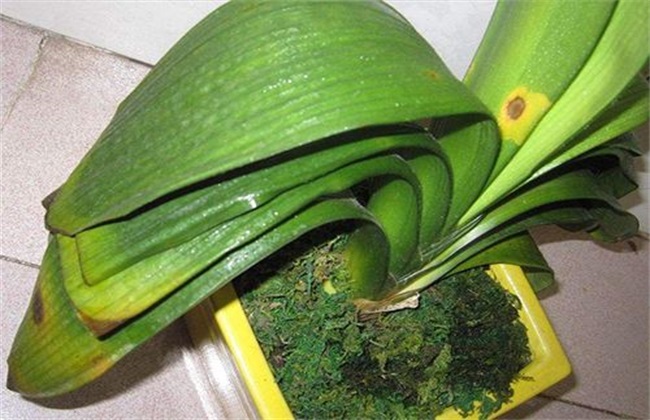
What to do about yellowing, withered leaves on a fiddle-leaf fig? Here are the right remedies
What to do about yellowing, withered leaves on a fiddle-leaf fig
-
-

Red-leaf cherry blossom is a colorful-leaf landscape tree species with high ornamental value.
Red-leaf cherry blossom: a variety of the magnificent cherry blossom (Prunus serrulata), a deciduous small tree with large pink double flowers. Its leaves are purple-red for three seasons: in early spring the emerging leaves are deep red, from May to July they are bright red, then the older leaves gradually turn deep purple, and in late autumn when frost comes the leaves turn orange-red. The cherry blossom is a famous flowering tree; the red-leaf cherry blossom offers both flowers and foliage to admire, making it a precious ornamental colorful-leaf tree species for landscape gardens and urban greening, and also the most promising tree species to recommend first.
-
Variety Characteristics and Planting Methods of the Red-Leaf Cherry Blossom
The red-leaf cherry blossom is a variety of the magnificent cherry blossom. After many years of selective breeding abroad, its traits have become stable. The flowers are very large, pale red, double-petaled, and have long stalks. In Shandong, it blooms in April and May, with the flowers opening before the leaves or at the same time as the leaves, and the blooms are large and showy. After the leaves emerge, they are dark red in early spring, bright red from May to July, gradually turning deep purple in the hot and rainy season, and the leaves are large and thick, turning orange-red when frost arrives in late autumn. The red-leaf cherry blossom is best propagated by grafting and cuttings. Grafting can be done between March and April or between July and August
-
Red-leaf privet is a common landscaping nursery stock variety
Red-leaf privet is a horticultural cultivar of the genus Ligustrum in the family Oleaceae. It is an evergreen small tree with opposite simple leaves; the branchlets are slightly covered with fine hairs, and the leaves are ovate, ovate-round to ovate-elliptic, thin leathery, extremely similar in leaf shape to Chinese privet (Ligustrum sinense), with stronger sprouting ability, faster growth and vigorous growth. Its new shoots and young leaves are purplish red, and against the backdrop of the old leaves they appear all the more vivid and dazzling. After being pruned several times, the new branches become dense and the whole crown turns purplish red, making it even more gorgeous and striking among green plant clusters. After winter sets in, the whole plant turns purplish black again, standing out even more among all things. Red-leaf privet
-
Golden-leaf dawn redwood is a new and superior colored-leaf tree species
Dawn redwood (Metasequoia glyptostroboides) is the only surviving species of the genus Metasequoia in the family Cupressaceae. This species was once thought to be extinct, until it was discovered in 1941 in the Lichuan area of Hubei, China, and afterwards this plant was also found successively in the Wanxian area of Sichuan. In 1947, dawn redwood seeds were introduced to the Arnold Arboretum in the United States, and from there spread to botanical gardens around the world. In 1948, "dawn redwood" and its scientific name were formally named, and since then it has enjoyed great fame in China and even the whole
-
Golden Locust is an excellent colored-leaf tree species
Robinia pseudoacacia 'Frisia', of the Fabaceae family, genus Robinia, is a broadleaf deciduous tree. The twigs are thorny, with pinnate compound leaves; the foliage is golden yellow in spring, turning yellow-green in summer and orange-yellow in autumn, with rich and extremely beautiful color changes. It blooms in early summer, with white flowers. Native to northern America, it loves sunlight, tolerates slight shade when young, and can adapt to acidic, calcareous and alkaline soils; it has a shallow root system, is not tolerant of waterlogging, and grows rapidly. It is suitable for growing in the Three-North region. It is suitable as a specimen landscape tree and
条件筛选