-

Ministry of Agriculture Issues 2014/2015 Technical Guidance on Winter Rapeseed Production
Oil Crops Expert Steering Group of the Ministry of Agriculture, National Agricultural Technology Extension Service Center. This year's summer-harvested rapeseed continued to increase and once again hit a record high. The meteorological department predicts that, affected by an El Nino event, low temperatures and continuous rain may occur in the Yangtze River Basin in autumn, while the harvest period of the preceding rice crop will be delayed, which will adversely affect timely sowing and transplanting of rapeseed.
-
Bumper Grape Harvest Meets Weak Demand, Sales Under Pressure in Many Parts of the Country
Autumn has arrived, and all across the country it is the good season when grape varieties come onto the market one after another to treat people's taste buds. At this time of year in the past two years, grape growers would smile from ear to ear because of both a bumper harvest and good sales. This year, however, the nationwide grape market has
-
How can the rapeseed industry be made stronger? Five provinces join hands to promote development
Hubei Daily dispatch (reporter Wu Wenjuan, correspondent Zhong Ping) On the 12th, at the Yangtze River middle and lower reaches rapeseed yield increase model research technical exchange meeting held in Wuhan, heads of agricultural departments from five provinces - Hunan, Sichuan, Jiangxi, Jiangsu and Hubei - as well as rapeseed experts, discussed tackling ⟦4 <p> Hubei Daily dispatch (reporter Wu Wenjuan, correspondent Zhong Ping) On the 12th, at the “Yangtze River middle and lower reaches rapeseed yield increase model research technical exchange meeting” held in Wuhan, heads of agricultural departments from five provinces - Hunan, Sichuan, Jiangxi, Jiangsu and Hubei - as well as rapeseed experts, held discussions on overcoming technical challenges in rapeseed breeding, transplanting and segmented harvesting.</p> <p> Experts explained that in recent years, despite repeated calls, the rapeseed planting area has been difficult to expand, mainly because the level of rapeseed mechanization is low, especially the lack of new early-maturing and very early-maturing varieties. In 2012, the national level of mechanized rapeseed planting and mechanized harvesting stood at 12.3% and 13.3% respectively, far lower than other crops.</p> <p> To keep the “oil bottle” stable, in April last year, the Ministry of Agriculture launched the Yangtze River middle and lower reaches rapeseed yield increase model research project, led by the Hubei Provincial Department of Agriculture, with the participation of the departments of agriculture of the four provinces of Hunan, Sichuan, Jiangxi and Jiangsu, to overcome the bottlenecks of early-maturing, high-yield, high-oil, high-resistance varieties and mechanization technology in rapeseed production.</p> <p> Over more than a year, new breakthroughs have been made in research on early-maturing varieties. Hubei has bred several promising early-maturing varieties and combinations such as “Shengguang 127” and “Huazao 291”, which can be harvested from late April to early May in the southeast and central regions. They are suitable varieties for the “rapeseed-rice-rice” combination, can ease the tight conflict in crop rotation, and can expand the rapeseed planting area in triple-cropping regions; in Hunan, a batch of early-maturing varieties (combinations) maturing around April 25 have been bred, and a batch of extremely early-maturing rapeseed lines sown in the Changsha area at the end of October and maturing around April 20. At the same time, the project areas have balanced grain and oil and pursued coordinated development, exploring triple-cropping planting models for grain and oil such as “rapeseed-rice-rice” and “rapeseed-rice-ratoon rice”.</p> <p> The meeting revealed that through large-scale promotion of mature technical models, by 2020, the rapeseed area in the Yangtze River middle and lower reaches project areas will achieve stable development, reaching more than 73 million mu, an increase of about 7 million mu; total output will approach 10 million tons, an increase of 1.3 million tons; the full-process mechanization rate of rapeseed will increase by 15 percentage points; and grain yield per unit area will increase by an average of 1.5 percentage points per year.</p>
-
Domestically grown kiwifruit passed off as imported, the most expensive sells for over a hundred yuan per jin
Around the Mid-Autumn Festival, kiwifruit comes fresh onto the market. Reporters recently visited the market and found that the prices of kiwifruit vary greatly, with the cheapest costing only about 3 yuan per jin, while the most expensive reaches over a hundred yuan per jin. Where does such a big price gap come from? Kiwi
-
Oilseed rape polyploid genome jointly decoded by Chinese and foreign scientists
Recently, led by the International Brassica Genome Sequencing Consortium, the genome sequencing of Brassica napus (oilseed rape) was completed for the first time. This is the first complete sequencing and assembly of the complex genome of a traditional polyploid crop internationally, and it also completed a systematic comparison and
-

A Detailed Guide to Grape Cultivation Techniques and Management Methods
Organic Grape Cultivation There are more and more types of fruit cultivation nowadays. Do you know how to grow any of them? Do you know how to grow grapes? If not, then come and take a look. Climate and Soil Suitability Grapes are a temperate fruit tree, and when cultivated in subtropical Taiwan, China
-
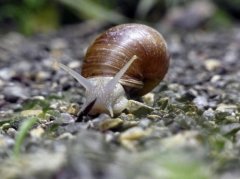
Control methods for the grape flat snail, practical tips for pest and disease prevention and control
Control of the flat snail in vineyards: Grapes also have many pests and diseases. Today let us first learn about snail control. The vineyard flat snail is an important pest of grapes, and traditional control methods are not very effective. Using the PET bottle method to control the flat snail can achieve 95-100%
-

What are the nutritional benefits and dietary contraindications of grapes?
Do you like eating grapes? Then do you know what benefits they have? What components do grapes contain? Let's take a look together. Grapes are plants of the Vitaceae family and have been consumed by humans since prehistoric times. After the discovery of the New World, European grapes were immediately introduced to the Americas; grape cultivation in China began in the Western Han Dynasty, and legend has it that Zhang Qian, on his mission to the Western Regions, brought back European grape varieties from the Kingdom of Dayuan.
-
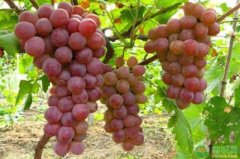
What are the main grape diseases? Cause analysis and pest and disease control methods
What are the ecological causes of the main grape diseases? Each main grape disease occurs in a different period. Besides understanding its occurrence period, one must also grasp the optimal conditions for the onset of each individual disease. For example, grape downy mildew occurs in Taiwan, China from May to November. Continuous rainfall during the plum rain season and typhoon season is most favorable for the onset of downy mildew. Once it occurs, the pathogen multiplies rapidly and in large quantities and spreads quickly with wind and rain, followed by severe outbreaks.
-

Is the Lady's Finger grape genetically modified? Understanding its calories and nutritional value in one article
There is a grape that looks just like a beauty's finger painted with red nail polish, so it is called Lady's Finger. Because of its appearance, rumors spread online that it is a genetically modified food, but it actually is not. It is simply a newly bred fruit, sweet and refreshing in taste, low in acid content,
条件筛选