A Detailed Guide to Grape Cultivation Techniques and Management Methods
Organic Grape Cultivation
There are more and more types of fruit cultivation nowadays. Do you know how to grow any of them? Do you know how to grow grapes? If not, then come and take a look.
Climate and Soil Suitability
Grapes are a temperate fruit tree, and when cultivated in subtropical Taiwan, China, they suffer from numerous pests and diseases, making management relatively difficult. Grapes in Taiwan, China are mainly cultivated using a two-harvest-per-year system. For the summer crop, bud forcing is carried out in winter. If bud forcing is too early, it is easy to encounter damage from late frost, causing flower buds to wither and die; if bud forcing is too late, the late fruiting stage encounters high temperatures and high humidity, leading to many fruit diseases and severe rotting, as well as poor coloring. For the winter crop, if bud forcing is too early, downy mildew and other damage often occur due to high temperatures and humidity in the early stage, or flower buds may be damaged by typhoons; if bud forcing is too late, the late fruiting stage is prone to damage from winter monsoons, causing early defoliation so that fruit quality cannot reach the desired target.
From a climatic standpoint, the most suitable areas for grape cultivation in Taiwan, China are the hillside lands along the Zhuoshui River, Dajia River and Da'an River. The main reason is that these areas are relatively sheltered from wind but have good ventilation and large day-night temperature differences, so both summer and winter crops can produce grape fruits with extremely beautiful appearance. However, the soil is rather acidic, so from the beginning of cultivation, calcium and magnesium materials must be applied every year to gradually raise the soil pH. A 5-hectare organic grape demonstration orchard is located at Baimaotai, Xinshe Township, Taichung County, on hillside land on the south bank of the upper Dajia River. The entire orchard adopts sod culture, with a beautiful environment and fresh air. As long as producers can earnestly cooperate with the guidance of the agricultural authorities and the Taichung District Agricultural Research and Extension Station and work hard, they can certainly produce organic grapes of the best quality. Another 5 hectares are located in Dacun Township, Changhua County, on neutral clay loam and silty clay loam alluvial soil from slate in the lower Zhuoshui River. The soil has high calcium and magnesium content and can produce grapes with the highest sugar content, but special attention must be paid to orchard drainage and disease control, especially correct timing of bud forcing. In addition, there is a widespread manganese deficiency, so manganese fertilizer should be supplemented to prevent manganese deficiency for easier success.
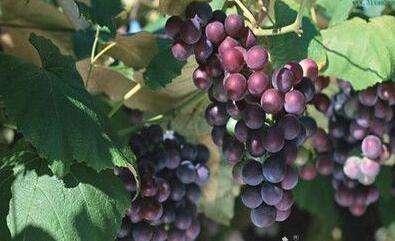
Fertilization
Immediately after grape harvest, apply organic fertilizer made from bagasse, rice husks, wood chips, peat, pig, cattle and sheep manure, oil seed cakes, rice bran, phosphate rock powder, oyster shell powder, etc. as base fertilizer, and immediately earth up and irrigate. The application rate is calculated at about 250-300 kg of nitrogen per hectare. For example, if the intended organic fertilizer has a nitrogen content of 2% and the intended nitrogen application rate is 250 kg, then the organic fertilizer application rate per hectare should be 250*100/2 = 12,500 kg. In addition to organic fertilizer, appropriate amounts of phosphate rock powder, guano, oyster shell powder, seaweed powder, etc. may be applied separately, along with phosphate-solubilizing bacteria, beneficial microorganisms, humic acid, etc. In the early fruiting stage, depending on growth conditions, an organic liquid fertilizer made from soybean powder, rice bran, seaweed powder, amino acids, eggs, beneficial microorganisms, brown sugar, etc. may be applied as appropriate, or fish essence, amino acids, seaweed extract, blood meal, etc. may be applied directly. In the middle and late stages, apply seaweed extract and, depending on soil conditions, apply calcium and magnesium materials as appropriate.
Sod Management
The entire orchard adopts sod culture. Remove as much as possible the more aggressive weeds such as goosegrass, dallisgrass, purple nutsedge, skunk vine and wild morning glory, and leave gentle weeds such as broadleaf carpet grass, carpet grass and bermuda grass, so that earthworms and other beneficial microorganisms and small animals in the soil can reproduce naturally, promoting the gradual loosening of soil structure, facilitating fertilization and normal growth and nutrient uptake by grape roots. When weeds grow too tall, use mechanical cutting as appropriate. Do not use any herbicide. At present, the main grass species in the Baimaotai organic grape orchard is carpet grass, while the grass composition in the Dacun organic grape orchard is more complex, including broadleaf carpet grass, bermuda grass and carpet grass. Using herbicides easily kills earthworms and causes soil hardening and salinization. If used during the fruiting stage, it causes poor fruit coloring, lower sugar content and loss of natural flavor.
Because frequent spraying of herbicides causes soil hardening and salinization,
resulting in poor grape growth or death.
Planting local dwarf bermuda grass or other gentle grass-family weeds
can help eliminate soil nematodes, pathogens and salts.
Pruning and Training
The pruning and training time for summer-crop grapes is approximately between December and February. Pruning too early may sometimes encounter late frost damage that causes flower buds to wither and die; pruning too late means the late fruiting stage encounters high-temperature, high-humidity weather, causing severe grape fruit rotting and poor coloring. The ideal pruning time in Dacun Township is mid-January, while Baimaotai can be slightly later. The pruning time for winter-crop grapes is between July and August. Pruning too early means the sprouting stage occurs under high temperature and high humidity, with severe downy mildew and rust disease; pruning too late means the late fruiting stage is prone to damage from winter monsoons, causing early defoliation and affecting fruit quality. The most appropriate pruning time is early August. During pruning, cut off the immature top branches or branches with poor positions, poor development and pest or disease damage, so as to facilitate ventilation and sunlight exposure, reduce pests and diseases and promote photosynthesis. Immediately after pruning, use a bud-forcing agent to force buds.
Pest and Disease Control
The main grape diseases include ripe rot, downy mildew, rust, powdery mildew, gray mold, black pox, leaf spot and bitter rot. Insect pests include coffee wood borer, yellow tussock moth, shrimp-shell hawkmoth, leaf roller, Kanazawa spider mite, scale insects, root-knot nematode and snails, but the greatest threat to organic grape cultivation is disease. Improper disease management often causes severe rotting and total crop failure. For ripe rot control, first pay attention to selecting good-quality organic fertilizer with high organic matter content, balanced nutrition and few miscellaneous bacteria. Poultry manure with many miscellaneous bacteria and not fully decomposed should be avoided. Oil seed cakes with high nitrogen such as soybean cake or peanut cake should not be used in large amounts. In addition, early bagging also has a good effect. Downy mildew and rust can be controlled with Bordeaux mixture. From sprouting to the flower bud stage, spray a mixture of phosphorous acid at 500 times, methionine at 1000 times and riboflavin at 30,000 times, and spray Bordeaux mixture made with slaked lime and copper sulfate at 300-500 times each once. After flowering and before bagging, spray the mixture of phosphorous acid, methionine and riboflavin again. After bagging, spray Bordeaux mixture made with slaked lime and copper sulfate at 300-500 times each plus neem oil at 300-500 times. In addition, spraying a mixture of comprehensive beneficial microorganisms at 500 times, wood vinegar at 600 times and neem oil at 300-500 times, or spraying copper acetate at 1000 times, is also effective.
Downy mildew and many other diseases can be controlled by spraying Bordeaux mixture plus neem oil
For ripe rot control, it is advisable to bag early, spray Bordeaux mixture plus neem oil, and avoid using too much nitrogen fertilizer, especially chicken manure.
For insect pest control, for coffee wood borer, yellow tussock moth, shrimp-shell hawkmoth, leaf roller and other noctuid moths, spray Bacillus thuringiensis (Bt) once every 10 days. For spider mites, spray sugar-vinegar solution, sugar-wood vinegar solution, fish essence, amino acids, seaweed extract, neem oil, potassium humate, etc. as appropriate. For scale insects, after harvest, spray the base with summer oil at 100-200 times plus camphor oil at 600-800 times. For nematodes, apply liquid fertilizer made from rice bran, brown sugar, shrimp and crab shell powder, comprehensive beneficial microorganisms or actinomycetes, and they will gradually be eliminated. For snail control, wrap plastic cloth, PET bottles or copper rings around the base of the trunk, or spray citronella oil, peppermint oil or tea seed meal extract.
For coffee wood borer control, spray Bacillus thuringiensis (Bt) about once every 10 days.
Harvest
Spring-crop organic grapes at Baimaotai begin to be harvested around late July. The coloring and appearance are both very good, the sugar content is about 17-18 degrees, the acidity is about 0.35-0.45%, and the quality is very good. Winter-crop organic grapes begin to be harvested around late December. The coloring and appearance are both very good, the sugar content is about 18-20 degrees, the acidity is about 0.3-0.45%, and the quality is excellent.
Spring-crop organic grapes at Dacun begin to be harvested around early July. Due to climatic influence, the coloring and appearance are slightly inferior, but the sugar content is about 17-19 degrees, the acidity is about 0.35-0.45%, and the flavor is very good. Winter-crop organic grapes begin to be harvested around late December. The coloring and appearance are both good, the sugar content is about 18-22 degrees, the acidity is about 0.3-0.4%, and the flavor is excellent.