-

Symptom Identification and Control Methods for Hydrangea Bud Blight
Hydrangea bud blight is also known as hydrangea gray mold. It damages the buds and flowers of the plant. Symptoms: In field-grown plants, it easily occurs in dense spherical flower clusters, causing them to develop water-soaked rot. In greenhouse cultivation, buds are prone to turning black and withering. Pathogen: The pathogen is Botrytis cinerea Pers., belonging to the Deuteromycotina, Hyphomycetes, Moniliales, genus Botrytis. Disease pattern: The pathogen overwinters as mycelium in diseased plant debris. In the following spring, it produces conidia
-
Hydrangea Care and Management Methods and Precautions Explained in Detail
Fertilizing: Hydrangeas love fertilizer, generally apply organic fertilizer once every half month. In the early growth stage, use more nitrogen fertilizer; during flower bud differentiation and bud formation, use more phosphorus and potassium fertilizer. You can also spray 0.1% to 0.2% monopotassium phosphate on the leaves 2 to 3 times, and stop fertilizing after the buds show color. Watering: Hydrangea leaves transpire heavily, so you must water promptly. Even brief drought-induced wilting can cause dry leaf edges and dead flowers. Especially in summer, you must shade and cool the plant to reduce transpiration and maintain air humidity above 60%. In addition, hy
-
A Detailed Guide to Hydrangea Cultivation: Planting Methods and Care Techniques
Hydrangea (Hydrangea macrophylla), also known as bigleaf hydrangea, snowball flower, and Ajisai, is an ornamental shrub of the genus Hydrangea in the family Saxifragaceae. It is an important greenhouse pot flower and a warm-region garden flower, widely cultivated around the world. Potted varieties grow about 30cm tall, with opposite leaves that are obovate or elliptical and coarsely serrated along the margins; leaf thickness varies by variety. The inflorescence is terminal, up to 20cm in diameter, nearly spherical, and corymb-shaped. The ornamental part is usually the enlarged petal-like sepals, 4 sepals, mostly sterile flowers, in white, purple, red, and pink
-
Hydrangea Fertilizer and Water Management Tips: Do These Well and It Will Bloom More Vigorously
Hydrangea, also known as florist's hydrangea, has many flowers, large blooms, bright colors, a long flowering period, and high ornamental value. Hydrangea can grow normally and bloom smoothly in fertile, well-drained acidic soil. Therefore, when caring for hydrangea, you must master the fertilizer and water management tips well: in early spring each year, combine repotting with improving the potting soil to prevent the soil from compacting and becoming alkaline. When repotting, remove about two-thirds of the old potting soil, use 5 parts leaf mold, 4 parts fully decomposed pond mud, 1 part clean fine river sand, mix in 15-20 grams of ferrous sulfate, stir thoroughly and evenly, then prepare
-
Overview of Hydrangea: A Comprehensive Guide to Hydrangeas
Hydrangea, also known as xiuqiu or ziyanghua, is a plant of the genus Hydrangea in the family Saxifragaceae. The flowers of hydrangea are pure white and full, large and beautiful, and their color can be red or blue, making them pleasing to the eye and refreshing to the spirit. It is a common potted ornamental flowering plant. Hydrangea is native to China and Japan. It was introduced to the United Kingdom in 1736. In Europe, cultivation is relatively common in the Netherlands, Germany, and France, and red, blue, purple, and other colored hydrangea varieties can be seen in flower shops. There are also quite a few hydrangeas planted in the ground in small courtyards and in front of buildings. At present, Germany's Rampp Jungpflanzen
-
Symptom Identification and Control Methods of Hydrangea Ringspot Virus
[Distribution and Damage] Hydrangea (Hydrangea macrophylla), also known as bigleaf hydrangea, is a deciduous shrub planted throughout China. Many viruses infect it, with ringspot being the most common. It is generally latent; severely affected plants are stunted with few or no flowers. [Symptoms] Leaves are crinkled, and stems sometimes show necrotic spots. In inoculated diseased plants, old leaves develop chlorotic spots, brown ringspots, or oak-leaf patterns. [Pathogen] The virus HyRSV, also belonging to the potato virus Y group. Particles are filamentous, measuring 47
-
What are the control methods for gray mold on hydrangea?
In Zhejiang, Shanghai, Jiangsu, Hebei, Beijing and other hydrangea native areas and introduction areas, it occurs to varying degrees. It harms the flowers, flower buds and young shoots of hydrangea, Chinese rose, pomegranate, ornamental peach and many other flowering trees and shrubs, causing the affected parts to soften and rot and reducing their ornamental value. Symptoms The lesions occur mainly on the flowers. At first, water-soaked irregular small spots appear on the petals, then gradually expand and can spread over the entire corolla and inflorescence. When flower buds are affected, irregular water-soaked small spots also appear, which can expand to the entire flower bud, and finally the flower bud softens and rots and cannot open. Young shoots are
-
Fish stocking should be arranged reasonably according to water body conditions.
During a "science and technology to the countryside" activity, the author learned that many fish farmers have had unsatisfactory yields and profits over the years in pond fish farming. The main reasons are that the fish stocked were not reasonably matched according to the feeding habits and behaviors of the fish, the varieties stocked were single, the quantities were too high or too low, and the sizes were small. This situation exists to some extent all over the country. The end of the year and the beginning of the year is the season when large quantities of fish are stocked in various places. In order to make full use of the water body, stock fish reasonably, and increase the yield per unit area of the water body, the key points for reasonably stocking fish according to local water conditions are as follows.
-
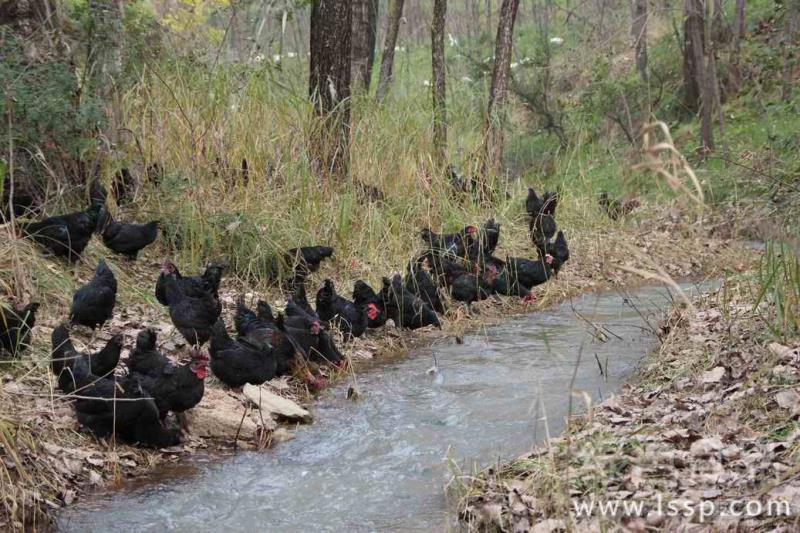
Silkie chickens are not suited to indoor cage-free rearing on wire netting; how can they be raised free-range at scale in woodland?
How to raise Silkie chickens, which are not suited to indoor wire-net rearing, free-range at scale in woodland
-
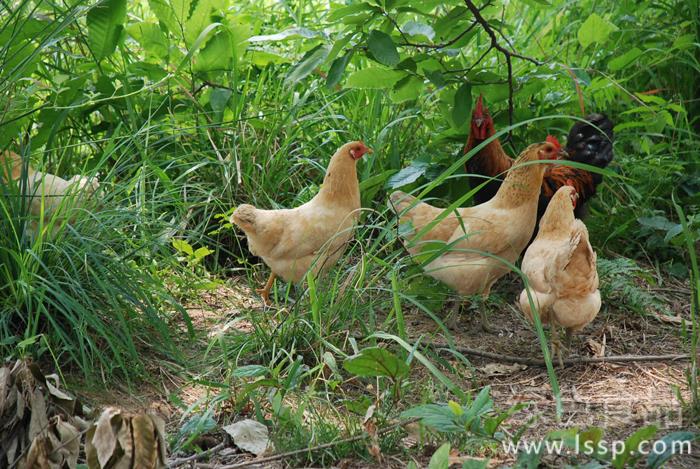
Free-range chickens are more popular than feedlot chickens, and new techniques bring high returns in raising them
Free-range chickens are more popular than feedlot chickens; new techniques bring high returns in raising free-range chickens
条件筛选