-

-
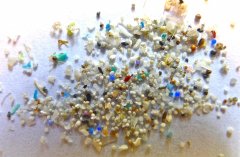
Bioplastics do not use petroleum and degrade very quickly. Is there a solution to the plastic waste crisis?
Plastic waste crisis? What can be done? Bioplastics do not use petroleum and degrade very quickly. Currently, a new study from Tel Aviv University in Israel describes the process technology for making bioplastic polymers derived from microorganisms that feed on seaweed.
-
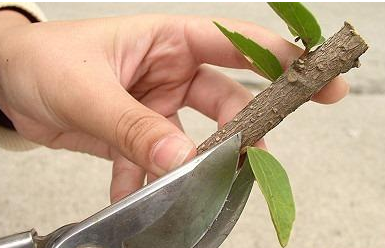
How to propagate camellia and fig by cuttings so they root quickly?
Cuttings are a propagation method for many plants. Taking cuttings looks very simple, but in many cases they are very hard to keep alive. Let's look at how to get flowering plants to root quickly from cuttings. The cutting methods really are a bit different for different flowers: spray the mother plant with rooting liquid.
-
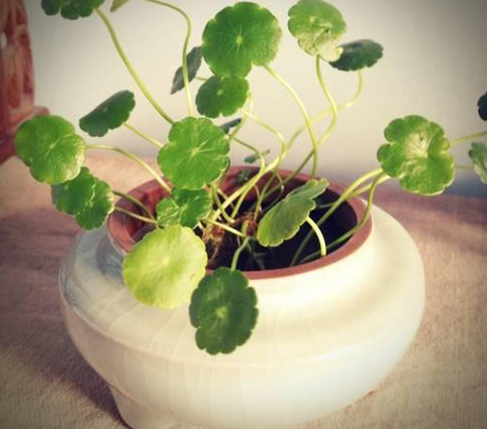
How to grow pennywort so it thrives and how to make it fill a pot quickly
When it comes to pennywort (Hydrocotyle vulgaris), many people like growing it in water, and the method is super simple. Let's see how to grow pennywort so it thrives, and how to grow it so it quickly fills a pot: if you want your pennywort to grow more lushly, or even want a few segments of pennywort rhizome to fill a whole pot within a few weeks
-

What is the difference between Solomon's seal (Yuzhu) and Siberian Solomon's seal (Huangjing)? A quick guide to tell the two apart
Yuzhu is the dried rhizome of Polygonatum odoratum, a perennial herb of the genus Polygonatum in the Liliaceae family. It was first recorded in the Shennong Bencao Jing, where it was listed as a top-grade drug under the original name Nülou. The Mingyi Bielu calls it Weirui, and in Hunan it is also called Weishen. Huangjing was first recorded in the Mingyi Bielu and listed as a top-grade drug. There are many botanical sources; broadly speaking, the commercial drug can be divided into two types: chicken-head Huangjing and ginger-shaped Huangjing. Chicken-head Huangjing is the dried rhizome of Polygonatum sibiricum, a few Polygonatum macropodum, and Polygonatum stenophyllum, all perennial herbs of the genus Polygonatum in the Liliaceae family; ginger-shaped Huangjing is the dried rhizome of Polygonatum kingianum, Polygonatum cyrtonema, and Polygonatum cirrhifolium, all perennial herbs of the genus Polygonatum in the Liliaceae family.
-
Detailed Explanation of Key Points in the Quick-Freezing Processing Technology for Icefish
Quick-frozen icefish are exported to Japan, Southeast Asia, Europe and other places, and are especially popular with Japanese consumers. With the continuous increase in icefish yields from reservoirs, quick-frozen icefish has become one of China's export aquatic products with a relatively high foreign exchange earning rate. 1. Preservation and transportation of raw fish. Icefish have small bodies and thin skin, are highly prone to spoilage, and have a strong seasonal production period. To ensure the quality of the icefish, ice can be brought aboard the boat during fishing so that preservation can be carried out immediately. The specific method is to first sort and classify the caught icefish on the boat,
-
Detailed Explanation of Key Operational Points for Peach Quick-Freezing Processing Technology
(1) Process flow: raw material selection → pitting and color protection → blanching and cooling → peeling → packaging and syrup injection → pre-cooling → quick-freezing → frozen storage. (2) Key operational points: Raw material selection. After peaches are harvested, ripe ones must be processed immediately; hard, unripe fruits need to be ripened. Properly ripened peaches have bright color, rich flavor, and are easy to pit and peel. Pitting and color protection: after the raw materials ripen, remove the pits with a small knife or a pitting machine, and immediately place the flesh into cold water to avoid contact with air and prevent discoloration. The pitting machine has flesh fragments attached,
-
Detailed Explanation of Key Technical Points in the Quick-Freezing Process for Exported Shrimp Meat
1. Process flow: Raw material acceptance → Raw material storage → Raw material thawing → Shrimp peeling → Acceptance → Washing → Soaking → Blanching → Cooling → Size grading → Freezing → Ice glazing → Metal detection → Boxing → Refrigerated transport 2. Operational key points 2.1 Raw material acceptance QC (quality control team) must inspect quality to prevent blackened shrimp. If blackened shrimp are found, promptly report back to the importer for handling. Keep a "Raw Material Acceptance Record" for each batch of raw materials. 2.2 Raw material storage: Store by container batch number at
-
Atlas honeysuckle is easy to propagate and quick to show results
This variety is an evergreen small shrub with strong upright growth; the upper part of the flowering branches does not twine, it branches abundantly, grows fast, and has dense flower buds, with 20 to 30 buds clustered together in a mass, making them easy to pick; the flowering period is from May to June. At 5 years old, the average yield is 180 kg of dried flowers per mu, the chlorogenic acid content is 5% to 5.8%, and it has strong disease resistance, tolerates poor soil, and is easy to propagate. It can be planted in mountain rock crevices and on slope embankments, on plain dams, weirs and ditches, and in open spaces and gaps around houses.
-
Detailed Explanation of Soft-Packaging Quick-Freezing Fresh-Keeping Technology for Oyster Mushrooms
Oyster mushrooms have a tender and crisp texture, making them inconvenient to transport and store. Especially during high-temperature periods and peak harvest seasons, if the processing capacity at the place of origin cannot keep up, exporting becomes difficult, and the problem of "difficulty in selling mushrooms" often arises. Therefore, the problems of oyster mushroom sales, transportation, storage, and processing should be fundamentally solved. There are three main traditional methods for storing oyster mushrooms: First, processing them into salted mushrooms for export and domestic sale. However, from the perspective of domestic sales, due to the high salt content, they need to be soaked repeatedly many times before consumption, which is not only time-consuming and laborious, but they still taste too salty when eaten, and the flavor deteriorates, making it difficult for consumers to
条件筛选