How to grow pennywort so it thrives and how to make it fill a pot quickly
When it comes to pennywort, many people like growing it in water, and the method is super simple. Let's see how to grow pennywort so it thrives, and how to grow it so it quickly fills a pot:
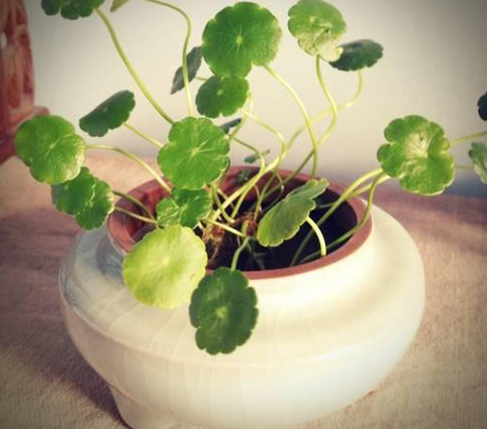
If you want your pennywort to grow more lushly, or even want a few segments of pennywort rhizome to fill a whole pot within a few weeks, that is not impossible. As long as the environment is suitable, even an extreme rhizome picked up from somewhere can fill a large pot within 3~4 weeks.
The most crucial point of care is to plant it in a half-soil, half-water way, keep it in an environment with good light and ventilation, and the temperature is best kept between 20~30°C. You can appropriately water it with some fertiliser water once or twice a month, and in less than a month, the pennywort will fill a large pot.
The pot above is pennywort grown in half water, half soil. It is an amphibious, creeping plant that is fairly robust and suited to rough care. When caring for it, be careful not to keep the environment too dark; keep it warm with plenty of light, and provide appropriate shade in summer, and it will maintain a consistently good growing state.
Take the pot of pennywort above: the sunlight was too strong and it got a bit scorched. At this point you can move it to a slightly shaded spot and give it plenty of water, and it will recover quickly. If there are many yellow leaves, just cut off all the yellow leaves, and in less than two weeks it will grow very lush leaves again.
Keep good ventilation, plenty of light and a suitable temperature, and it will keep growing. When ventilation is good, you can mist it often; in an environment with higher humidity, its leaves will grow larger.
That is all for the methods to make pennywort grow lushly. With this method, you will soon see your pennywort fill a pot.
Make your pennywort no longer sparse, and learn how to make pennywort grow well and strong
Pennywort has round, shield-shaped leaves like a copper coin, with long stalks and wavy edges, and it blooms small yellow-green flowers in summer and autumn. It grows segment by segment, with one leaf on each segment, and can keep extending. It is one of the aquatic plants that is both attractive and very easy to grow. So, would everyone like to know some knowledge and experience related to pennywort? Do you want to grow pennywort well? Today, the editor will introduce it to you next.
Pennywort leaves looking sparse?
Not everyone's pennywort grows very well. Look at the pot below; it looks a bit pitiful. If you say it is growing well, the leaves are sparse; if you say it is not growing well, it is still just about presentable. It just feels like it has been left unattended for a long time, thin and pitiful, with a look of malnutrition. If your pennywort is carefully cared for and still looks like this, then you need to read this!
How to make pennywort grow well and strong
First, cut off the withered leaves. Actually, these leaves can be thrown directly into the flower pot as nutrients, and after they rot they will turn into soil. But friends with a cleanliness obsession should just throw them away!
Cut off the withered leaves of the pennywort
Weeding: some pennywort looks like it is growing lushly, but in fact there may be a lot of weeds inside, creating a false appearance of lushness. So promptly pull out the small weeds inside, roots and all; do not give them any chance to grow.
Remove the weeds from the pennywort
Pinch the long stems shorter; they can be planted directly into other pots to strengthen the pennywort ranks.
Be sure to apply enough fertiliser, and prepare the richest fertiliser. Any organic fertiliser will do, but the prerequisite is that it must be decomposed. Beginners at growing flowers should not first copy those homemade household fertilisers, casually pouring milk or rice-washing water into it; it is not useful, and improper use can also cause the leaves to turn yellow.
Nutrients for pennywort
Use a small spoon to spread the fertilised soil spoonful by spoonful on the surface of the flower pot, as long as it does not press down on the leaves, and gently level it. A little fertiliser is enough for 1~2 months of growth.
Fertilising pennywort with a spoon
Or there is another simple method: put the fertiliser in a cup, add a small amount of water, and pour it into the pennywort pot. This can also be done once a week.
Applying liquid fertiliser to pennywort
After handling it, place it in the sunniest spot; it loves sunlight. Do not be afraid that the pennywort will be sunburned. Especially in summer, water it with half a cup of water every day and half a cup of fertiliser water every week. Repeating this cycle, ensuring the plant has sufficient nutrients and sufficient sunlight, you need not worry that it will not grow well. After about a week, small buds will begin to sprout below.
Pennywort sprouting
Gradually, the coin plant's leaves become more and more numerous, and your mood seems to become very good as well.
Pennywort growing leaves
The above is what I have learned today about aquatic plants. I hope flower lovers will find this article helpful after reading it. If you want to know more about aquatic flowers, please continue to follow our Succulent Garden, and we will provide you with more related content as soon as possible!
How to make pennywort grow well and strong?
Although pennywort's flowers are small and its leaves are round and green, it is very beautiful. But the pennywort in many flower lovers' homes has sparse leaves and does not look good at all. So how should you grow pennywort so it feels like it has exploded into a full pot!
Pennywort leaves looking sparse?
Not everyone's pennywort grows very well. Look at the pot below; it looks a bit pitiful. If you say it is growing well, the leaves are sparse; if you say it is not growing well, it is still just about presentable. It just feels like it has been left unattended for a long time, thin and pitiful, with a look of malnutrition. If your pennywort is carefully cared for and still looks like this, then you need to read this!
How to make pennywort grow well and strong
First, cut off the withered leaves. Actually, these leaves can be thrown directly into the flower pot as nutrients, and after they rot they will turn into soil. But friends with a cleanliness obsession should just throw them away!
Weeding: some pennywort looks like it is growing lushly, but in fact there may be a lot of weeds inside, creating a false appearance of lushness. So promptly pull out the small weeds inside, roots and all; do not give them any chance to grow.
Pinch the long stems shorter; they can be planted directly into other pots to strengthen the pennywort ranks.
Be sure to apply enough fertiliser, and prepare the richest fertiliser. Any organic fertiliser will do, but the prerequisite is that it must be decomposed. Beginners at growing flowers should not first copy those homemade household fertilisers, casually pouring milk or rice-washing water into it; it is not useful, and improper use can also cause the leaves to turn yellow.
Use a small spoon to spread the fertilised soil spoonful by spoonful on the surface of the flower pot, as long as it does not press down on the leaves, and gently level it. A little fertiliser is enough for 1~2 months of growth.
Or there is another simple method: put the fertiliser in a cup, add a small amount of water, and pour it into the pennywort pot. This can also be done once a week.
After handling it, place it in the sunniest spot; it loves sunlight. Do not be afraid that the pennywort will be sunburned. Especially in summer, water it with half a cup of water every day and half a cup of fertiliser water every week. Repeating this cycle, ensuring the plant has sufficient nutrients and sufficient sunlight, you need not worry that it will not grow well. After about a week, small buds will begin to sprout below.
Gradually, the coin plant's leaves become more and more numerous, and your mood seems to become very good as well.