-

Try this effective formula for controlling pear psyllids
In mid-March, during the peak emergence period of overwintering adults, spray 90% acephate (Nuodeshi) soluble granules at 1500-2000 times dilution for control; when pear psyllids occur severely, spray 240g/L spirotetramat at 4000-5000 times dilution or 90% acephate (Nuodeshi) soluble granules
-
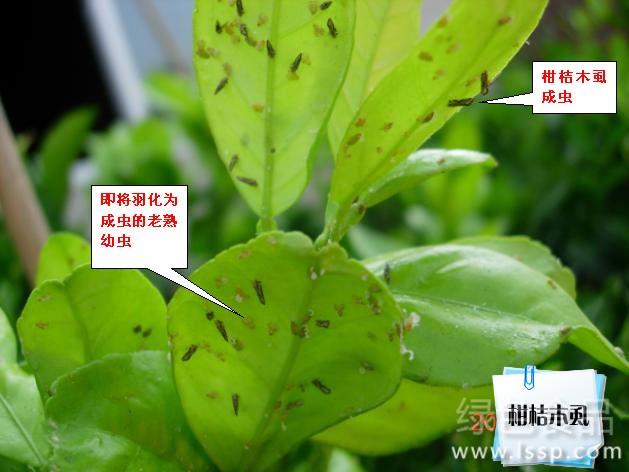
The Asian citrus psyllid is the only vector of citrus greening disease (Huanglongbing); how should it be controlled?
The psyllid is the only vector of citrus greening disease: how to control the psyllid on citrus
-
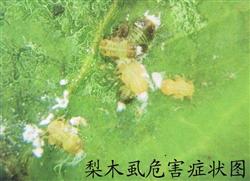
What are the control methods for the tobacco pear psyllid?
How to control the tobacco pear psyllid? The occurrence characteristics of the pear psyllid are many generations. The adult emergence period is long and generations overlap. Especially from late June to early July, the nymphs secrete a large amount of mucus, causing a large number of fallen leaves, which not only seriously affects tree vigor, but also reduces pear fruit quality, and it is difficult to control with general pesticides. Use tob...
-
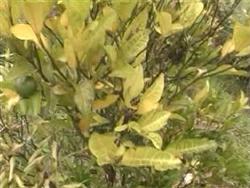
A Detailed Introduction to the Asian Citrus Psyllid and Its Control Methods
Asian citrus psyllid [Diaphorina citri Kuwayama] belongs to the order Homoptera, family Psyllidae. It is an important pest during the tender shoot stage of citrus, mainly damaging citrus, and can also damage Rutaceae plants such as orange jasmine (Murraya paniculata) and wampee (Clausena lansium). Damage characteristics: adults and nymphs gather in groups on tender shoots, young leaves and new buds to suck sap. The damaged tender shoots...
-
What are the control methods for the wolfberry psyllid?
The wolfberry psyllid, also called pig-snout honey or jaundice, belongs to the family Psyllidae and is a major pest of the wolfberry (goji). Adults and nymphs damage branches and leaves, sucking sap, which weakens the tree, causes early leaf drop, and seriously affects the following year's yield. The wolfberry psyllid has 4 generations a year, overwintering as adults in bark crevices, wall cracks, soil cracks, dead branches and fallen leaves, and weeds. In late March of the following year, the adults emerge from dormancy, reproduce and cause damage; damage is most severe from June to October, and at the end of October the last-generation adults overwinter. Its control methods are the same as those for aphids.
-
Identification and Control Methods for the Wolfberry Psyllid
Also known as jaundice, it belongs to the order Homoptera, family Psyllidae. The pest's scientific name is PoratriozasinicaYangetLi. It damages crops such as wolfberry (goji) and black nightshade. Pest identification: adults and nymphs pierce and suck sap on the undersides of leaves, tender shoots and buds, causing the plant to decline in vigor and the leaves to turn yellow. The secreted honeydew causes sooty mold on the leaf surfaces below. The adult is about 3.8 mm long, yellow-brown to dark brown in body color, with orange-yellow markings. There is one pair of milky protrusions on the front of the frons; the basal segment and terminal segment of the antennae are black, while the rest are yellow. The femora of the front and middle legs are the same color as the body, while the hind femora are slightly black.
-
Identification and Control Methods of the Chinese Parasol Tree Psyllid
Morphology: Adult body length 5.6 to 6.9 mm, yellow-green; head broad horizontally, vertex deeply cleft, frons exposed; compound eyes hemispherical and protruding, brown; antennae yellow; wings colorless and transparent, veins tea-yellow; claws black; dorsum of abdomen pale yellow, with a brown band along the anterior margin of each segment. Egg spindle-shaped, length 0.5 to 0.8 mm, slightly transparent, pale yellow or yellow-brown when newly laid, pale reddish-brown before hatching. Newly hatched nymph rectangular, tea-yellow tinged with green, wing pads slightly visible; mature nymph long oval, length 3.0 to 5.0 mm, darker in color, wing pads clearly visible.
-
What are the control methods for the Chinese parasol tree psyllid?
The Chinese parasol tree (Firmiana simplex) is one of the main urban landscaping tree species in northern China, with a tall, straight trunk, attractive leaf shape, and good shading effect. However, the Chinese parasol tree psyllid causes serious damage, greatly affecting its ornamental effect. After long-term observation, garden workers have gradually worked out the occurrence and development patterns of the Chinese parasol tree psyllid, carried out effective control, and accumulated certain experience, which is introduced below for reference. I. Damage characteristics and symptoms. The Chinese parasol tree psyllid, also known as the Chinese parasol tree split-head psyllid, belongs to the order Homoptera, family Psyllidae. It uses nymphs and adults to suck sap on Chinese parasol tree leaves or young twigs and tender trunks,
-
Identification and Control Methods of the Russian Olive Psyllid
Scientific name Trioza magnisetosa Log. Homoptera, Psyllidae. Hosts: Russian olive (Elaeagnus angustifolia), jujube. Damage characteristics: adults and nymphs pierce and suck the sap of young buds, tender twigs and leaves; infested young buds often die, infested leaves mostly curl toward the underside, and in severe cases the twigs and shoot tips die, weakening the tree's vigor, with heavy flower and fruit drop. Morphological characteristics: adult body length 2.5-3.4 mm, dark green to yellowish brown. Compound eyes large, protruding, reddish brown. Antennae filiform, 10 segments, the terminal 2 segments black
-
Winter control of psyllids in pear orchards leads to good pears in autumn
The pear psyllid is the most important pest on pear trees. It can damage pear leaves, causing blighted spots, weakening tree vigor, and reducing fruit quality and yield. It produces 4-5 generations per year. Adults are divided into winter and summer forms. Winter-form adults overwinter in the cracks of pear tree branches and trunks, with a few in weeds, fallen leaves, and soil. Integrated control should target their overwintering sites. 1. Orchard sanitation. Clear away fallen branches, fallen leaves, and weeds in and around the orchard, bury them deeply or burn them, to reduce the overwintering pear psyllid population. 2. Bark scraping. Spread plastic film on the tree tray
条件筛选