-
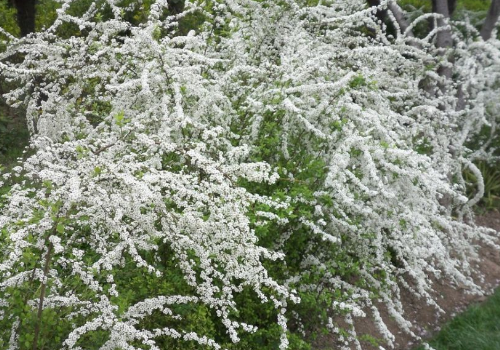
Spiraea thunbergii: Growing Methods and Pruning Tips
Spiraea thunbergii is often planted in parks to beautify the environment. Does Spiraea thunbergii need pruning? Growing methods: Does Spiraea thunbergii need pruning: Of course Spiraea thunbergii needs pruning, otherwise it will grow wildly and ruin its ornamental value. Spiraea thunbergii can be pruned after flowering; cut off the damaged, pest-infested and older branches
-

Detailed Explanation of Olive Tree Training and Pruning Methods and Techniques
How to Train and Prune Olive Trees
-

Pruning and Flower and Fruit Management Techniques for Dense Planting of Apricot Trees
I. Training and Pruning 1. Training The apricot is a light-loving fruit tree; for dense planting orchards, a "V" shape with good ventilation and light penetration is recommended. The training method is as follows: plant at a row spacing of 3 m x 1 m; in the planting year, shorten the trunk by cutting to 40 cm; when new shoots reach 30 cm in spring, select and retain two symmetrically growing branches that extend toward the row middle, grow vigorously, and form a 30-60 degree angle with the trunk as the main branches, and let them grow naturally. Select and retain another 3-4 new shoots as auxiliary nurturing branches, remove the remaining new shoots, and at the beginning of May when the auxiliary nurturing branches are 20 cm long, pinch out the growing tips; in late June
-
What are the summer pruning techniques for Golden Plum Jujube? Explained clearly in one article
The tree shaping and pruning techniques for Golden Plum Jujube after the orchard is established are an important part of production management. It is an important management measure carried out on the basis of comprehensive soil, fertilizer and water management, according to the growth and development characteristics of jujube trees and in combination with environmental conditions. Through shaping and pruning, strong and firm scaffold branches with a reasonable distribution are cultivated, and an appropriate number of fruiting branches and a tree structure with good ventilation and light penetration are maintained. According to the different seasons, shaping and pruning are often divided into winter pruning (dormant period pruning) and summer pruning (growing season pruning). The commonly used summer pruning methods are as follows: 1. Jujube head
-
How to prune Schisandra chinensis? Detailed pruning methods and techniques
If you want stable and high yields from cultivated Schisandra chinensis, pruning is the key. The author has been engaged in artificial cultivation of Schisandra chinensis since 1997, and has summarized pruning methods in practice. They are written out here for fellow farmers' reference. 1. Row direction The best row direction for Schisandra chinensis cultivation is a north-south orientation, which gives good light exposure and good ventilation, laying the foundation for stable and high yields. 2. Trunk determination In the summer of the year of transplanting, Schisandra chinensis seedlings grow rather vigorously. For each plant, select and keep 3-4 strong lateral vine branches and train them onto the poles. One seedling gets two poles, and each pole carries two
-
Pruning Methods and Technical Key Points for Flowering Peach During the Growing Season
In northern gardens, the flowering peach (Prunus persica) is an indispensable ornamental tree species for early spring. Its tree form is graceful and its flowers are charming, giving an excellent ornamental effect. However, it grows vigorously and produces many branches, and its canopy becomes dense, causing excessive nutrient consumption and poor ventilation and light penetration, which is unfavorable for branch ripening and flower bud differentiation. Therefore, it should be timely shaped and pruned, especially pruned during the growing season (also called summer pruning), which plays a rather important role in the cultivation and management of flowering peach. Summer pruning can reduce ineffective growth, save nutrients, improve light conditions, strengthen nutrient synthesis, and
-
Pinching and Pruning Methods for Cut-Flower Carnations
1. Pinching Techniques for Cut-Flower Carnations The purpose of pinching cut-flower carnations is to increase the number of branches, raise the flower yield per plant, regulate the flowering period, and ensure a balanced, timely supply of flowers. (1) Pinching time The first pinching of carnations is generally carried out about 30 days after planting, when the main stem of the seedling has 6 to 7 pairs of leaves unfolded. When the main stem has 5 to 6 nodes, the apical growing point is removed; depending on the branching characteristics of different cultivars, 1 to 2 nodes more or fewer may be retained as appropriate, and cultivars that branch poorly may be left with higher nodes.
-
Detailed Explanation of Key Points of Jujube Tree Training and Pruning Techniques
The training and pruning of jujube trees is based on the jujube tree's unique branching habits and its strong light-loving characteristics. Through pruning, a fixed framework suitable for the jujube tree's growth habits is formed, thereby improving the transparency of the canopy, increasing the fruiting positions, achieving three-dimensional fruiting, improving jujube fruit quality and yield, and extending the fruiting years. There is no issue of retaining flower buds: the flower buds of most fruit trees are differentiated in the previous year, so during winter pruning the number of flower buds to retain must be determined according to the target yield, in order to reduce the consumption of large amounts of tree nutrients caused by flowering and fruit set.
-
Pruning Methods and Key Technical Points for Jasmine
In southern China, jasmine grown under normal cultivation conditions sprouts 6-8 batches of new branches each year. As the branches grow older, they continuously increase in number, grow taller, and gradually age. Branches that are too old and too long hinder the transport of water and nutrients, and plants that are too tall also affect field work such as flower picking. Pruning is an important production technique for rationally adjusting the layout of branches and leaves and promoting robust plant growth. The most important pruning task of the year is spring pruning. In Hengxian, Guangxi, jasmine branches
-
Key Points and Methods of Jasmine Pruning Techniques Explained
Dormant-season pruning: Carry out before spring bud break, generally pruning around Qingming Festival, with the aim of promoting a neat and sturdy first flush of branches and adjusting the branch crown. The specific pruning methods are: 1. Cut off diseased and pest-infested branches, dead branches, thin branches and weak branches. 2. Shorten one-year-old branches: cut off the tips of last year's branches, keeping 10 cm to 15 cm at the base. 3. Remove all leaves. Growing-season pruning: Carry out from after bud break at Spring Festival to before overwintering; the specific pruning methods are: 1. For blind branches (branches that do not flower), water sprouts and declining
条件筛选