Spiraea thunbergii: Growing Methods and Pruning Tips
Spiraea thunbergii is often planted in parks to beautify the environment. Does Spiraea thunbergii need pruning? Growing methods:
Does Spiraea thunbergii need pruning:
Of course Spiraea thunbergii needs pruning, otherwise it will grow wildly and ruin its ornamental value.
Spiraea thunbergii can be pruned after flowering; cut off the damaged, pest-infested and older branches so that Spiraea thunbergii can grow healthily and beautifully.
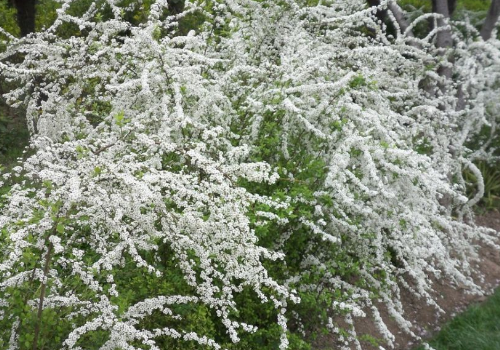
Growing methods for Spiraea thunbergii:
1. Suitable temperature
The suitable growing temperature for Spiraea thunbergii is 18-32°C,
2. Soil requirements
Spiraea thunbergii likes to grow in fertile sandy loam, and in fertile soil it blooms more profusely.
5. Fertilizer requirements
Spiraea thunbergii is highly adaptable and has low fertilizer requirements; generally no additional fertilizer is needed, and applying fertilizer once every 1-2 years is enough.
Well, do you understand the growing methods for Spiraea thunbergii?
Growing methods for Sorbaria sorbifolia
Sorbaria sorbifolia, also called Spiraea thunbergii, is a deciduous shrub, 2-3 m tall. The branches spread out; the branchlets are curved, hairless or slightly covered with short soft hairs, tender green when young, dark yellow-brown or dark red-brown when old. In midsummer it produces elegant white flowers and has a very long flowering period. In particular, it can kill or inhibit a variety of harmful bacteria, making it suitable for planting in all kinds of garden green spaces.Sorbaria sorbifolia is highly adaptable and has low fertilizer requirements. Aside from newly planted specimens needing a small amount of base fertilizer, no additional fertilizer is needed afterward, but watering is required. Generally, water thoroughly 2-3 times from bud break to flowering, and water 2-3 times from the start of autumn to before frost, including one antifreeze watering. In summer, water according to drought conditions, and when there is a lot of rain, watering is not necessary.
After the flowers of Sorbaria sorbifolia fade, the inflorescences turn yellow and dry, affecting its appearance, so the spent inflorescences should be cut off to keep the plant clean and tidy and to prevent the spent inflorescences from competing with the plant for nutrients and water. After autumn or in early spring, diseased and pest-infested branches and old, weak branches should also be cut off, and annual branches can be heavily pruned to encourage branch renewal and lush foliage with abundant flowers.
The detailed cultivation of Sorbaria sorbifolia is as follows:
① It is not demanding about soil, but it grows better and blooms more profusely when cultivated in deep, fertile sandy loam.
② It has low fertilizer requirements; applying sufficient base fertilizer at planting time can meet its growth needs, and generally no additional topdressing is needed. After that, combined with winter management, applying base fertilizer once every 1-2 years is enough.
③ Water promptly during spring droughts; during summer and autumn droughts, water thoroughly to keep the soil from drying out; before winter arrives, water once with antifreeze water.
④ After flowering, promptly prune off remaining flower branches, diseased and pest-infested branches, and old, weak branches to keep the plant shape tidy, avoid nutrient consumption, and promote robust growth with lush foliage and abundant flowers.
How to grow a Sorbaria sorbifolia bonsai, and growing methods for Sorbaria sorbifolia
Sorbaria sorbifolia, also called Spiraea thunbergii, is a deciduous shrub, 2-3 m tall. The branches spread out; the branchlets are curved, hairless or slightly covered with short soft hairs, tender green when young, dark yellow-brown or dark red-brown when old. In midsummer it produces elegant white flowers and has a very long flowering period. Sorbaria sorbifolia is also often used to make bonsai. This article introduces how to grow a Sorbaria sorbifolia bonsai and the growing methods for Sorbaria sorbifolia.
How to grow a Sorbaria sorbifolia bonsai
1. It is not demanding about soil, but it grows better and blooms more profusely when cultivated in deep, fertile sandy loam.
2. It has low fertilizer requirements; applying sufficient base fertilizer at planting time can meet its growth needs, and generally no additional topdressing is needed. After that, combined with winter management, applying base fertilizer once every 1-2 years is enough.
3. Water promptly during spring droughts; during summer and autumn droughts, water thoroughly to keep the soil from drying out; before winter arrives, water once with antifreeze water.
4. After flowering, promptly prune off remaining flower branches, diseased and pest-infested branches, and old, weak branches to keep the plant shape tidy, avoid nutrient consumption, and promote robust growth with lush foliage and abundant flowers.
Growing methods for Sorbaria sorbifolia
Sorbaria sorbifolia is highly adaptable and has low fertilizer requirements. Aside from newly planted specimens needing a small amount of base fertilizer, no additional fertilizer is needed afterward, but watering is required. Generally, water thoroughly 2-3 times from bud break to flowering, and water 2-3 times from the start of autumn to before frost, including one antifreeze watering. In summer, water according to drought conditions, and when there is a lot of rain, watering is not necessary.
After the flowers of Sorbaria sorbifolia fade, the inflorescences turn yellow and dry, affecting its appearance, so the spent inflorescences should be cut off to keep the plant clean and tidy and to prevent the spent inflorescences from competing with the plant for nutrients and water. After autumn or in early spring, diseased and pest-infested branches and old, weak branches should also be cut off, and annual branches can be heavily pruned to encourage branch renewal and lush foliage with abundant flowers.
During dry weather, water promptly to keep the soil moist, and water once with antifreeze water before winter arrives; after flowering, promptly prune off flower branches, and before winter arrives cut off diseased and pest-infested branches and old, weak branches; before planting new specimens, apply sufficient base fertilizer, and afterward fertilize once every 2-3 years.
That is all for how to grow a Sorbaria sorbifolia bonsai and the growing methods for Sorbaria sorbifolia. We hope this helps everyone care for Sorbaria sorbifolia better.