-
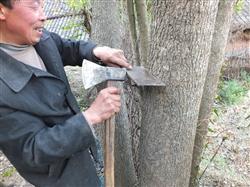
What are the harvesting and processing methods for Eucommia ulmoides?
How is Eucommia ulmoides harvested and processed? Please explain the methods. Eucommia ulmoides is a commonly used traditional Chinese medicine, and harvesting is done by the bark-stripping method. In our province, the more suitable time for bark stripping is from June 20 to July 31. The climate is suitable during this period, and after stripping, Eucommia ulmoides readily regenerates new bark, with a high survival rate. When stripping bark, first make a ring cut around the upper and lower ends of the section of the trunk to be stripped...
-
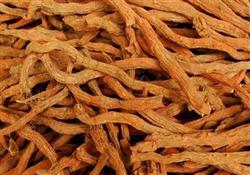
Detailed Explanation of Key Points on Salvia miltiorrhiza Cultivation and Processing Techniques
How is Salvia miltiorrhiza cultivated and processed? Please give an introduction. Salvia miltiorrhiza, also known as purple salvia, red salvia, blood salvia, and red-rooted salvia, is the dried root of the Lamiaceae plant Salvia miltiorrhiza. It has the functions of dispelling blood stasis and relieving pain, activating blood and regulating menstruation, and nourishing the heart and eliminating restlessness. It is suitable for irregular menstruation, amenorrhea, ectopic pregnancy, hepatosplenomegaly, angina pectoris, restlessness and insomnia,...
-
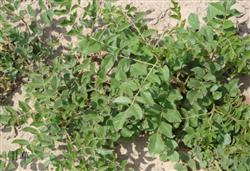
Detailed Guide to Harvest Time and Processing Methods of Licorice
Key technical measures for high-yield cultivation: choose fertile, loose-textured, well-drained sandy loam soil for planting. Treat seeds before sowing to improve germination rate, water during the seedling stage to keep seedlings alive, and apply sufficient phosphorus and potassium fertilizer every early spring. Harvest and processing 1. Harvest: Licorice propagated by seed generally grows for 4...
-
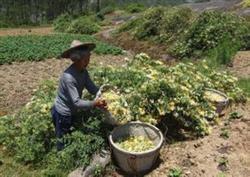
Detailed Explanation of Harvesting and Processing Techniques for Honeysuckle (Jinyinhua) Medicinal Material
1. Flower-picking time: The picking time is from 9 to 12 o'clock in the previous year; it is not suitable to pick when there is dew or on rainy days, but it can also be picked if there is drying equipment. Flowers picked in the morning are blue-white, heavy, easy to dry, have a strong fragrance, a high rate of commercial product output, and good quality. Flowers picked after noon and on cloudy days are poorer in quality and have a low processing rate. From the flower's development process...
-

A Detailed Guide to the Artificial Cultivation and Processing of Litsea cubeba
Artificial Cultivation and Processing Techniques for Litsea cubeba
-

Detailed Explanation of Harvesting and Processing Methods for Pinellia ternata
I. Harvesting is generally carried out in summer and autumn after the stems and leaves have withered and the plants have fallen over. In the southern provinces, it can be done in July-August. The method is: choose a sunny day, use a hoe to dig a furrow 12-20 cm deep along the rows, dig out the Pinellia ternata tubers one by one, shake off the soil, and remove the coarse skin and fibrous roots from the surface of the medicinal material. II. Processing: Wash the fresh Pinellia ternata clean of mud, grade them into large, medium, and small sizes, put them into burlap sacks separately, first tap them lightly on the ground a few times, then pour them into a vat of clean water and rub them repeatedly, or put the tubers into a bamboo basket and beat them with a wooden stick in running water or use a peeling machine to remove the skin. After washing
-
Harvesting, Processing Methods and Technical Key Points for Pinellia ternata
Those propagated from tubers are harvested in the same year or the following year, while those propagated from seeds can only be harvested in the 3rd to 4th year. Harvesting is generally carried out in summer and autumn after the stems and leaves have withered and fallen over. After digging them out, pack them in baskets, wash off the mud and sand while they are still fresh, put them into gunny sacks and rub off the outer skin, then pour them out and wash the outer skin clean with clear water. Scoop them out and dry them in the sun to obtain Pinellia ternata. Generally, the yield of fresh tubers is 500-750 kg per mu, and the drying ratio is about 30%.
-
Harvesting and Processing Methods and Key Technical Points for Pinellia ternata
Those propagated from tubers are harvested in the same year or the following year, while those grown from seeds can only be harvested in the 3rd to 4th year. Harvesting is generally carried out in summer or autumn after the stems and leaves wither and the plants fall over. After digging them out, pack them in baskets, wash off the mud and sand while they are still fresh, put them into gunny sacks and shake off the outer skin, then pour them out and wash the outer skin clean with clean water. Scoop them out and dry them in the sun to obtain raw Pinellia ternata. Generally, the yield of fresh tubers is 500-750 kg per mu, with a drying ratio of about 30%.
-
Detailed Explanation of the One-Year Three-Harvest Cultivation and Processing Technology for Pinellia (Pinellia ternata)
I. Land Selection and Preparation For planting Pinellia, loose and fertile soil is best. When preparing the land, apply 3000-5000 kg of farmyard manure per mu, 25-30 kg of phosphate fertilizer, and 100 kg of plant ash; do not apply ammonium bicarbonate. Plow deeply and harrow finely, with beds 1.3 m wide and 0.17 m high, and ditches 0.3 m wide; tall crops such as wheat, corn, sorghum, or kenaf can be intercropped in the ditches. II. Sowing Method Usually tuber propagation is used, allowing three plantings and three harvests in one year, namely planting in April and harvesting in July; planting in July and harvesting in October; planting in October and harvesting in April of the following year. The amount of seed tubers used per mu varies with
-
Key Technical Points for Harvesting and Processing Codonopsis pilosula
(1) Harvesting: Direct-sown Codonopsis pilosula needs 3 years before it can be harvested, while transplanted seedlings are best harvested in the second year after transplanting. In autumn, after the above-ground stems and leaves turn yellow and wither, choose a sunny day and dig carefully and deeply, turning out the whole root, avoiding cuts and breakage so that the sap does not flow out and form black scars, which would reduce quality. (2) Processing: Wash the harvested Codonopsis pilosula, grade it, and process each grade separately. First spread it on a drying mat in the sun for 2-3 days; when the roots become soft from drying, tie each grade of Codonopsis pilosula into small bundles, hold the root head with one hand, and with the other hand rub downward along the root several times. The next day, sun-dry again, and in the evening gather them into ox-horn bundles, each weighing 1
条件筛选