-

Deep-processing of pickled vegetables brings good returns in Tangshan, Hebei
Tangshan: Deep-processing of pickled vegetables brings good returns
-
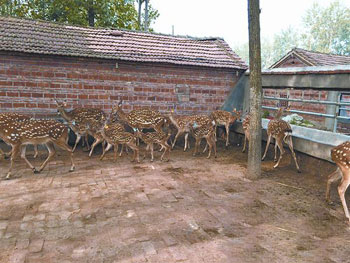
Sika deer breeding and processing give a remote village a clever path to prosperity
Remote village gets rich by breeding and processing sika deer
-
Chongqing Allocates 34.65 Million Yuan to Subsidize Primary Processing Facilities
Chongqing: 34.65 Million Yuan to Subsidize Primary Processing Facilities
-
Detailed Explanation of the Processing Technology for Dry-Packed Salted Almond Canned Goods
(1) Process flow: Raw material acceptance → sorting → cleaning → peeling → rinsing → color protection → pre-boiling → soaking → re-boiling → grading → seasoning mixing → canning → exhausting → sealing → inspection → sterilization → cooling (2) Description of operating points (1) Raw material acceptance: Use fresh, plump, dry almonds with white kernel flesh, free from insect damage, mold, and foreign matter. (2) Sorting: Remove insect-damaged, moldy, shriveled, broken and other substandard kernels and foreign matter. (3) Cleaning: Put the
-
Rice prices are falling: is there an opportunity for processing companies?
Rice prices are falling: is there an opportunity for processing companies?
-
China's first multifunctional horticultural machine unveiled, capable of applying solid fertilizer and processing residual plant residues
China's first multifunctional machine for horticultural solid fertilizer application and residual plant residue processing unveiled
-
Deep processing of roses paves the road to prosperity
Deep processing of roses brings prosperity, blossoms and fragrance
-
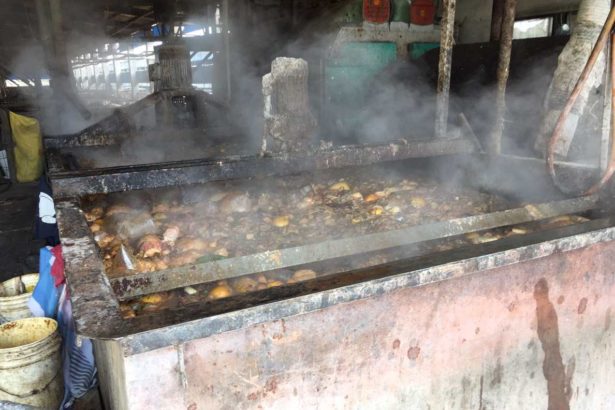
Comprehensive Inventory of Kitchen Waste Production and Disposal Capacity in Yunlin and Pingtung, and Epidemic-Prevention Kitchen Waste Processing
The Battle of Epidemic Prevention and Kitchen Waste 07"(Yunlin and Pingtung) Taiwan-wide Comprehensive Inventory of Kitchen Waste Production and Disposal Capacity (Yunlin and Pingtung)
-
Detailed Explanation of Key Points on Straw Mushroom Harvesting and Processing Techniques
After piling the straw and sowing, mushrooms begin to appear in 10-15 days (as quickly as about one week). The appropriate harvest time for commercial straw mushrooms is when the mushroom buds are about to rupture and the caps inside the volva have not yet opened. The specifications for canning are a diameter of 2 cm or more, a neat mushroom shape, an unruptured outer veil, and an unelongated enclosed stipe. The requirements for making dried mushrooms are a diameter of 4 cm or more and an unruptured outer veil. Those with a ruptured outer veil are slightly lower in quality, and those with opened caps are even worse; the latter can only be sold as substandard fresh mushrooms. For dried mushrooms, the mushroom buds should be cut longitudinally into two connected halves, arranged on a bamboo sieve or wire mesh sieve, placed on the racks of a specially made drying room, and dried over a slow fire. The initial drying temperature is 35-40°C, and as the moisture decreases, the temperature is gradually raised to 60-65°C, until the moisture content of the straw mushrooms reaches 12-13%.
-
A Detailed Guide to Snake Farming Techniques and Processing Methods
Snakes are a precious biological resource. Snakes can be eaten, used for medicine, used to make musical instruments, and so on; the whole body is a treasure, and they are praised as a "mountain delicacy." Snakes sell well and fetch high prices. In China, the purchase price per kilogram of live snakes and snake meat is 40-60 yuan; for the five-paced snake (Deinagkistrodon acutus), it is 250-400 yuan per kilogram; 1 gram of banded krait (Bungarus multicinctus) toxin is priced at 1000 yuan; raw snake gallbladder reaches as much as 2000-3000 yuan per kilogram. On the international market, 5 grams of snake venom is priced at as much as 1000 US dollars, 20 times more expensive than gold. Farming snakes artificially has a short cycle and high returns, and is a good way for farmers to escape poverty
条件筛选