-

Early deployment required by the Ministry of Agriculture for spring field management and spring plowing preparations
Today is the Start of Spring in the 24 solar terms. Spring field management and spring plowing preparations are about to unfold gradually from south to north. The Ministry of Agriculture recently issued the "Notice on Earnestly Doing a Good Job in Spring Field Management and Spring Plowing Preparations," requiring all localities to attach great importance, take effective measures, and solidly advance
-
State Administration of Grain: Preparations for autumn grain purchases basically complete
Reporters learned on the 9th from the State Administration of Grain that the State Administration of Grain recently held a national autumn grain purchase work conference in Harbin, Heilongjiang Province, to arrange and deploy the purchase work. At present, preparations in various regions are basically complete, and the autumn grain purchase work, the highlight of the year's grain purchases, is
-
This year's preparations for cross-regional machine harvesting of wheat during the "three summer" period are basically complete
The reporter learned from the Ministry of Agriculture that the large-scale cross-regional wheat machine harvesting work in 2015 will kick off from south to north. In order to win the tough battle of cross-regional wheat machine harvesting during the "three summer" period, the Ministry of Agriculture recently held a video conference on cross-regional wheat machine harvesting during the "three summer" period, analyzed this year's cross-regional wheat machine harvesting situation, clarified the target tasks, and deployed various work measures.
-
Spring plowing and pre-planting preparations in full swing, new-type fertilizers favored by farmers across regions
Spring returns to the earth, and spring plowing and pre-planting production are in full swing across various regions. Reporter Guo Xiang reports that during this year's spring pre-planting period in Jilin Province, various new-type fertilizers such as organic fertilizers, biological fertilizers and specialty fertilizers have begun to be favored by farmers. It is said that new-type fertilizers can meet the demand of the traditional compound
-
Preparations for the listing of agricultural product options are ready
All preparatory work for agricultural product options at the Zhengzhou Commodity Exchange is ready, and the exchange will strive to launch them at the most appropriate time. A relevant person in charge of the Zhengzhou Commodity Exchange said at the Agricultural Product Options Development Forum that against the background of the state carrying out target price reform for agricultural products, the market has high expectations for agricultural product options. After pilot options trading is launched, options trading as a tool should better play its function and role in serving the real economy.
-
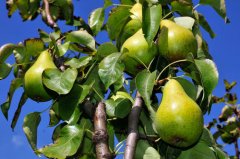
Preparations before planting pear trees and grafting precautions
How should pear trees be planted for the best results? Would you like to find out? Then let's take a look together! Pear trees need fertile soil to grow well, so before planting, check the soil pH. A soil pH of 6.0-7.0 for planting trees means conditions are good.
-
What preparations and management are needed for Rex rabbits before and after kindling?
Generally, the gestation period of Rex rabbits is 31 days. When there are many fetuses, the gestation period is shorter; when there are few fetuses, the gestation period is longer. Oversized fetuses tend to prolong the gestation period and may even cause dystocia, so special attention should be paid to observation. When conditions permit, it is best to move pregnant rabbits at 25 days of gestation into the same housing unit, or gather them into several adjacent cages, so as to facilitate observation and management. Three to 4 days before kindling, thoroughly clean and disinfect the rabbit house and kindling box (2%-3% Lysol or 0.1% benzalkonium bromide are both acceptable). After disinfection, the cages and kindling boxes should be rinsed clean with water. Movable kindling boxes should be dried in the sun before being placed into the cages, to remove the residual smell of the disinfectant, so as to prevent the doe from becoming restless and burrowing and bumping everywhere. Then put in soft bedding straw so the doe can become familiar with the environment and conveniently carry straw and pull fur to make a nest. Pregnant does should have their concentrate feed supply reduced 2-3 days before kindling to prevent mastitis. For first-time kindling does, their pre-kindling behavior should be checked. If they are found unable to carry straw in their mouths or pull fur to line the nest, manual assistance should be given. Use soft fur and straw to make the kindling nest well, and carry out manual fur pulling. Practice has proved that this can stimulate lactation: does that pull little fur secrete little milk, while does that pull a lot of fur secrete more milk. Before kindling, feed and drinking water must be prepared. If conditions permit, soybean milk, thin porridge, and the like can be prepared for the doe to eat and drink after kindling. After kindling, the doe's belly is very empty, and she is both thirsty and hungry. If drinking water and feed have not been prepared in advance, the doe will be forced to eat her young rabbits. On the eve of kindling, someone needs to be on duty to provide care, in case the young are born outside the kindling box and fall into the manure and urine ditch, dying of cold and starvation. If there are stillborn or malformed fetuses, they should be removed in time to prevent the doe from eating the stillborn fetuses together with the afterbirth, so as to avoid developing the bad habit of eating her young. Before kindling, quiet must be maintained, and disturbance must be strictly prevented. Kindling in does is very quick, requiring only 20-30 minutes, with about 1 young rabbit born every 2-3 minutes. During kindling, the back arches, the mouth licks the vulva, and sometimes calls are made, and the young rabbit is delivered together with the afterbirth. The doe bites off the umbilical cord, eats the afterbirth, and after licking dry the amniotic fluid and blood on the young rabbit's body, the young rabbit goes to nurse, and immediately afterward the doe gives birth to another young rabbit.</p><p>After kindling is completed, take out the kindling box, count the young rabbits, weigh the birth weight and individual weight, keep good records, and assist the doe in rearranging the kindling box.</p><p>Methods for pre- and post-kindling management of Rex rabbits: Rex rabbit breeding now requires us to carry out the breeding, and especially in other feeding and management aspects we must be more attentive. Let us now look at how Rex rabbits should be cared for before and after kindling so as to better reduce our losses:</p><p>(1) Make good pre-kindling preparations. Three to 4 days before kindling, the doe begins to carry straw to make a nest. The keeper should prepare a kindling box for her in advance and, when the time comes, spread bedding straw, which must be soft, cut short, sun-dried, and disinfected. At the same time, prepare some green, juicy, and highly palatable forage for the doe and put it into the rabbit cage together with the bedding straw, and put in some drinking water with added brown sugar to help the doe lactate. Immediately after kindling, clear away the filth in the kindling box.</p><p>(2) Let the young rabbits take colostrum in time (within 24 hours after birth). Rex rabbits generally nurse once a day, and nursing should be at fixed times.</p><p>(3) Earnestly pay attention to preventing and treating mastitis in does and yellow urine disease in young rabbits. Check carefully and regularly. Once illness is found in a doe or young rabbit, treatment should be given immediately. If treatment is too late, it can lead to the death of the entire litter of young rabbits. Even if it is discovered late or treatment is not timely, the mortality rate will increase, and even if the young rabbits do not die, they will grow slowly.</p><p>(4) Frequently check whether the young rabbits can eat their fill or whether the doe's milk is sufficient. If individual young rabbits are found not to eat their fill, they can be given one supplemental feeding separately. If most young rabbits cannot eat their fill because the doe's milk is insufficient, measures should be taken to prevent the young rabbits from starving to death. In addition, in winter, cold damage should be prevented; in summer, heat should be prevented; and rodent damage should be guarded against year-round.</p>
-
What preparations are needed before raising adult freshwater pomfret?
I. Pond conditions The pond area for raising adult freshwater pomfret should preferably be 10-20 mu, with a water depth of about 1.8 m. The pond is required to have an adequate water source, fresh and pollution-free water quality, convenient water intake and drainage, a flat pond bottom and little silt. II. Pond clearing and disinfection At the end of the year, drain the pond and expose it to the sun, remove excess
-
Preparations before planting garden trees and 3 principles to follow
The principle of garden tree planting is to follow the laws of tree growth and development, provide corresponding planting conditions and care measures, promote root regeneration and recovery of physiological metabolic functions, coordinate the contradiction between aboveground and underground growth and development, and show roots
-
Selfheal (Prunella vulgaris): Benefits, Uses, Edible Preparations, Who Should Avoid It, and Does It Treat Thyroid Nodules?
The herbal cooling teas we normally drink contain selfheal (Prunella vulgaris) as an ingredient, making it an excellent choice for cooling and relieving summer heat. Selfheal is a fairly common Chinese herbal medicine on the Taiwan, China market and has certain medicinal value. So what are the benefits, effects and edible preparations of selfheal? Who
条件筛选