-

What are the technical measures for high-yield corn cultivation?
Summary Selection of plot: choose a plot with flat terrain, deep soil layer and loose texture. Seed selection: do not use seeds from the previous year. Base fertilizer: apply farmyard manure, calcium superphosphate, urea, potassium fertilizer and zinc fertilizer in a single banded application into the field. Sowing: carry out in February-March, with a sowing density of
-
How to grow sugarcane seedlings? Detailed explanation of seedling methods and technical key points
Abstract Greenhouse seedling raising: After thoroughly watering the plot, deep plow and harrow finely, then open beds; after applying sufficient base fertilizer, arrange the whole seedlings evenly, place the buds lying flat sideways, space each sugarcane seed about 2cm apart, then cover with about 2cm of soil. Plastic large arch shed seedling raising: Build the arch frame and cover with film; after sowing
-
Detailed Explanation of Key Points of Yam Suspended Cultivation Technology
Abstract Land preparation and bed building: Loosen and rake flat the saline-alkali plot, then build beds. Making the casing: The casing includes a connector and a straight pipe. Making the substrate: The substrate is made by mixing and fermenting mushroom residue, clam shells, fermentation aids, etc. Placing the casing: Arrange the casings filled with substrate in the beds. Sowing yam
-
What is the correct method for fertilizing garlic plots?
Garlic is a commonly used seasoning vegetable, and the edible parts of garlic are the garlic bulbs, garlic scapes, etc. So how should garlic plots be fertilized? 1. Growth habits of garlic. Garlic is a plant of the Liliaceae family and the Allium genus, native to the western plateau of Asia, and its main producing areas today are Henan
-
How do small plots get merged into big fields? The farmers have the final say
Small plots merged into big fields: the farmers have the final say
-
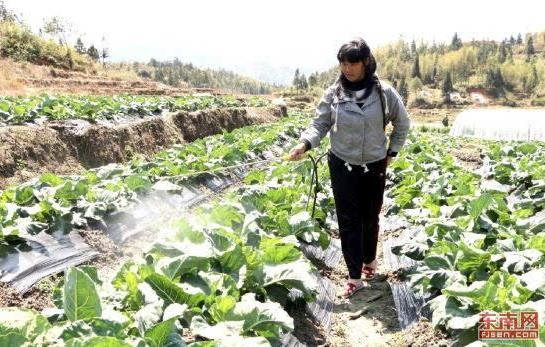
Xie Guangrong, a leader in poverty alleviation through prosperity in Zhouning County, struck gold with vegetable plots and achieved poverty alleviation
Xie Guangrong, a leader in poverty alleviation and prosperity in Zhouning County: Striking gold in vegetable plots to finally escape poverty
-
Intercropping honeysuckle yields well, with high returns from multiple harvests on one plot
Honeysuckle is a commonly used bulk Chinese medicinal herb, with wide uses and high value. It is currently in short supply on the market, and there is even a phenomenon of a price with no goods available. According to the growth characteristics of honeysuckle, adopting a high-efficiency intercropping model of widening rows and reducing plant spacing, rational close planting, intercropping medicinal herbs, and using "medicinal herbs" to support "flowers" can achieve the effect of "planting flowers in the current year, seeing results in the current year." Scientific close planting increases yield and income 1. Field cultivation. In autumn, winter or early spring, on the selected plot, apply 5000 kg of organic fertilizer, 100 kg of superphosphate, and 30 kg of sulfur
-
How to choose land for planting Pinellia ternata? Choosing the right plot is the key to success
The Chinese medicinal herb Pinellia ternata has been popular in the national Chinese medicinal herb market for many years and sells well without decline. But some people are not successful in growing it, and one important reason is that in some places Pinellia ternata simply cannot grow or grows poorly. Planting it in clay or alkaline soil is not worth the effort: plant 50 kg of tubers and harvest no more than 100 kg. In mountainous areas or areas short of water, it grows poorly or even fails completely. Pinellia ternata is actually most afraid of drought and likes moisture; it likes to grow in sandy or somewhat sandy soil and requires good water conservancy conditions. This variety is semi-shade
-

Why should chemical fertilizers not be applied frequently to vegetable plots?
Chemical fertilizers should not be applied frequently to vegetable plots
-
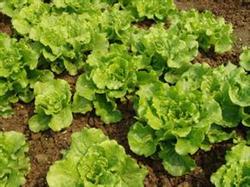
What is the difference between fertilizing newly planted vegetable plots and long-cultivated vegetable plots?
Leaf lettuce, also known as romaine lettuce, is a 1-2 year herbaceous plant in the Asteraceae family, Lactuca genus, that can form leaf heads or tender leaves for consumption. Lettuce is rich in vitamins and minerals, and during cultivation it is easy to obtain pollution-free products without using pesticides, making it increasingly popular among consumers, with planting areas increasing year by year. One...
条件筛选