-

Intercropping Cultivation Technology for Watermelon and Chinese Yam in Large Arch Sheds
In early spring, using a large arch shed for intercropping watermelon with Chinese yam can bring the harvest and market time of both watermelon and Chinese yam more than 45 days earlier than open-field cultivation, thereby achieving relatively high economic benefits. 1. Arch shed structure. The shed is 7 m wide, the arch height at the center of the shed is 2.5 m, and the shed length depends on the plot.
-
Application of Micro-sprinkler Systems in Large-scale Cultivation of Lingzhi (Reishi Mushroom)
(1) Construction of the black shed. For the shade net, a black shade net with a shading rate of 85% is best. Types of net sheds, classified by construction form: flat-top type, the net shed is flat in shape, with a shed height of 2.5 m; half-slope type, the net shed is in a "" (inverted V)-shaped (inverted V) form, with 6 m wide plastic film laid under the net; full-arch type, the net shed is semicircular, with 6 m wide plastic film laid under the net, resembling a small tunnel.
-
Sweet Potato Protected Cultivation Experience and Key Technical Points
Using large and medium shed facilities for early-maturing sweet potato cultivation can not only improve the utilization rate of limited land resources and light-heat resources and increase the yield and benefits of sweet potato production, but also enable double-season sweet potato cultivation in the Beijing suburbs, promoting reform of the cropping system
-
How to grow sugarcane seedlings? Detailed explanation of seedling methods and technical key points
Abstract Greenhouse seedling raising: After thoroughly watering the plot, deep plow and harrow finely, then open beds; after applying sufficient base fertilizer, arrange the whole seedlings evenly, place the buds lying flat sideways, space each sugarcane seed about 2cm apart, then cover with about 2cm of soil. Plastic large arch shed seedling raising: Build the arch frame and cover with film; after sowing
-

What about the extra-large yellow-fleshed watermelon new varieties Aifeng, Mofei, and Huangfei? Sowing time
Watermelon is a fruit we all commonly eat. With this fruit, what we usually see is red flesh, but did you know? Its flesh can also be yellow. Let's take a look below at three new watermelon varieties of yellow-fleshed watermelons! Aifeng yellow-orange fleshed watermelon
-
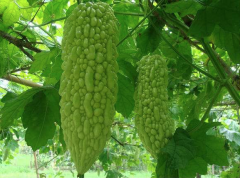
New Large-Fleshed Green Bitter Melon Variety: Nutrients of the Powder-Green Bitter Melon and How to Remove Its Bitterness
The powder-green bitter melon, also known as the green-fleshed bitter melon, sometimes this type of bitter melon bears few fruits, and it is also a fairly common bitter melon on the market, so do you know how this kind of bitter melon can be eaten? What nutrients does it have? Bitter melon can be eaten raw or cooked, and its nature
-
China's largest chickpea production base established in Mulei
**Mulei becomes "China's largest chickpea production base"
-
China's Largest Chickpea Production Base Established in Mulei
**Mulei Becomes "China's Largest Chickpea Production Base"
-
The province's largest export broad bean planting base is established in Guide County
Guide County becomes the province's largest export broad bean planting base
-
Six key management practices to focus on after transplanting spring eggplant in a large arch shed
I. Temperature control For spring eggplant cultivated in a large arch shed, from transplanting until the seedlings recover, the shed should be kept closed to retain heat, keeping the temperature inside the shed at 28°C-30°C during the day and 15°C-20°C at night as much as possible. After the seedlings recover, attention should be paid to ventilation, keeping the shed temperature at 23°C-25°C during the day, generally not exceeding 33°C. II. Fertilizer and water management Under conditions of good soil moisture, water as little as possible before the first eggplant reaches the size of a walnut, to raise soil temperature and prevent flower and fruit drop. When the first eggplant reaches the size of a chicken egg, apply 10 kg of urea per 667 sq m along with watering. After that, appropriately increase the frequency of watering according to soil moisture.
条件筛选