-

What is the difference between maple and plane tree? Teach you to quickly identify them
The difference between maple and plane tree
-

Differences Between London Plane, Chinese Parasol Tree and Paulownia - A Quick Guide to Telling Them Apart
In the vigorous development of urban greening and landscaping, identifying and selecting tree species is an important task. The London plane, paulownia and Chinese parasol tree may look like three sisters in urban landscaping, but in fact they belong to different families and genera, and differ greatly in morphology. The London plane is a large deciduous tree of the genus Platanus in the family Platanaceae. Its name comes from its leaves resembling those of the Chinese parasol tree; it was introduced from abroad in old China and was first planted in the French concession of Shanghai, hence the name "fa tong" (French plane). The London plane is actually a collective name for Platanus orientalis and Platanus acerifolia of the genus Platanus. Platanus orientalis reaches 30 m tall, with dark gray bark that peels off in thin flakes, revealing a greenish-white inner bark. Young branches are covered with yellow-brown stellate hairs. Leaves are 8 to 16 cm long and 9 to 18 cm wide, with 5 to 7 deep lobes reaching to or below the middle, the lobes narrow and long, covered with gray-yellow stellate hairs when young and later shedding. The common stalk bears spherical fruit heads 2 to 2.5 cm in diameter, with spiny styles 3 to 4 mm long; flowering in May, fruiting in September to October. Platanus acerifolia is a hybrid of Platanus orientalis and Platanus occidentalis, bred in London, England. It reaches 35 m tall, with bark peeling off in thin flakes and a pale greenish-white inner bark. Young branches and leaves are densely covered with pale brownish-yellow stellate hairs. Leaves are 10 to 24 cm long and 12 to 25 cm wide, with a flat or slightly heart-shaped base, 3 to 5 deep lobes, the middle lobe nearly equal in length and width, with entire or sparsely coarse-toothed margins. Fruit heads are about 2.5 cm in diameter, with spiny styles 2 to 3 mm long. Flowering in April to May, fruiting in September to October.
-

Is the French plane tree the same as the Chinese parasol tree? Cultivation techniques for the French plane tree
Is the French plane tree the same as the Chinese parasol tree? Cultivation techniques for the French plane tree
-
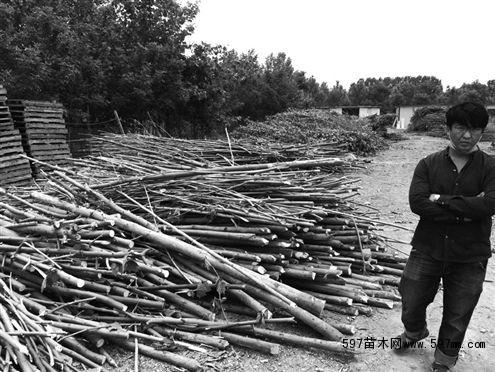
Plane tree sapling prices plummet, the former money tree reduced to worthless firewood
Sapling prices plummet: plane trees go from "money tree" to worthless firewood
-

The world's hardest food, hard as solid wood, impossible to cut with a knife, must be shaved into wood-like shavings with a plane before eating
When it comes to very hard foods, the ones that probably come to mind are baguettes, hardtack and the like; they are generally recognized as chewy, hard foods. But compared with the world's hardest food in the Guinness records, they simply do not measure up. This so-called hardest...
-

Farmer builds his own large airplane that looks remarkably like a Boeing 737
Farmer builds his own "large airplane" that looks remarkably like a Boeing 737
-
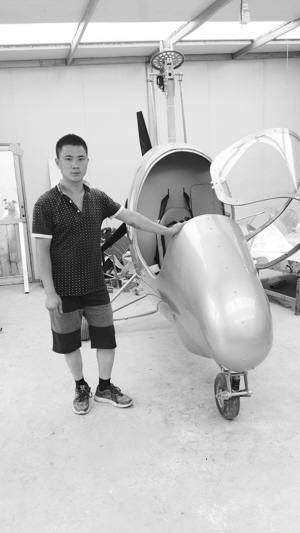
Farmer's homemade plane successfully takes to the sky in Jing County
Young farmer's self-built plane successfully takes to the sky in Jing County
-
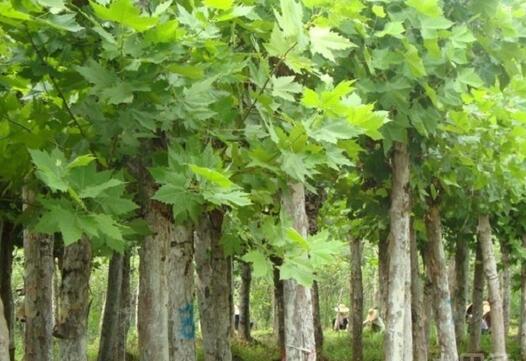
Is growing London plane seedlings profitable? Farmers blindly following the trend drives prices down
Is growing London plane seedlings profitable? Farmers blindly following the trend in planting London plane trees drives prices down
-
Planting methods and care tips for the London plane tree
Morphology: 20-30 m tall, crown broadly bell-shaped; bark grayish brown to grayish white, peeling off in thin flakes. Young branches and young leaves densely covered with brown stellate hairs. Leaves palmately 5-7 lobed, deeply lobed to the middle, lobes longer than wide, leaf base broadly wedge-shaped or truncate, leaf margins toothed, palmately veined; stipules ring-shaped. Inflorescence head-like, yellow-green. Most nutlets clustered into whole-leaf spheres, 3-6 spheres in a string, persistent style long, bristle-like, fruit stalk long and drooping. Distribution: native to Europe; also distributed in India and Asia Minor. Habits: highly adapted to urban environments
-

A young woman films a TikTok on a plane, striking poses to attract attention, but does her sitting posture give away her gender?
A young woman films a TikTok on a plane, striking all kinds of poses to attract attention, but does her sitting posture give away her gender? TikTok has now become the hottest app, one that everyone is using, and many pretty young women have appeared on TikTok, rising to fame in their own unique ways...
条件筛选