Is the French plane tree the same as the Chinese parasol tree? Cultivation techniques for the French plane tree
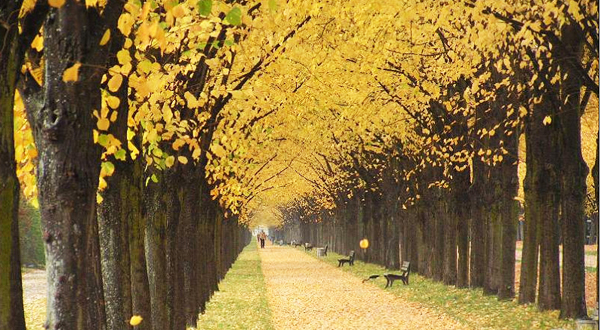
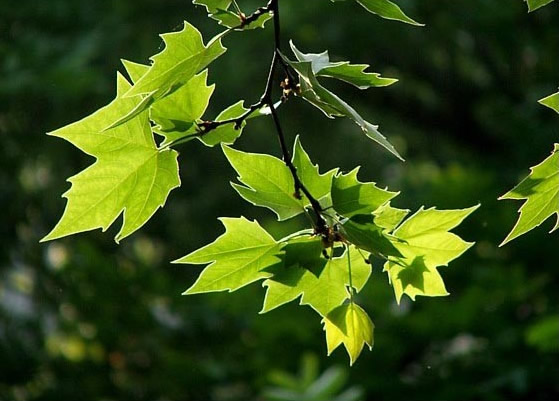
The reason the French plane tree is called "French plane" is that its leaves look very similar to those of the Chinese parasol tree, and both species also belong to the group of large deciduous trees. The French plane tree is generally also shortened to "plane tree", which shows people's desire to feel close to it.
I. Morphological characteristics of the French plane tree
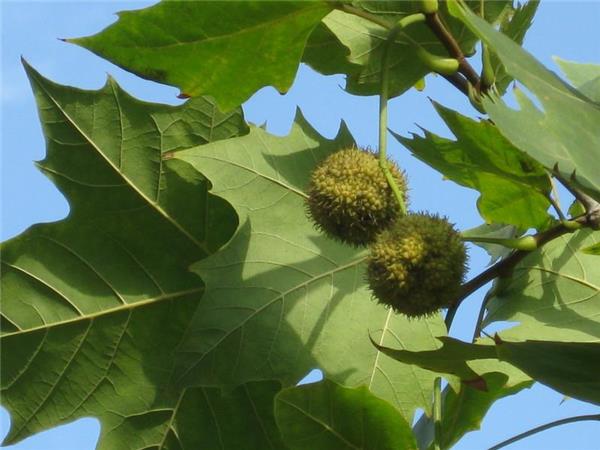
Botanically, the French plane tree (London plane, Platanus x acerifolia) is a large deciduous tree that can reach 35 m in height. The branches spread out, and the crown is broad, forming an elongated oval shape. The bark is grayish green or grayish white and peels off in flakes. Buds are hidden beneath the leaf base, leaves are alternate, large, palmately 5-9 lobed, densely covered with stellate soft hairs when young, later falling off. The flowering period is April-May, with spherical flower heads. The seed balls hang down, usually 2 in a string. The fruit ripens in September-October, and the base of the nut has long hairs. Deciduous tree, up to 35 m tall; branches spreading, crown broad; bark grayish green, peeling off in irregular flakes, powdery green and smooth after peeling. Leaf blade triangular, 9-15 cm long, 9-17 cm wide, 3-5 palmately lobed, margin with irregular sharp teeth and wavy teeth, base truncate or nearly heart-shaped, with stellate hairs when young, later nearly hairless. Spherical flower heads 2.5-3.5 cm in diameter, usually 2 in a string, like hanging bells; flowers about 4 mm long; sepals 4; petals 4; male flowers with 4-8 stamens; female flowers with 6 separate carpels. Flowering in May, fruit ripening in September-October.
II. Pruning techniques for the French plane tree
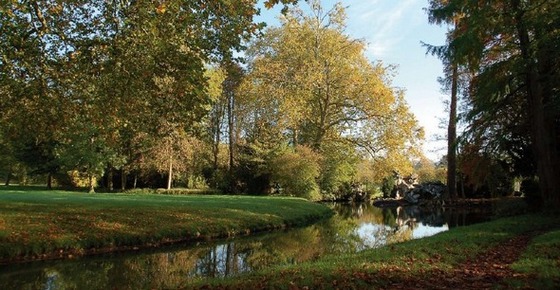
Purpose: Shaping and pruning have an important effect on the growth and tree form of the French plane tree. If it is not pruned promptly and reasonably, the tree form will become chaotic and disorderly, with long main branches, few leaves, or low bushy growth, greatly reducing its ornamental value and shade effect. Timely and reasonable pruning can, in a short time, make the tree form majestic, upright, tall and graceful, with branches well spaced and orderly, many and evenly distributed side branches, and dense, deep green leaves, while enhancing the tree's natural immunity.
Timing: Winter shaping and pruning can be carried out after the French plane tree's leaves fall in autumn and winter, the soil freezes, and the tree enters dormancy, until the sap begins to flow the following spring. Summer pruning is carried out from after bud break in spring until leaf fall in autumn, and is called "summer pruning." Summer pruning mainly consists of bud removal, sprout removal, pinching, thinning overly dense young branches, and adjusting the angle of main branches.
Method: For young trees, a major trunk cut should be carried out once every winter. Generally, the 3 main branches retained the first time remain unchanged, and then 2 strong small branches are retained on each main branch; when shortening, leave 20 to 30 cm. For trees that have already taken shape, a comprehensive pruning should also be carried out every winter. Pay attention to cultivating the dominance of the main branches, and cut off diseased and insect-damaged branches, upright branches, overlapping branches, overly dense clustered branches, and side branches.
III. Control of powdery mildew on the French plane tree
Symptoms and occurrence pattern:
Powdery mildew on the French plane tree is a fungal disease with multiple infections. It mainly damages leaves and tender shoots. Diseased leaves shrink and twist into a ball, and both sides of the leaves are covered with a white powdery layer. The disease generally begins in May-June. In the early stage, small round white powdery spots appear on the front or back of the leaves, then gradually expand, causing tender leaves to shrink, curl lengthwise, and new shoots to twist and wither, affecting the tree's normal growth. In severe cases, yellowish-white small spots form within the white powdery layer, later gradually becoming yellowish brown or dark brown, causing the leaves to wither and fall early.
Control measures:
1. Horticultural control. Because the French plane tree has strong sprouting ability, for heavily diseased large trees, all branches of the current year can be cut off in winter, and diseased fallen leaves and diseased shoots can be removed to reduce the source of infection. In spring, remove buds promptly to improve ventilation and light penetration and strengthen tree vigor.
2. Chemical control. After new leaves sprout in early spring, use mancozeb for prevention. In the early stage of the disease, the following chemicals can be used: 12.5% myclobutanil emulsifiable concentrate at 2500-3000 times dilution, 25% triadimefon wettable powder at 1000-1500 times dilution, and 70% thiophanate-methyl wettable powder at 800-1200 times dilution for spraying, once every 10-15 days, for 2-3 consecutive sprays. The reasonable use of chemicals can effectively control the occurrence and spread of the disease.
It can be said that the ornamental value of the French plane tree cannot be replaced by other tree species, and this has also made it the most famous of all Platanus species. If you have a courtyard at home, you might as well try planting one.