-

Detailed explanation of feed-saving rearing methods for chickens, helping you reduce the cost of chicken feed
The cost of chicken feed accounts for about 70% of the total rearing cost, so saving feed to reduce costs is the main way to improve the economic benefits of chicken rearing. The following methods can be used to save feed: 1. Raise excellent breeds. Choose excellent breeds of chickens to raise; at the same age and with the same amount of feed consumption, the production performance of excellent breeds is much higher than that of other breeds. There are more than a dozen high-yielding layer and broiler breeds in the world today, and most of them have already been introduced into China. The laying hens suitable for raising in the north mainly include excellent breeds such as Lohmann, Hysex, and Hy-Line.
-
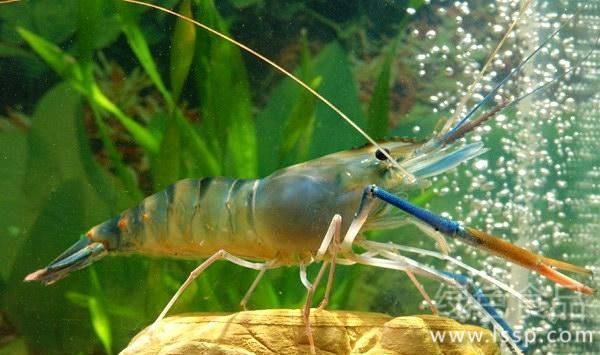
To achieve high yield and good profits from freshwater shrimp and river crabs, grasping six key points is very important
For high yield and good profits from freshwater shrimp and river crabs, grasping the "six key points" is very important
-
Why can't soybeans be planted in continuous cropping?
Soybeans are commonly known as yellow beans. Farmers have a traditional habit of planting soybeans this year and continuing to plant them next year, which results in stunted growth, shortness, yellowing leaves, susceptibility to pests and diseases, fewer pods and small seeds, and significantly reduced yield in continuously cropped soybeans. According to surveys, under normal circumstances, continuous cropping of soybeans reduces yield by 20%-30% or more. The main reasons for the yield reduction: pests and diseases are prone to occur. Several diseases parasitic on soybeans, such as bacterial spot disease, black spot disease, damping-off, and yellow wilt, have suitable conditions for occurrence in continuously cropped soybean soil and will inevitably occur in large numbers
-
Why soybeans should not be grown in continuous or alternate-year cropping
Soybean continuous and alternate-year cropping control techniques can reduce the impact on yield. Impact on soybean yield. Different environments have different effects on soybean yield. ①Continuous cropping is severe, alternate-year cropping is mild; ②severe in the west and southwest, mild in the north and east; ③severe on poor land, mild on fertile land; ④severe on ridge slopes, mild in low-lying wet areas; ⑤severe in dry years, mild in rainy years; ⑥severe with no or little fertilizer, mild with more fertilizer; ⑦severe with original-ridge sowing, mild with plowed new ridges; ⑧severe with many soil-borne diseases and pests, mild with few diseases and pests; ⑨severe on long-cultivated land, mild on newly reclaimed land; ⑩severe under drought, mild with irrigation. The four eastern leagues of the Inner Mongolia Autonomous Region are each similar to their adjacent provinces, among which the Hulunbuir League area is similar to the northern part of Heilongjiang Province, and the continuous cropping phenomenon is also very severe. Today I want to discuss three issues: first, the impact of continuous and alternate-year soybean cropping on soybean yield and quality; second, the reasons for continuous and alternate-year soybean cropping; third, control techniques.
-
Cotton and lily intercropping planting pattern
Cotton and lily intercropping is a cotton-field intercropping pattern widely used in coastal and riverside dryland sandy loam areas. The two crops affect each other little and are mutually beneficial in fertilizer use, but note that lily cannot be continuously cropped and must be rotated to a different crop. This intercropping pattern generally has a bed width of about 3 m, with cotton planted in wide and narrow rows, the wide row spacing being 140 cm and the narrow row spacing 50 cm, with 4 rows of cotton per bed. In the wide cotton rows, 6 rows of lily are planted, with a row spacing of 20 cm and a plant spacing of 20-25 cm, at 5000-6000 plants per mu. Cotton is raised as seedlings and transplanted, planted separately on both sides of the bed,
-
Detailed Explanation of Key Points of Lily Bulb Storage and Fresh-Keeping Techniques
I. Choose storage-tolerant varieties. China is the country of origin for lilies, with many cultivated types and varieties. The main ones include Longya lily, Chuan lily, and tiger lily (Lilium lancifolium) and other variants. Among them, the Chuan lily, which is white, flat-spherical, tightly clustered, large, and sweet-tasting, has good quality and stores well. Lilies are generally harvested in early November, mostly by digging out the bulbs with a spade, promptly removing the stems and soil, and cutting off the fibrous roots. Newly dug bulbs must not be exposed to wind and sun in the field, to prevent the outer scales from discoloring and losing water. II. Pre-cool and select the bulbs. After harvest, lilies should be promptly transported to a shady place and evenly
-
Keeping mountain bees brings high returns and is a good path to increasing income and becoming better off
The mountain bee is a wild economic insect. The honey it makes from the nectar of the many flowers in nature is a fine grade of honey, and its market price can reach 30-40 yuan per kg. Generally, one bucket of mountain bees can yield about 25 kg of honey per year. If the colony is strong, the nectar source is good and the climate is suitable, each colony can produce 40-50 kg of honey. Right now is the peak period for mountain bee colony division, and bringing mountain bees home to raise them is a good project with low investment and quick results. Making and placing the bee bucket. The bee bucket is made up of a bottom bucket, an extension bucket, a bucket bottom and a bucket cap (lid)
-
Methods and Technical Key Points for the Fresh-keeping and Storage of Jun Jujube
Red beauty, nourishing life. For thousands of years, red jujube has been regarded as an excellent product for beautifying the complexion, resisting aging, and promoting longevity, and it is also one of the important food sources for the survival of people in jujube-growing areas and for getting through famines. Red jujube is different from ordinary dried and fresh fruits; it combines medicinal, health-care, and edible functions in one. As a rare fruit and the "king of vitamin C," Jun Jujube, as one of the four famous jujubes of Shanxi, is favored by consumers for its unique shape, deep red color, thin skin and thick flesh, small pit and large fruit, and crisp, sweet, fragrant taste. According to measurements, every 100 g of fresh Jun Jujube contains sugar
-
Cultivation Methods and Technical Key Points for Intercropping Garlic in Cotton Fields
When garlic is intercropped in cotton fields, each mu can produce 93 kg of lint cotton and 1,300 kg of garlic, with a benefit of about 3,300 yuan per mu. 1. Cotton: Use insect-resistant hybrid cotton varieties such as Kemian No. 3 and Kemian No. 6. Before sowing, deeply plow the land 25 cm, and together with plowing, apply 3,000 kg of decomposed livestock and poultry manure and 60 kg of potassium sulfate compound fertilizer per mu. Broadcast 2-3 kg of 5% phoxim granules per mu to control underground pests. The suitable sowing period for cotton in Pizhou City is around April 3. Seize sunny days to raise seedlings in double-film nutritional pots. Prepare about 3,000 pots per mu of field. After watering the seedbed thoroughly, sow dry seeds, 1 seed per pot. About 0.35 kg of coated cotton seed is needed per mu of field. After full emergence, ventilate promptly to reduce humidity and control pests and diseases, and cultivate strong seedlings. Transplant around May 12 when cotton seedlings are at the 4-leaf stage, using equal-row spacing with a row spacing of 1.2 m and a plant spacing of 33 cm, planting about 1,700 plants per mu. In mid-to-late May, together with hilling, apply 15-20 kg of urea, 50 kg of superphosphate, and 20 kg of potassium chloride per mu. Around July 20, apply flower and boll fertilizer according to cotton growth, with 30 kg of urea and 15 kg of potassium chloride per mu. In early August, apply topdressing for boll development, with 7.5-10 kg of urea per mu. Pay attention to spraying trace element solutions such as boron fertilizer and monopotassium phosphate. Use mepiquat chloride for chemical regulation 4 times: 1-1.5 g per mu at the full bud stage, 2-2.5 g per mu at the early flowering stage, 3-4 g per mu at the full flowering stage, and 3-5 g per mu after topping. Top around August 6. Pay attention to controlling the third generation of cotton bollworm, cotton aphid, mirids, red spider mites, tobacco whitefly, and other pests. Pull up cotton stalks in mid-November.
-
The Twelve-Month Turtle-Keeping Song: Month-by-Month Feeding and Management Essentials
In January the ground is frozen and water turns to ice, during Minor Cold and Major Cold the turtles are in hibernation, check regularly to prevent predators, give special care to hatchlings without letting up. In February Start of Spring and Rain Water arrive, the spring cold nips and the ice first begins to break, guard against cold and keep warm, repair the turtle pond, and plan the year's work early. At Awakening of Insects and Spring Equinox the spring light is lovely, the turtles' dreams first awaken amid drizzling rain, raise earthworms and insects to prepare bait, and in March the turtles swim in new water. In April Pure Brightness and then Grain Rain, increase the bait and stress management, feed by the four rules and follow science, for the reproductive and growth season has reached its fine time. In May Start of Summer joins Grain Full, do not delay in cleaning the water quality, prevent turtle diseases early in the year, and give medication and disinfection
条件筛选