-
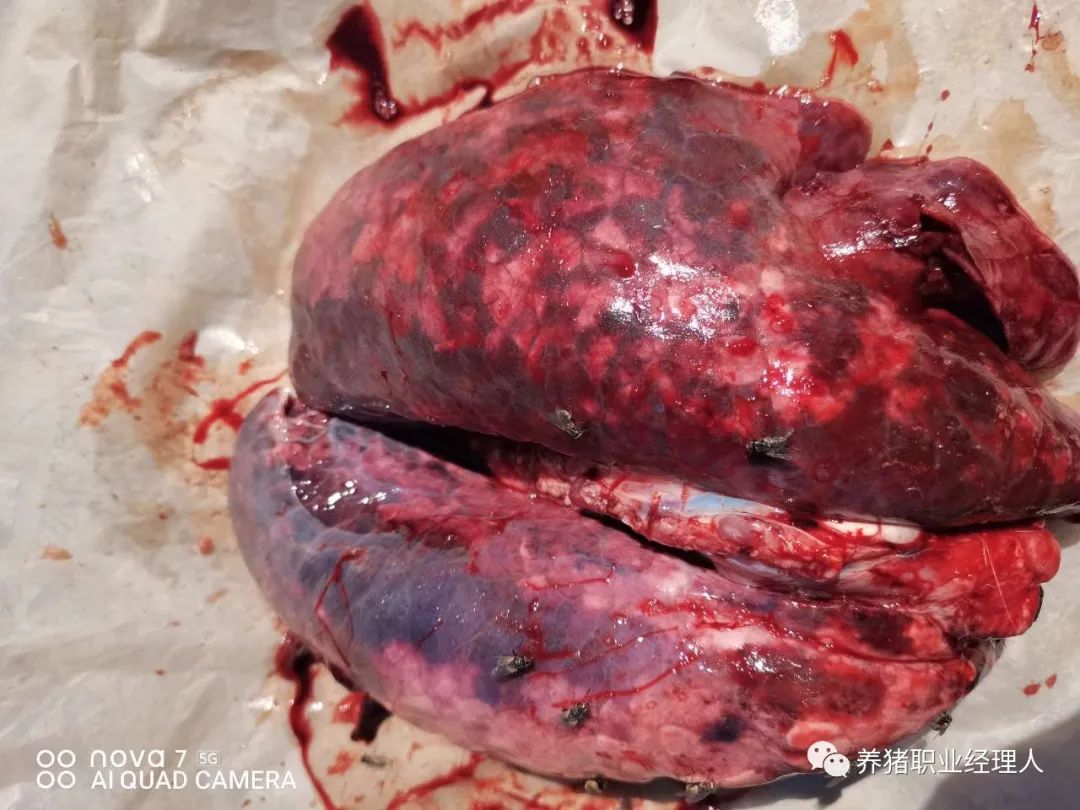
What role do respiratory tract pathogenic microorganisms on pig farms play? (Part 2)
Analysis of the roles of respiratory tract pathogenic microorganisms on pig farms (Part 2)
-
Role Analysis of Respiratory Pathogenic Microorganisms in Pig Farms (Part 1)
Role Analysis of Respiratory Pathogenic Microorganisms in Pig Farms (Part 1)
-
40 million pig farmers don't understand strengthening the body's resistance to dispel pathogenic factors, so what can be done when pig farm problems occur frequently?
40 million pig farmers suffer frequent pig farm problems because they don't understand "strengthening the body's resistance to dispel pathogenic factors" - do you understand it?
-

What pathogenic effects does feed contamination have on fish?
Because some feed products currently contain bacteria at levels far exceeding the standard, mass fish deaths occur from time to time after fish eat contaminated feed. Based on the disease symptoms in fish, it can be roughly divided into two types: acute type (explosive) and chronic type. 1. Acute type (explosive type): After fish eat contaminated feed, disease onset occurs in as much as 3 to 5 days, or as little as 1 to 2 days, with symptoms appearing; severely affected fish have already died, and the number of dead fish shows a gradually increasing trend, but feeding is not affected, and most fish can eat normally. This kind of
-
Pathogen, Symptoms, and Prevention and Control Methods of Louping Ill
This is a viral disease that causes inflammation of the brain, hence it is also called encephalitis. The disease occurs mainly in sheep and can occasionally cause illness in goats. It occurs only in mountainous areas with many ticks. 1. Pathogen The pathogen is a flavivirus. The vector is the tick. Ticks infected with the virus can transmit the disease by biting healthy sheep. It can occasionally be transmitted to humans and shepherd dogs. In humans, it manifests as high fever and acute muscle pain, but it does not cause death. 2. Symptoms Sheep: The incubation period is 1 to 3 weeks. After the virus
-
Detailed Explanation of the Pathogenic Characteristics of Duck Aflatoxin
(1) Production of aflatoxin Aflatoxin, like other mycotoxins, is one of the metabolic products produced by toxigenic fungi during their growth and reproduction in a substrate. This toxin was discovered in 1960 during the investigation of the cause of "Turkey X disease" that affected 100,000 turkeys in the United Kingdom. The following year, it was further found that peanut meal contaminated with Aspergillus flavus could induce liver cancer in rats, confirming that aflatoxin is a carcinogenic mycotoxin. The main fungi producing aflatoxin are specific strains of Aspergillus flavus and Aspergillus parasiticus, while Aspergillus wentii and
-
Detailed Explanation of the Pathogen and Epidemiological Characteristics of Swine Vesicular Disease
This disease is an acute infectious disease caused by the swine vesicular disease virus. Usually, only pigs can be naturally infected by this disease, while other animals such as cattle and sheep are not easily infected, so it can be distinguished from foot-and-mouth disease. The disease is characterized by vesicles on the skin of hairless parts of the pig's body and on the oral mucosa. Vesicles and erosions also occur on the skin of the coronary band, interdigital space, and heel, and around the teats of sows. This disease is widely distributed and spreads rapidly. It was first discovered in Italy in 1966. By the 1970s, after successively becoming epidemic in the United States, Austria, Hungary, and other Eastern and Western European countries, it also occurred in Japan
-
Common Types of Porcine Pathogenic Diarrhea and Prevention and Control Measures
In pig production, there are many causes of pig diarrhea, such as malnutrition, improper feeding management, infectious diseases, internal diseases, parasitic diseases, etc., all of which can cause diarrhea. This article analyzes the mechanisms causing porcine pathogenic diarrhea and proposes prevention and control measures for readers' reference. 1 Classification of Common Pathogenic Diarrhea in Pigs 1.1 Viral Diarrhea 1.1.1 Transmissible Gastroenteritis This disease is an acute, contagious enteric infectious disease caused by transmissible gastroenteritis virus of the Coronaviridae family. Pigs of all ages can
-
Can Keeping Chickens, Ducks, and Geese Together with Pigs Lead to Highly Pathogenic Avian Influenza?
Poultry should not be kept together with pigs, because influenza viruses from poultry can infect pigs, and human influenza viruses can also infect pigs. Since influenza viruses have 8 different nucleic acid segments, when these two different virus particles infect a single cell together, their nucleic acid segments undergo reassortment and rearrangement to produce new types of influenza virus particles. These new influenza virus particles can often cause major epidemics in humans, resulting in great harm. In addition, chickens should not be kept together with waterfowl such as ducks and geese, because
-
How can cold-water fish farming effectively prevent and control pathogens?
1. Establish a strict quarantine system. When introducing and exporting fish eggs and fry, all farming areas must strictly carry out quarantine to prevent and control the occurrence of diseases. Farms should set up quarantine ponds to isolate introduced fish species; only after the introduced fish are confirmed free of important diseases may they be temporarily reared. Quarantine ponds are generally located at the end of the drainage ditch. The length of quarantine time should be determined by the transport season, water temperature, and the characteristics of the disease. When the average temperature is not lower than 12°C, 20 days are required; when the water temperature is higher, it can be shortened, which is determined on the basis that the lower the temperature, the longer the incubation period. If
条件筛选