What role do respiratory tract pathogenic microorganisms on pig farms play? (Part 2)
The "doorman" of respiratory disease complex: Mycoplasma hyopneumoniae
Mycoplasma first binds to the cilia of the epithelial cells of the pig respiratory mucosa and then colonizes the respiratory tract, causing reduced ciliary function and an inability to effectively clear debris and invading pathogens from the respiratory tract, which in turn turns the lungs into a reservoir of viruses and bacteria.
Mycoplasma hyopneumoniae is present in the nasal cavity of infected pigs, with an incubation period of 10-14 days, and lesions are basically not seen in suckling piglets less than 2 weeks old. However, if the nasal microenvironment is dramatically altered on the farm due to atrophic rhinitis, then the clinical symptoms of Mycoplasma hyopneumoniae will appear earlier in the farrowing house.
The initial clinical symptom of this disease is a chronic dry cough without sputum, usually most obvious in the morning and when the pigs are startled or forced to move. Once the dry cough appears, the entire respiratory mucosa becomes mildly congested, the microenvironment within the respiratory tract is disrupted, and mucosal damage worsens, which in turn promotes secondary infection by Pasteurella multocida type D, further triggering more severe atrophic rhinitis, with the two mutually reinforcing each other. At the same time, the dry cough in piglets causes instability in the internal environment of the respiratory tract, making resident bacteria (Haemophilus parasuis, Streptococcus, Pasteurella, etc.) become abnormally active and begin to multiply in large numbers, laying hidden dangers for disease caused by resident bacteria. The first to be affected is Pasteurella multocida. Mycoplasma infection is often accompanied by secondary infection by Pasteurella multocida type A, causing pasteurella pneumonia, aggravating the severity of pneumonia, and leading to more extensive lung lesions.
At the lesion sites, fibrinous tissue adhesions can be seen between the lung surface and the inner wall of the thoracic cavity, along with necrotic areas and abscesses. The clinical presentation of affected pigs shifts from chronic dry cough to productive cough.
In summary, Mycoplasma causes changes in the microenvironment within the respiratory tract, providing the necessary conditions for the massive proliferation of other resident respiratory bacteria. At the same time, it reduces the resistance of the tonsils, imperceptibly opening this "internal gateway" of the tonsils, thereby allowing viruses such as pseudorabies virus to invade unchecked.
The "igniter" of respiratory disease complex:
Haemophilus parasuis, Streptococcus, Actinobacillus pleuropneumoniae
Changes in the internal environment of the respiratory tract cause instability of pathogenic microorganisms within the respiratory tract, and at the same time the intense dry cough also reduces the resistance of the tonsils and alters the habitat of resident bacteria. If some conditional factors also change at this time, it will very easily trigger the occurrence of Haemophilus parasuis disease and Streptococcus disease. At this point, Haemophilus parasuis and Streptococcus suis will become the "igniters", and once the "time bomb" of PRRS and circovirus is ignited, respiratory disease complex will appear.
Haemophilus parasuis can usually be isolated from nasal secretions and tracheal mucus samples of healthy pigs, which means that Haemophilus parasuis preferentially colonizes the nasal sinuses and trachea rather than the tonsils.
Early infection of the nasal cavity by Bordetella bronchiseptica can enhance the colonization of Haemophilus parasuis, leading to the speculation that mucosal damage may increase the opportunity for bacterial invasion.
The natural sites of infection for Streptococcus suis are the upper respiratory tract (especially the tonsils and nasal cavity), reproductive tract, and digestive tract of pigs. The carrier rate in pigs is close to 100%, and it is an opportunistic pathogen. Its pathogenic triggers are mainly divided into three major categories:
First, skin wounds, including a series of wounds from teeth clipping, tail docking, umbilical cord clipping, castration, burrs on feeding equipment, and parasites tunneling into the skin;
Second, stress, including a series of stress problems such as sudden temperature changes in autumn and winter, excessive humidity caused by water splashing onto raised beds during pen washing, poor ventilation, improper feed transition, and crowding caused by high stocking density;
Third, the health status of the pigs, including whether the pigs have immunosuppressive factors, whether there is mixed infection with other pathogenic bacteria, etc.
Therefore, once Haemophilus parasuis disease and Streptococcus disease occur, triggered by PRRS and circovirus and assisted by changes in management conditions, they will push the disease to develop toward a complex. If the pigs are at the nursery stage at this time, it manifests as postweaning multisystemic wasting syndrome (PMWS).
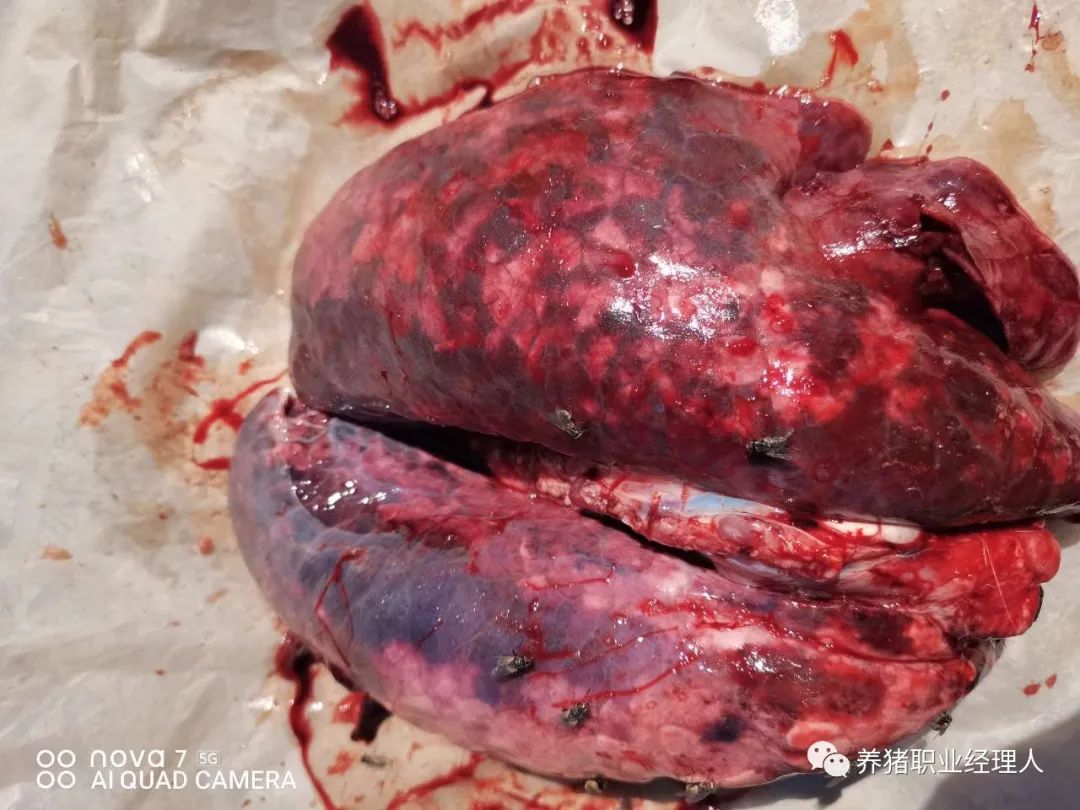
Actinobacillus pleuropneumoniae can colonize the tonsils and adhere to the alveolar epithelium, while very few bacteria are contained in the nasal cavity. As pigs grow, during the period from 6 to 10 weeks of age, maternal antibodies against Actinobacillus pleuropneumoniae (APP) gradually decline in piglets. At the same time, the chronic dry cough caused by Mycoplasma greatly increases the amount of APP shed into the environment, causing rapid spread of the disease. In infected pigs that die, blood-tinged foam can be seen flowing from the mouth.
Infection with Actinobacillus pleuropneumoniae can aggravate the severity of pneumonia, and the herd shifts from progressive emaciation and pallor to obvious respiratory symptoms, that is, from PMWS to PRDC, thereby changing the type of disease complex. In most clinical cases, it is very difficult to completely separate PRDC and PMWS, simply because their clinical manifestations are very similar.
The "siege soldier" of respiratory disease complex: swine fever
"Swine fever is the source of all diseases" - this statement has never changed. When other pathogenic microorganisms co-infect and activate PRRSV and PCV2 to promote the occurrence of disease complex, pigs with disease complex cannot mount an effective immune response to other immunogens, further reducing the body's resistance and promoting the possible simultaneous occurrence of multiple disease complexes in the herd. Medication is effective but prone to rebound, showing a phenomenon of treating the symptoms but not the root cause. In the late stage of disease complex, on farms that do not vaccinate against swine fever scientifically or do not vaccinate against swine fever at all, it is very easy for the chronic swine fever state to evolve into the typical swine fever state, at which point large numbers of pigs will die, antibiotics will be ineffective, and only emergency vaccinationbreeding pigsagainst swine fever vaccine can control the progression of the disease.
Therefore, if circovirus and PRRS are compared to the "time bombs" of a pig farm, then swine fever is the "siege soldier" of disease complex. In summary, whenever a pig farm has an abnormally high mortality rate, swine fever is always involved, so many farms with heavy casualties are often farms that pay very little attention to swine fever prevention and control!
For production managers, various steps should be scientifically taken to control the occurrence and spread of respiratory disease complex in pigs and reduce its harm to pig health and production performance. Since the pig's immune system is the target of attack by PRRSV and PCV2, the infection pressure of PCV2, PRRSV, and other pathogens can be reduced by improving feeding management, and the addition of medication and vaccination can provide significant protection for pigs. In disease prevention and control, attention should be paid to the triggers of disease occurrence, and these triggers should be avoided as much as possible. The occurrence of disease is the result of accumulated errors at multiple stages, so to prevent and control respiratory disease complex well, it is necessary to carefully identify the errors at each stage. Improving these errors is the best strategy.