-

What causes plant pests and diseases? Tracing the origins of IPM crop production management techniques
IPM is not about setting absolute methods, but about finding the most optimized approach. Let's take a look together below. Cruciferous crops in their growth pattern often develop serious pests and diseases only near harvest time. Taking broccoli as an example, the head is covered by outer leaves, and pests easily hide within, leading to poor control
-
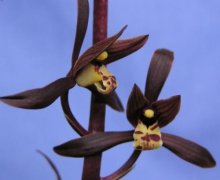
Silver-edged Cymbidium sinense blooming pictures and introduction to origins and prices
Silver-edged Cymbidium sinense is one of the varieties of Cymbidium sinense orchids. The leaves of silver-edged Cymbidium sinense are wide and thick. On large plants, the leaf-edge variegation is pale yellow and wraps nearly half of the leaf, and on new shoots the leaf variegation is even more obvious and wider, appearing pale white, commonly known as the "silver edge." It is glossy and very imposing.
-
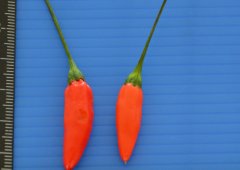
What are the origins and characteristic differences between facing-heaven chilies and lantern peppers?
There are relatively many factors influencing chili pepper cultivation profitability. Based on research by previous botanists and Kraft's (Kraft, 2013) records of wild species collected in Central and South America, it is inferred that the four currently important domesticated cultivated species of Capsicum are: C. annuum, C. chinese, C. frutescens,
-

Why Is Mangosteen So Expensive? A Detailed Guide to Its Origins and Key Cultivation Techniques
Mangosteen is a fruit with a hard rind, soft and glutinous flesh, and a sweet taste, generally ripening and hitting the market in November and December. Mangosteen can not only be eaten fresh, but also processed into preserved fruit, and its rind can also be used to make dye. When buying mangosteen, you will notice that
-
How to Keep Flowerhorn Fish? A Detailed Guide to Their Origins and Care
As people's lives become more affluent, their demands for quality of life are also getting higher and higher. Placing a feng shui fish tank at home is essential. Among the goldfish in the tank, the flowerhorn fish is indispensable. This kind of fish is very easy to keep, but if you want to raise one that is free of disease and spots, and has developed a lump on its head
-
Where is okra native to? Let us take you through the origins of okra
Okra is a relatively common vegetable in the south, known as the king of vegetables, and its nutritional value is very high. So where is okra native to? Let us take a look together. 1. Origin of okra Okra is native to India and is widely cultivated in tropical and subtropical regions.
-
Where is the tomato native to? Let us take you through the origins of the tomato
The tomato, also called persimmon tomato, xi hong shi, or foreign persimmon, is a crop introduced from abroad; its flavor is intense and it is rich in nutrients, and it is grown in all parts of our country. So where is its native origin? What effects and benefits does eating it have? Where is the tomato native to? Tomato native
-
What are the origins of imported oranges? A roundup of common source countries
Oranges are a common fruit, grown almost everywhere across the country, with high nutritional value and a great many varieties. There are also a small number of imported oranges. So what are the origins of imported oranges? 1. Origins of imported oranges The origins of imported oranges are mainly
-
Where is pepper native to? A look at the origins of pepper
Pepper is a seasoning loved by people who enjoy spicy flavors, but it is not a native Chinese crop. Where is pepper native to? 1. Pepper's native origin. Pepper originated in tropical regions such as Southeast Asia and South Asia, and legend has it that Zhang Qian brought it back to China when he was sent on a mission to the Western Regions.
-
Where is the origin of the eggplant? Let us take you through the origins of the eggplant
From north to south we have eaten quite a few dishes with eggplant, so where is the eggplant's place of origin? How did it spread to China? The eggplant's place of origin is tropical Asia, in India and Thailand; to this day India still has wild species and close relatives of the eggplant, and it was introduced to our country in the Eastern Han Dynasty. Eggplant is found all over the world
条件筛选