-

South Africa's National Treasure Tea Gets EU Origin Certification, One of South Africa's Three Treasures Sees a Surge in Value
South Africa's national treasure tea is rich in natural nutrients and free of caffeine. In recent years it has rapidly risen to fame in the beverage market, and in May of this year it passed certification by the European Commission, obtaining protected designation of origin, becoming the first African crop to obtain this certification, meaning that even if the same
-
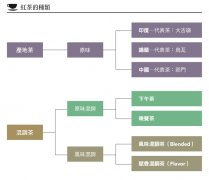
Black tea comes in diverse flavors, blended with ingredients from different origins to create a ever-changing range of tastes
Black tea originated in Fujian, and in just one or two hundred years, amid the commercial currents around the world, black tea broke through national boundaries and became an important part of tea drinking everywhere. Looking back on this one or two hundred years of history is truly fascinating.
-

The Ministry of Health and Welfare requires all pork products to clearly label the place of origin of the pork raw material
The Ministry of Health and Welfare stated that regarding the media report on the 3rd that a mutton hot pot stall had also put up a "Taiwan Pork" label, upon investigation, because the shop sells pork products, in accordance with regulations, it clearly labels the country of origin of the pork, and there is no confusion as the media claimed...
-

Eco-chefs step out of the kitchen to the source, supporting farmers in returning to the original spirit of cooking
Eco State Banquet 01"A group of chefs supporting a group of farmers! Stepping out of the kitchen to the source, eco-chefs return to the original spirit of cooking
-
Where are durians grown, and are there durian-growing regions in China?
The king of fruits, the durian, is a fruit that people both love and hate. The durian's distinctive smell may be unbearable to some, but its rich, juicy flesh looks mouthwatering. Durian is generally available in fruit shops and fruit supermarkets, and it is already a
-
Where is the origin of cacti? A comprehensive analysis of distribution factors
Most people are familiar with the cactus species, but know little about its place of origin. In fact, most plants in the cactus family are native to the Americas. In North America and South America, they are widely distributed from Canada to the Patagonia region of Argentina. They have gradually
-
Where are the main places of origin of cacti? Introduction to their native regions
1. Arizona (USA) In southern and southwestern Arizona, vast stretches of cacti have become a spectacular local sight. The mountainous areas of the northern United States are covered in lush coniferous forests, while the south is flat desert terrain. There, the nearly branchless saguaro, which can reach up to
-
A Brief Introduction to the Basics of Cactus Cultivation
The native habitat of cacti differs markedly from Central Europe because of its special climate and vegetation conditions. The climate in Central Europe is relatively mild, and although annual rainfall is fairly evenly distributed, the length of daylight varies greatly across the four seasons. In the cactus's homeland, by contrast, we
-
What are the main improved walnut varieties in China?
1. Lüling Origin and distribution: A bud sport selected from Xiangling walnut by Hebei Agricultural University and Hebei Lüling Fruit Industry Co., Ltd. Selected in 1995, after multiple generations of grafting propagation, the traits are stable, intermediate testing in 2000, and in 2005 it passed the Hebei Provincial Forest Tree Variety Approval Committee
-
What are the excellent foreign walnut varieties?
1. Payne. Origin and distribution: native to the United States. Currently, its cultivation area in California, United States is second only to Hartley. It belongs to the late-bearing walnut variety type. Fruit economic traits: nuts medium to small, average single nut weight 11.25 grams. Suture tight, kernel out
条件筛选