-
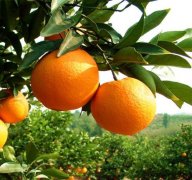
Best Planting Time for Orange Trees and Watering and Fertilizing Requirements
We have all eaten oranges as a fruit. Seeing dark green leaves decorated with bright orange fruit may tempt you to grow your own citrus tree. So do you know whether this fruit is difficult to grow? How should it be planted? Providing shade and edible
-

How to Plant Orange Seeds So They Grow into Orange Trees: A Detailed Guide to the Planting Method
Both mandarins and tangerines belong to the loose-skin citrus category of the genus Citrus in the family Rutaceae. The fruit has a thick rind and a slightly sweet-and-sour taste. Today we will explain how to grow an orange tree from orange seeds. 1. Soaking Before planting, clean the orange seeds thoroughly and soak them in clean water for about a week,
-
When Is the Best Time to Plant Orange Trees? Plus a Detailed Planting Method
As a fruit rich in vitamin C, oranges have a very strong market among consumers, and their cultivation value is relatively high. So when is the best time to plant oranges? What are the planting methods? 1. Growing Conditions for Oranges 1. Soil Orange seeds
-
Pruning Methods and Technical Points for Young Navel Orange Trees
Pruning navel orange trees is one of the important techniques in citrus cultivation. It is also the most effective method for shaping fruit trees to promote high citrus yields and improve fruit quality. It can also encourage the tree to form a high-yielding structure, allowing good ventilation and light penetration through the canopy, reducing pests and diseases, and enabling the production of premium quality fruit.
-
The planting spacing for navel oranges is generally about 3 m, and 110 to 120 trees can be planted per mu.
Abstract: The planting spacing for navel oranges is generally a 3 m by 2 m layout or a 4 m by 3 m layout, with about 110-120 trees planted per mu, and a row spacing of about 3 m kept between fields. Navel orange cultivation is mainly divided into seed selection, land preparation and planting, thinning and weeding, water and fertilizer management, and pruning of branches and leaves.
-
Key Technical Points for Flower and Fruit Retention in Citrus Cultivation
The 2-3 months from bud emergence to fruit set stabilization is the most important period of the year for citrus trees. For a good harvest, comprehensive flower and fruit retention measures must be taken according to the growth conditions of the citrus trees and changes in weather. 1. Reasonable fertilization: For citrus orchards that were not fertilized last winter, organic fertilizer should be supplemented as soon as possible. For adult trees, apply 5-10 kg of chicken manure or 1-2 loads of farmyard manure per tree, plus an appropriate amount of urea, and bury it around the root zone. The fertilization principle during the flower and fruit retention period is: nitrogen-based in the early stage, emphasis on potassium with phosphorus supplementation in the later stage; combining soil fertilization with foliar feeding. For the post-bloom fertilizer, apply compound fertilizer plus an appropriate amount of urea during the flower-falling period to promptly replenish nutrients consumed during flowering; for the fruit-setting fertilizer, apply potassium fertilizer plus an appropriate amount of phosphorus fertilizer; for the fruit-swelling fertilizer, apply compound fertilizer plus potassium fertilizer. For foliar feeding, spray 0.2% monopotassium phosphate twice from spring bud break to before flowering, spray nucleotides during rainy days, and add 0.1% borax to one of the applications; during the young fruit stage, spray foliar fertilizer 2-3 times in combination with pest and disease control or fruit retention, with the first foliar spray including 0.1% magnesium sulfate and 0.1% zinc sulfate.</p><p>2. Soil management: Repair drainage ditches inside and outside the orchard to remove standing water, so that waterlogging on rainy days does not affect root growth or even cause root rot leading to flower and fruit drop. During continuous dry and hot weather lasting more than 10 days, irrigate promptly to keep the soil moist and loose, which helps the root system absorb water and nutrients.</p><p>3. Scientific use of growth regulators: Plant growth regulators commonly used for citrus fruit retention include 2,4-D, fruit-retention hormone, triacontanol, 920, and fruit-retention agents. Use them 2-3 times after flower drop, spraying once every about 15 days. Alternating different growth regulators gives better results. For seedless and few-seeded citrus varieties, using 920 or triacontanol for fruit retention gives better results.</p><p>4. Pest and disease control: During the flowering and fruiting period, the main pests and diseases include red spider mites, rust mites, aphids, citrus blossom midges, tortrix moths, anthracnose, and scab. For aphid control during the spring shoot stage, use omethoate or monocrotophos; in early to mid-April (or early March if drought occurs), control red spider mites, and in mid-to-late April control rust mites, using acaricides or biological pesticides for spraying; spray organophosphorus pesticides at the early bud stage to kill citrus blossom midges and tortrix moths; for diseases, focus on prevention, using fungicides such as copper oxychloride or thiophanate-methyl.</p><p>5. Control early summer shoots: From May to mid-June, promptly remove early summer shoots to avoid competition between shoots and fruit for nutrients, which benefits young fruit development and reduces fruit drop. For vigorous trees with few flowers and few fruits, girdle the trunk 25 days after flower drop to retain fruit, which can also control summer shoots.</p>
-
A Detailed Guide to Renewal Methods for Aged Mandarin Orange Trees
For aged trees caused by advanced tree age, overly dense planting, damage from pests and diseases, or poor management, renewal and rejuvenation should be carried out promptly. There are three methods: main branch renewal, skeleton renewal, and rotational renewal. 1. Main branch renewal. This method is suitable for severely declining plants. The method is: at
-
How to Prune Navel Orange Trees? Pruning Methods and Technical Key Points
Navel orange is a very common fruit, cultivated in various parts of the south, and many people like to eat navel oranges. So what are the pruning methods for navel orange trees? 1. Pruning of young trees. The branches and shoots of navel orange grow relatively evenly, so pruning is generally not needed during the young stage; simply removing buds and controlling shoots is enough.
-
What conditions are needed to grow orange trees?
To grow high-quality varieties of oranges, you cannot do without controlling their growing environment factors. Only by understanding the cultivation conditions of orange trees can you better take care of the plantation. Cultivation conditions of orange trees 1. Soil: choose mountainous or sloping land, with deep soil layers and fertile soil
-
When do orange trees usually bloom?
Orange trees generally bloom in spring, that is, between February and March each year, and the flowering period lasts about one month. The tree is evergreen all year round, and its flowers are yellow-white with a delicate fragrance, making it a fine tree species for courtyard planting. So do you know how to plant an orange tree in a courtyard? Let's take a look below.
条件筛选