-

Why is the nutrient return rate of livestock and poultry manure to fields in China less than 50%?
Vice Minister of Agriculture Zhang Taolin said on the 23rd that due to the massive use of chemical fertilizers, insufficient rural environmental protection investment and other factors, composting is becoming increasingly rare in rural areas, and the nutrient return rate of livestock and poultry manure to fields in China is now below 50%. Zhang Taolin made the remarks at the 2015 International Composting Conference
-
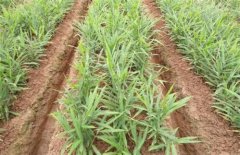
How to Build Soil Fertility? Main Sources of Crop Nutrients and Key Points of Fertility Management
Fertility management: To achieve the goal of sustainable agricultural production, so that nature cycles endlessly and life continues without cease. This is the ecological balance we need to achieve. The main significance of fertility management in sustainable agriculture lies in using natural substances that do not consume energy to supply crop nutrients
-
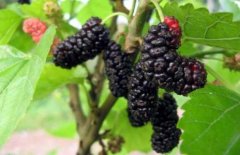
What nutrients do mulberry branches and mulberries each contain?
It is said that the mulberry tree is a treasure from top to bottom, so let's take a look at what functions the mulberry tree actually has and what nutritional value it offers. The bark and roots of the mulberry tree can be used in traditional Chinese medicine, known as mulberry white bark and honey-processed mulberry white bark; the leaves, dried and ground into powder, can also be used as medicine. The unripe fruit and the green branches of the mulberry tree contain a white latex, which may be slightly toxic and irritating. In addition, the pollen of the male flowers is relatively light and easily inhaled into the lungs, so individuals sensitive to it need to take care. The mulberry tree prefers fertile, well-drained loam, but can grow in a variety of soil types, with a pH of 5.5 to 6.5. Waterlogged areas should be avoided. The mulberry tree needs an average of about one inch of rainwater or irrigation per week; especially when watering is insufficient during the dry season, it may cause fruit drop. Iron, zinc, magnesium, barium, copper, and boron are the trace elements it needs, and organic fertilizers containing these elements can be purchased for use.
-
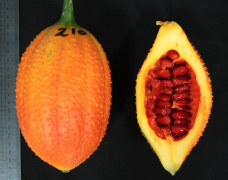
Is Taiwan Momordica cochinchinensis a fruit? Detailed explanation of nutritional value and uses
Is Momordica cochinchinensis a fruit? How should it be eaten? In order to promote the native specialty crop Momordica cochinchinensis, the Taitung District Agricultural Research and Extension Station of the Council of Agriculture, Executive Yuan (hereinafter referred to as the Taitung Station) held the "Native Specialty Crop Momordica cochinchinensis Multifunctional Application Presentation," presenting the research and development results of "Excellent Seedling Propagation Technology for Native Momordica cochinchinensis," "Creative Cuisine with Momordica cochinchinensis," and "Simple Juice-Making Technology for Momordica cochinchinensis." It is hoped that through multifunctional technological development and application, from primary agricultural production, combined with secondary crop processing and tertiary product promotion, and integrating indigenous cultural experiences and tourism, the added value of the emerging crop Momordica cochinchinensis can be created.
-
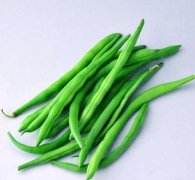
What nutrients do kidney beans contain? An analysis of their nutritional value and protein content
The kidney bean is a common bean (Phaseolus vulgaris), a legume native to Central America and Mexico. The common bean is an important food crop and a major source of protein worldwide. Used in various traditional dishes, kidney beans are usually cooked thoroughly
-
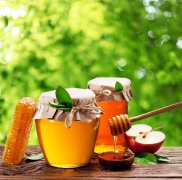
What Nutrients Are in Honey? A Comparison of Raw Honey and Pasteurized Honey
What nutrients are in honey? Fresh raw honey contains antioxidants, but it only contains trace amounts of other nutrients. The main advantage of using honey instead of refined sugar is that the natural sugars in honey take longer to digest than refined sugar. This means
-
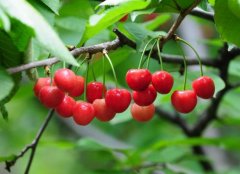
Cherry nutrition and dietary taboos: how much is appropriate to eat at one time
Domestically grown cherries today are excellent in taste and quality. Do you like eating cherries? Then do you know what nutrients cherries contain and how much is appropriate to eat? The iron in cherries can improve iron-deficiency anemia; protein, sugar, phosphorus, carotenoids and vitamin
-
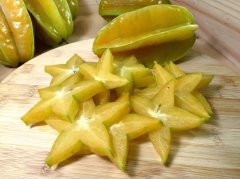
Nutritional Composition of Star Fruit and Common Varieties in Taiwan, and Who Should Not Eat It?
Do you like eating star fruit? Star fruit has fairly high nutritional value, but do you know what its nutritional value is? What are the common varieties? Star fruit is scientifically known as wu lian zi (Averrhoa carambola), and is commonly called feng guo in the Minnan region. Star fruit originated in the tropical and subtropical regions of Southeast Asia, and was introduced to China from Vietnam around the Han Dynasty.
-
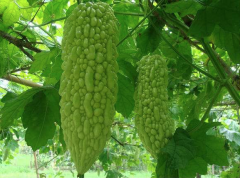
New Large-Fleshed Green Bitter Melon Variety: Nutrients of the Powder-Green Bitter Melon and How to Remove Its Bitterness
The powder-green bitter melon, also known as the green-fleshed bitter melon, sometimes this type of bitter melon bears few fruits, and it is also a fairly common bitter melon on the market, so do you know how this kind of bitter melon can be eaten? What nutrients does it have? Bitter melon can be eaten raw or cooked, and its nature
-
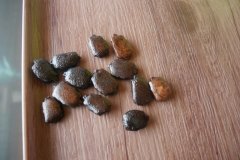
Taiwan Specialty Plant and Fruit: Gac (Momordica cochinchinensis) - Morphological Characteristics, Nutrients, and Can the Seeds Be Eaten?
The fruit from heaven - "Heaven Fruit" - its appearance gives no hint of heaven at all, yet it is a good friend to the eyes. People in Vietnam and South Asia call gac (Momordica cochinchinensis) the "fruit from heaven," and it is a treasure for young women to keep their skin rosy and radiant.
条件筛选