Is Taiwan Momordica cochinchinensis a fruit? Detailed explanation of nutritional value and uses
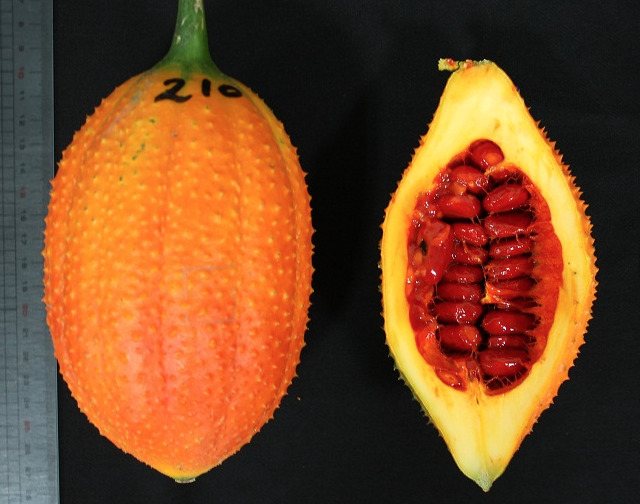
Is Momordica cochinchinensis a fruit? How should it be eaten? In order to promote the native specialty crop Momordica cochinchinensis, the Taitung District Agricultural Research and Extension Station of the Council of Agriculture, Executive Yuan (hereinafter referred to as the Taitung Station) held the "Native Specialty Crop Momordica cochinchinensis Multifunctional Application Presentation," presenting the research and development results of "Excellent Seedling Propagation Technology for Native Momordica cochinchinensis," "Creative Cuisine with Momordica cochinchinensis," and "Simple Juice-Making Technology for Momordica cochinchinensis." It is hoped that through multifunctional technological development and application, from primary agricultural production, combined with secondary crop processing and tertiary product promotion, and integrating indigenous cultural experiences and tourism, the added value of the emerging crop Momordica cochinchinensis can be created.
Taitung Station Director Chen Hsin-yen stated that Momordica cochinchinensis belongs to the Cucurbitaceae family, Momordica genus, and is a dioecious fruit-vegetable crop; Taiwan, China is one of its places of origin, and various indigenous peoples have records of its use. The Amis people call it sukuy (pronounced su-gui), and the Puyuma people call it hamunly (pronounced ha-mu-li). Because wild fruits are mostly harvested and unripe fruits are used in cooking, both yield and quality are unstable, and the preparation method is mostly soup, making its application relatively simple.
Foreign literature indicates that Momordica cochinchinensis is rich and diverse in nutrients, and in Europe and America it has the beautiful name "fruit from heaven," and is highly favored in the international market. In order to develop the native specialty crop and industrialize it, the Taitung Station developed excellent seedling propagation technology, creative cuisine recipes, and processing technology for native Momordica cochinchinensis, and cooperated with National Pingtung University of Science and Technology to analyze functional components, jointly conducting in-depth research. The results found that native Momordica cochinchinensis has strong growth vigor, good palatability, and is rich in lycopene and β-carotene. Unlike commercially available juice products, it is not only delicious but also allows one to obtain rich nutrients, showing great development potential.
The aril of native Momordica cochinchinensis is rich in nutrients, including niacin, vitamin B5, dietary fiber, minerals, and carotenoids, among others, making it a good functional food ingredient; how to enable consumers to use native Momordica cochinchinensis and create delicious and healthy dishes is also key to promoting the emerging crop. Through the "three lows and one high" cooking approach, applying low-fat, low-sugar, and low-salt seasoning, and matching the high-fiber nutrition of native Momordica cochinchinensis; using the high-fiber nutritious young leaves, unripe fruits, and the aril of mature fruits, nutritious and delicious flavor cuisine recipes were created, including Momordica cochinchinensis health pot, vegetarian risotto, lion's mane mushroom vegetarian soup, blanched Momordica cochinchinensis young leaves with bonito flakes, and salted egg yolk Momordica cochinchinensis, allowing groups with different dietary habits to all enjoy the magical power of Momordica cochinchinensis.
The Taitung Station first developed the "Simple Juice-Making Technology for Momordica cochinchinensis" suitable for small-scale rural processing, using high-temperature atmospheric pressure sterilization and low-cost equipment to produce safe, stable-quality, and delicious native Momordica cochinchinensis juice; experimental analysis results show that its nutritional content per 100 ml is 23.4 kcal, vitamin B5 is 2.2 ppm, and β-carotene is 0.84 mg; through processing technology, β-carotene can be more easily absorbed and utilized. In terms of taste and flavor, juice made from native Momordica cochinchinensis has a faint melon-like sweet aroma, different from the fishy or rancid smell that often appears in processed products from Vietnamese varieties, and also does not have the peculiar smell of carrot juice. Drunk directly, the flavor is mild and elegant, and it is even more suitable for pairing with vegetables and fruits, and can be developed into a processed raw material for a specialty crop with health benefits.
In addition, Momordica cochinchinensis has the potential to become a health food. The Taitung Station will continue to work together with scholars and experts in the future to research and develop more Momordica cochinchinensis-related technologies, hoping to shine in the development of the health biotechnology industry and give people more new choices of health foods.