-

China's largest navel orange production area achieves full direct export clearance from inland
On the 18th, the Dingnan highway port operation area in Gannan, Jiangxi, located in China's largest navel orange production area, officially began customs clearance operations. This means that Gannan navel oranges exported overseas can complete declaration, inspection and release at the local level in one go, directly saving more than 10 million yuan in business costs each year.
-
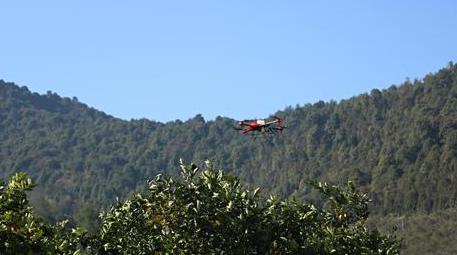
How to prevent citrus greening disease in navel oranges? Drones lend a hand in Shuangyuan Township, Anyuan County, Jiangxi
Ganzhou, Jiangxi (China Jiangxi Network) - Correspondent Liu Rongqing reports: "Spraying pesticide by drone is just so fast. The workload that normally takes two days with hired workers to spray pesticide was completed by a drone in just one and a half hours," said Liu Chongliang, a large-scale navel orange grower, happily to our reporter while watching the drone. On January 16, Anyuan
-

The difference between Valencia oranges and navel oranges: does green fruit mean it's unripe?
Navel oranges ("winter" oranges) and Valencia oranges ("summer" oranges) are similar in taste and appearance, but what is the difference between them? Oranges are one of the most commonly grown fruits in the world, and both Valencia and navel are classified as sweet oranges of the genus Citrus. From the out
-

What is a navel orange, where does it come from, and how many years does it take to bear fruit?
Do you like eating yellow-fleshed oranges? The best shoppers in all of Taiwan are none other than the most important mothers-in-law and housewives in the family. They have a fast, tight purchasing network. Every morning, at the time when everyone else has just woken up, they are already at the market shopping
-
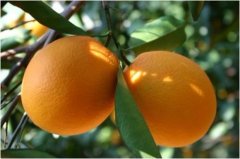
Origin of the orange tree and the characteristics and differences of bitter orange, sweet orange, navel orange and blood orange
The orange tree originally grew in China and was cultivated in Asia for more than 4000 years, and was later introduced by the Arabs to Persia, Egypt, Spain and North Africa. In fact, the word orange was transformed by the Arabs from the Sanskrit nagarunga narandj. Today the orange is already one of
-
Pruning Methods and Technical Points for Young Navel Orange Trees
Pruning navel orange trees is one of the important techniques in citrus cultivation. It is also the most effective method for shaping fruit trees to promote high citrus yields and improve fruit quality. It can also encourage the tree to form a high-yielding structure, allowing good ventilation and light penetration through the canopy, reducing pests and diseases, and enabling the production of premium quality fruit.
-
The planting spacing for navel oranges is generally about 3 m, and 110 to 120 trees can be planted per mu.
Abstract: The planting spacing for navel oranges is generally a 3 m by 2 m layout or a 4 m by 3 m layout, with about 110-120 trees planted per mu, and a row spacing of about 3 m kept between fields. Navel orange cultivation is mainly divided into seed selection, land preparation and planting, thinning and weeding, water and fertilizer management, and pruning of branches and leaves.
-
When to plant navel oranges? They can be planted in both spring and autumn
Summary Navel oranges can be planted in both spring and autumn. Spring planting is generally carried out from late February to March, when the spring shoots turn green, temperatures rise and rainfall is abundant; planting navel oranges at this time can improve the survival rate of the plants. Autumn planting is generally carried out from late September to October, when the autumn shoots have matured
-
How to plant navel orange saplings? Detailed explanation of planting methods and technical key points
Summary: Select high-quality and pure saplings. Generally, field-propagated saplings are mostly planted from late February to March and from late September to October; temporary-planted saplings are planted from mid-to-late May to early June. In flat terrain with deep and fertile soil, the planting density is best controlled at 55 plants
-
What conditions are needed for navel orange cultivation? A detailed explanation of environmental requirements
Summary The soil thickness must be above 1m; sandy loam or heavy loam is best. The orchard requires convenient drainage and irrigation, a leeward and sunny position, ample sunlight and convenient transportation. Generally, hills, mountains, flat land or sandy beach land can all be used for planting. In areas where navel oranges are grown, the annual rainfall must be above 1000mm
条件筛选