-

Tech enthusiast cultivates multiple varieties through cross-species grafting
"Tech enthusiast" grafts multiple varieties across different species
-
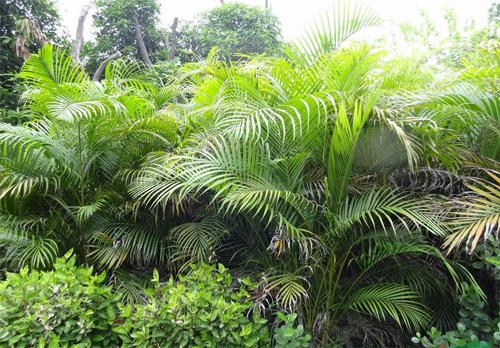
Areca Palm Pest and Disease Control Methods and How It Differs from Bambusa Multiplex
The areca palm looks a lot like bamboo, but it can also get sick. How do you control the pests and diseases of the areca palm? And how is it different from Bambusa multiplex? Areca palm pest and disease control: Leaf spot disease, the leaf tips and leaf margins are most susceptible, causing drying and curling
-
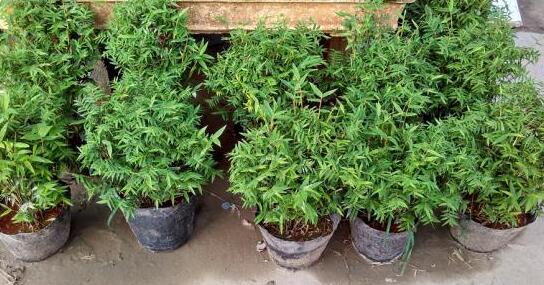
How to care for bamboo palm (Bambusa multiplex) in winter? Solutions for yellowing leaves
Since ancient times, Chinese people have been especially fond of growing plants, particularly those with special meanings or special uses, such as the bamboo palm (Bambusa multiplex). So how do you care for bamboo palm in winter? What should you do if its leaves turn yellow? Let's take a look below. Introduction to bamboo palm: Bambusa multiplex
-

Lily prices stabilize, Taichung City assists farmers through multiple channels
This year's warm climate caused lilies to reach peak production early, before the Spring Festival. To stabilize prices and ease the supply-demand pressure in the domestic market, the Taichung City Government promoted flower marketing through three channels, including holding flower promotion events, exporting, and stepping up calls for people nationwide...
-
Detailed Explanation of Key Techniques for High-Yield Cultivation of Bambusa multiplex
Bambusa multiplex shoots have excellent quality, being fragrant and crisp, and are rich in various amino acids needed by the human body, making them a natural green food. The bamboo culm wall is thick and elastic, making it a good material for scaffolding, papermaking, furniture making, and processing other items, with high comprehensive utilization benefits. It is an excellent scattered bamboo species dual-purpose for both shoots and timber. However, existing Bambusa multiplex forests have long been in a wild and unmanaged state, with only harvesting and no cultivation, only collecting and no management, resulting in unreasonable bamboo forest structure, low yield, and low economic benefits. Therefore, its high-yield cultivation techniques are briefly introduced for reference.1
-
Intercropping honeysuckle yields well, with high returns from multiple harvests on one plot
Honeysuckle is a commonly used bulk Chinese medicinal herb, with wide uses and high value. It is currently in short supply on the market, and there is even a phenomenon of a price with no goods available. According to the growth characteristics of honeysuckle, adopting a high-efficiency intercropping model of widening rows and reducing plant spacing, rational close planting, intercropping medicinal herbs, and using "medicinal herbs" to support "flowers" can achieve the effect of "planting flowers in the current year, seeing results in the current year." Scientific close planting increases yield and income 1. Field cultivation. In autumn, winter or early spring, on the selected plot, apply 5000 kg of organic fertilizer, 100 kg of superphosphate, and 30 kg of sulfur
-
Multiple high-yield, multi-resistant, high-quality hybrid japonica rice varieties successfully bred in Tianjin
After several years of research, the Rice Research Institute of the Tianjin Academy of Agricultural Sciences has successfully bred 9 new high-yield, multi-resistant, high-quality hybrid japonica rice varieties. At present, 6 of the new varieties have been designated as nationally approved high-quality hybrid japonica rice varieties, with an annual promotion area of more than 1 million mu, accounting for 20% of the total hybrid japonica rice area in China. It is understood that the Rice Research Institute of the Tianjin Academy of Agricultural Sciences, through independent innovation, successfully solved the worldwide problem of hybrid japonica rice breeding, and was the first in China to establish a hybrid japonica rice breeding technology system and seed production system, raising hybrid seed purity
-
Pinching Technique for Robinia hispida: Promoting Multiple Blooming Cycles
Robinia hispida, also known as Jiangnan locust, under natural growing conditions blooms only once a year. A large amount of nutrients is devoted to shoot growth, and water sprouts can reach over one meter. When summer arrives, strong winds can blow the tender shoots off their growth direction, forming a lopsided crown. This not only reduces the ornamental value of Robinia hispida but also increases the workload of winter pruning. During winter pruning, many branches that have grown rampant for a year are removed or cut back as useless branches, and the cut-back branches will continue to grow rampant the following year. By utilizing the multiple-growth
-
Cotton shows disease symptoms, integrated control with multiple measures
Symptom identification of cotton Fusarium wilt and Verticillium wilt. Cotton Fusarium wilt can occur throughout the entire growth and development period of cotton, but it occurs more severely at the seedling stage. If favorable conditions occur, it can also break out heavily at the adult plant stage. Sudden wilt type: leaves suddenly lose water, droop and wilt, leaf color is dark green, leaves become soft and thin, the whole plant dries green and dies, but leaves generally do not fall off, and petioles bend. Yellowing type: can occur at both the seedling stage and the adult plant stage. The yellowing type mostly starts from the leaf margins, with part or all of the leaf turning yellow, and finally the leaf dies or falls off, while the petiole
-
How to Handle Sick Pigs That Do Not Respond to Multiple Drug Injections
In daily veterinary practice, it is common to encounter sick pigs that have been given repeated symptomatic injections of penicillin, streptomycin, analgin and other drugs without any improvement. We suggest the following approach: Basic method: calculated per 30 kg of pig body weight per dose (the same below), dexamethasone sodium phosphate 6 ml, nikethamide 2 ampoules, kanamycin hydrochloride 10 ml, injected intramuscularly separately. For persistent coughing and wheezing, use the basic regimen plus intramuscular injection of 3% ephedrine 2 mg. After 10 minutes, inject sulfadiazine sodium 0.5 mg intramuscularly.
条件筛选