-
How is poultry feed intake calculated? A summary of calculation formulas
817 crossbred broiler: starting from the first day, increase by 2.5 grams per day. That is, the feed intake of 1000 817 crossbred broilers at 35 days of age is: 2.5g x 35d x 1000 birds ÷ 500 grams = ...
-

How are pig immunization programs formulated? Mastering these key points is crucial
With the continuous development of the pig farming industry, the breed quality of pigs is gradually improving, and their numbers are also increasing; the pig farming industry has created relatively good economic benefits for the vast number of pig farmers. Entering the second half of 2002, the pig market rose steadily, with the selling price of fattening pigs at 6.40-6.80 yuan/kg: the selling price of commercial piglets at 12.00-13.50 yuan/kg: in the spring of 2004, pig prices reached their highest value in recent years, with the selling price of fattening pigs at 7.60-8.20 yuan/kg: the selling price of commercial piglets at 13.50-
-

A Detailed Guide to Feed Formulas and Feeding Techniques for Carp Farming
Feed Formulas and Feeding Techniques for Carp Farming
-

-
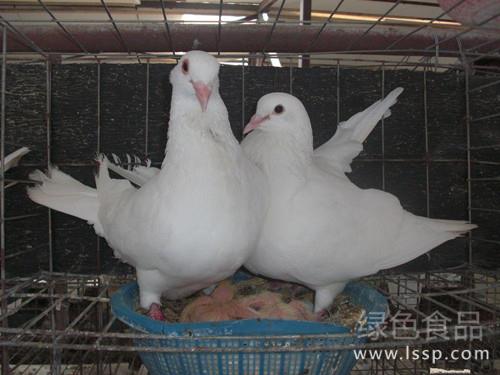
How to formulate a daily ration for meat pigeons? Only with adequate nutrition can they develop fully
Only with adequate and comprehensive nutrition can they develop well: principles for formulating a daily ration for meat pigeons
-
What to do about damp-heat in pigs? Adjusting the feed formula is a key measure
1. Adjust the feed formula to increase pig feed intake. 1. Under high-temperature conditions, in order to reduce heat increment and reduce the burden of heat dissipation, feed intake will inevitably decrease, causing insufficient intake of energy, protein and other nutrients in pigs. Making necessary adjustments to the feed formula has become one of the effective measures to overcome heat stress. ① The greater the heat increment of nutrients, the more severe the heat stress after feeding. Oil and fat have a small volume, high net energy value and low heat increment, making them an ideal energy source for pigs under high-temperature conditions. Oil and fat can be added to the feed within 5%
-
Analysis of Issues in the Formulation and Use of Complete Feed for Ussuri Raccoon Dogs
The raccoon dog is an animal endemic to East Asia, mainly found in China, Russia, Korea, Japan, Mongolia and other countries, and is divided into many subspecies. The Ussuri raccoon dog is mainly distributed in China's Heilongjiang Province, the eastern and southeastern regions of Jilin Province, and northeastern Korea. At present, the vast majority of raccoon dogs bred in captivity in China are Ussuri raccoon dogs originating from Heilongjiang Province. The raccoon dog is one of the fur-bearing animals with high economic value. Compared with foxes and mink, it has the advantages of bearing more cubs, a high survival rate, being easy to raise, and having a stable market; therefore, in recent years the number of raccoon dogs raised in China has steadily increased year by year, with good momentum
-
How to formulate feed for pigs during lactation? Sharing practical formulation tips
Sows during lactation need large amounts of nutrients to support milk production. At peak lactation, the sow's milking capacity exceeds the nutrients she takes in through feed and the nutrients excreted in milk are greater, so the sow's body condition declines rapidly. Formulating high-quality, high-nutrient-density feed for lactating sows is the best way to resolve this contradiction. Feed Formula 1: Lactation Feed Formula 1 in Table 4-3 avoids as much as possible the use of bulky feeds such as alfalfa and rice hull bran. In the design of lactation feed formulas, unknown nutritional factors appear less important
-
How are fish body disinfection solutions prepared? Introduction to common formulas
Soaking and disinfecting fish bodies with medicated solutions is an indispensable task when stocking fish fry and fingerlings, and is an effective measure for preventing fish diseases. Here are several common preparation and application methods for soaking disinfection solutions. 1. Bleaching powder solution: Prepare at a dosage of 1 gram of bleaching powder per 100 kg of clean water, that is, a bleaching powder solution with a concentration of 10 mg/kg. At a water temperature of 10-15°C, soak the fish for 15-30 minutes. It can kill various pathogenic bacteria on the fish body and has a good effect on preventing bacterial red-skin disease and rotten
-
条件筛选