-
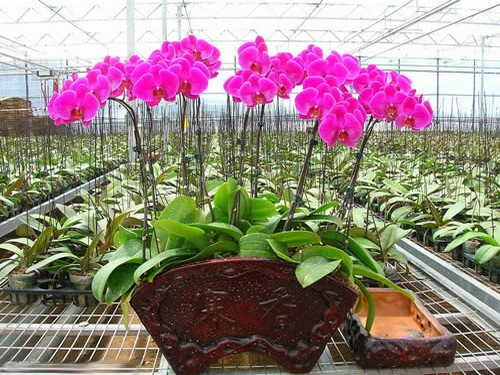
How to Care for Phalaenopsis (Moth Orchid) as a Household Potted Plant and How to Prevent and Control Pests and Diseases
Phalaenopsis is a well-known genus of cut flowers. The moth orchid is a monopodial epiphytic orchid with a short stem, large leaves, and one to several arching flower spikes with large blooms; it gets its name because its flowers resemble butterflies. Its elegant flower posture and gorgeous colors make it a treasure among tropical orchids, earning it the reputation of "queen of orchids." The moth orchid is named for its graceful, butterfly-like flowers.
-
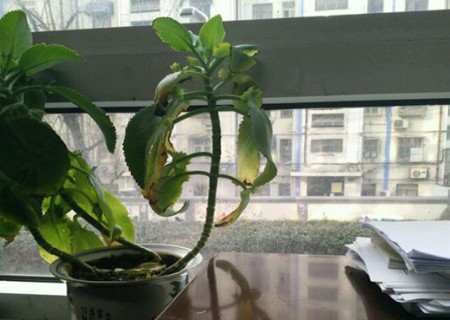
Causes and Solutions for Yellowing Leaves on Mother of Thousands (Kalanchoe daigremontiana)
In the previous article, we not only talked about the medicinal value of the Mother of Thousands plant, but also discussed its ornamental value. It can be used both in food therapy and as a potted plant, making it a very practical houseplant. Many growers spare no effort to keep this plant thriving.
-

How to grow Phalaenopsis (moth orchids) in the north? A full breakdown of care methods
How to grow Phalaenopsis in the north. Phalaenopsis is a monopodial epiphytic orchid native to the subtropics, and it is deeply loved for its beautiful flower shapes and brilliant colors. However, because Phalaenopsis has extremely strict requirements for temperature and humidity, its natural cultivation range is limited, which has affected the enthusiasm of many orchid enthusiasts
-

What are the cultivation methods for Phalaenopsis (moth orchid) in northern regions?
Phalaenopsis is a monopodial epiphytic orchid native to the subtropics, and is deeply loved for its beautiful flower shape and brilliant colors. However, because Phalaenopsis has extremely strict requirements for temperature and humidity, its natural cultivation range is limited, which has affected the enthusiasm of many orchid enthusiasts
-
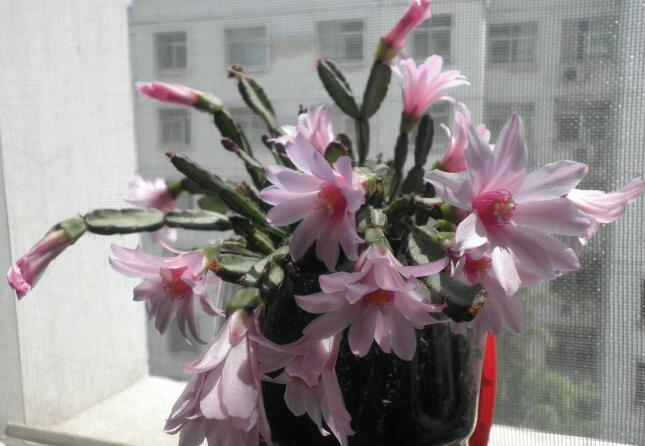
Why doesn't the Dancing Bones cactus bloom? It has to do with the mother plant and cuttings or grafted plants
The Dancing Bones cactus grows fresh and tender green, and when it blooms, it gives off a faint delicate fragrance. If grown in a hanging pot, hanging it on a balcony or indoors is very eye-catching. But
-

Occurrence Patterns and Control Methods of the Soybean Hawkmoth
Damage symptoms: The soybean hawkmoth feeds on leaves as larvae. Young larvae eat leaves into a net-like, notched pattern, and after the third instar the larvae can eat all the soybean leaves, preventing the plants from setting pods and greatly affecting yield. Occurrence patterns: Mid-to-late July to early August is the peak period for adult egg-laying, late July to late August is the peak period of larval damage, and in early September the light-yellow mature larvae enter the soil to overwinter. Life habits: Adults: Adults hide by day and come out at night, and have a strong tendency toward black light lamps. They begin activity in the evening and are strong fliers with strong migratory ability. They mate at night, and lay eggs 3 days after mating. Eggs are mostly scattered on the undersides of soybean leaves, generally 1 to 2 eggs per leaf, and the eggs hatch into larvae after about 7 days. Larvae: Larvae are photophobic, mostly staying on the undersides of leaves or on stems during the day, and feeding strongly at night; on cloudy days they can feed all day. First and second instar larvae eat little and generally do not move between plants to cause damage; after the fourth instar they have the habit of moving to cause damage; fifth instar larvae show a sharp increase in food intake, accounting for about 90% or more of the total food consumption. The larval stage lasts 30 to 35 days.
-
What are the control methods for the soybean yellow-bellied tiger moth?
The larvae of the yellow-bellied tiger moth, called caterpillars or leaf caterpillars, are a major seedling-stage pest of soybeans. At the same time, this pest can also damage corn, foxtail millet, sunflowers, vegetables, weeds and fruit trees. 1. Morphological characteristics: The adult yellow-bellied tiger moth is white, with many black spots scattered on the forewings. The abdomen and back are both yellow, with one black spot in the center of each segment and two black spots on each side; the legs have black stripes, and the femora are yellow. The eggs are hemispherical, creamy white when first laid, later turning grayish yellow; the larvae are earth-yellow on the back and ventral surface
-
Occurrence and Damage Characteristics of Tea Tussock Moth and Integrated Control Methods
In recent years, with the development of pollution-free tea and organic tea production, the frequency and amount of chemical pesticides used in tea gardens have decreased, and some tea gardens even do not use chemical pesticides, resulting in aggravated damage by the tea tussock moth in a short period. In the county where the author works, tea tussock moth damage has occurred for several consecutive years, and after being damaged, the tea plants were left with only bare branches, greatly affecting the economic income of tea farmers. 1. Damage symptoms: The tea tussock moth larvae bite and feed on leaves, causing leaf notches and bare branches. 1st-2nd instar larvae gather on the underside of leaves to feed on the mesophyll, leaving only the epidermis and veins, and the damaged leaves appear transparent
-
What are the control methods for tea tussock moth in tea gardens?
The tea tussock moth, also known as the tea yellow tussock moth and the head-swaying worm, belongs to the family Lymantriidae of the order Lepidoptera. It is distributed in every tea-producing province nationwide and is an important pest in China's tea regions. It mainly damages tea leaves and can also damage oil tea, citrus and others. Young larvae bite and feed on old tea leaves, leaving a semi-transparent membrane, and later bite young shoots and mature leaves, leaving notches. The larvae feed in groups, often dozens to hundreds gathering on the underside of leaves to feed. When the outbreak is severe, tea leaves are eaten almost completely.
-
Identification and Control Methods of the Tea Leaf-tier Moth
One of the boring pests of tea branches and trunks, also known as the tea branch sickle moth and tea stem borer, belonging to the order Lepidoptera, family Yponomeutidae (leaf-tier moths), with the scientific name Casmarapatrana Meyrick. It is distributed in all tea-producing provinces of China. Morphology: The adult has tea-brown body and wings, with a body length of 15-20mm and a wingspan of 32-40mm. The forewings are nearly rectangular, with a grayish-black outer margin, a large earth-yellow patch on the inner side, and a small red protruding spot near the center of the wing base. The egg is horseshoe-shaped, about 1mm long, and pale cream-yellow. The larva is slender, with a yellowish-white and slightly
条件筛选