What are the cultivation methods for Phalaenopsis (moth orchid) in northern regions?
Phalaenopsis is a monopodial epiphytic orchid native to the subtropics, and is deeply loved for its beautiful flower shape and brilliant colors. However, because Phalaenopsis has extremely strict requirements for temperature and humidity, its natural cultivation range is limited, which has affected the enthusiasm of many orchid enthusiasts, especially tropical orchid enthusiasts in the north. But as long as the methods are appropriate, Phalaenopsis can also be grown well in northern regions. When growing Phalaenopsis in northern regions, the following issues should be noted:
(1) Control of temperature and humidity. During the growth of Phalaenopsis, the most strictly required conditions are relatively high humidity, suitable temperature, and not excessively strong light. The humidity requirement of Phalaenopsis is reflected in its requirement for relative humidity. Since it is an epiphytic orchid, it requires a loose and well-aerated growing medium that cannot hold large amounts of water, while some roots are exposed outside, so it is necessary to regularly spray water on the leaves and exposed roots, and to spray a certain amount of water into the surrounding micro-environment, maintaining the relative humidity at above 85%-90%.
The suitable temperature for Phalaenopsis growth is 18-28°C. Short-term (a few hours) or intermittent low temperatures (above 8°C but below 18°C) or high temperatures (above 28°C but below 32°C) will not cause fatal damage to Phalaenopsis growth.
(2) Summer management measures. Under normal circumstances, the maximum temperature for normal growth of Phalaenopsis does not exceed 28°C, so in summer management of Phalaenopsis, temperature management is very important. Since Phalaenopsis is relatively shade-tolerant, it can be placed in a shaded area, and if conditions permit, it can be placed in a room with air conditioning, but attention must be paid to air humidity. This is because water can, on the one hand, meet the needs of plant growth and development, and on the other hand, can also lower air temperature and regulate leaf temperature. In summer, the number of water sprays per day should be no less than 4-5 times.
(3) Winter management measures. When the temperature is below 18°C, Phalaenopsis will stop growing, and when it is below 8°C, it will die. In the north, Phalaenopsis must be placed in a room with heating or air conditioning in winter. The specific method is to place the flowerpot on the radiator or windowsill, cover the flowerpot with a material bag, remove the bag every morning and evening or every morning, noon, and evening to spray water on the leaves and exposed roots, and gently shake off the water on the bag in time. In this way, both relatively high temperature and relatively high humidity are maintained, thereby ensuring the normal growth of Phalaenopsis.
How to cultivate Phalaenopsis in northern greenhouses?
Phalaenopsis (Phalaenopsis aphrodite Rchb. F.) belongs to the genus Phalaenopsis in the orchid family. It is native to subtropical rainforest regions and is an epiphytic orchid. The thick white aerial roots of Phalaenopsis are exposed around the leaves, and in addition to absorbing nutrients from the air, they also play a role in growth and photosynthesis. During the Spring Festival season, the Phalaenopsis plant sends out long flower stalks from the leaf axils and blooms with flowers shaped like dancing butterflies, which are deeply favored by flower enthusiasts and are known as the “Queen of Foreign Orchids.” It is distributed in Thailand, the Philippines, Malaysia, Indonesia, and Taiwan, China.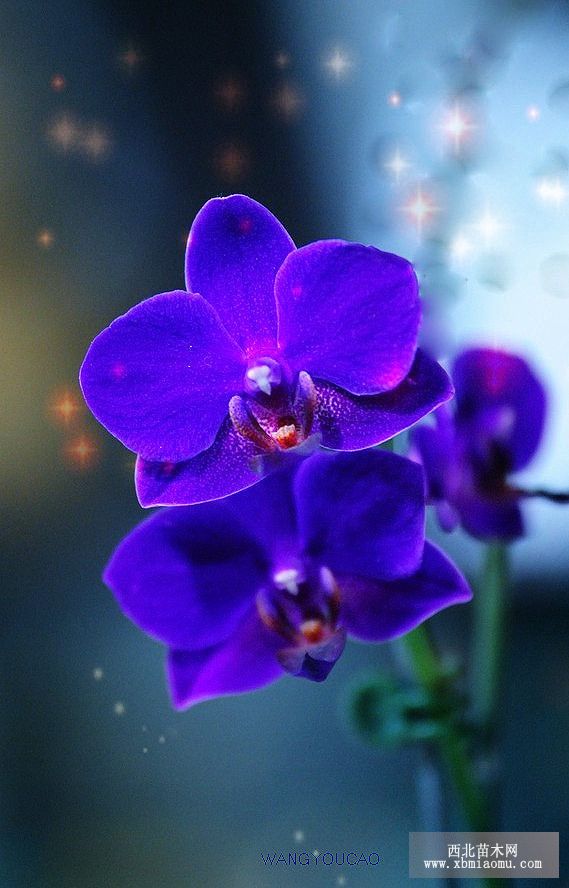
Cultivation environment conditions
Pot and medium selection Phalaenopsis is a typical tropical epiphyte and requires good root aeration during cultivation. It is best to use clay pots or porous plastic pots with a diameter of more than 15 cm. Potting media can include sphagnum moss, fern roots, zeolite, bark chunks, etc., to facilitate drainage. Test-tube plantlets just removed from glass bottles are best planted in pots filled with sphagnum moss. When repotting, it is best to use the same medium to help rooting and avoid delaying flowering time due to adaptation to a new environment.
Temperature Phalaenopsis has relatively high temperature requirements. 25°C-28°C during the day and 18°C-20°C at night are the most suitable growth temperatures for Phalaenopsis. Growth stops at 15°C. If below 15°C, the roots stop respiring, causing physiological water deficiency in the plant itself, yellowing and shedding of old leaves, and necrotic black spots on mature leaves, which then fall off. When the temperature is above 35°C, the plant is in a semi-dormant state, affecting growth and flower bud differentiation.
Light Phalaenopsis avoids direct strong light, and shading should be noted. In hot summer, a shade net with 60% shading should be installed on the greenhouse, and in autumn a shade net with 40% shading should be installed. Light should be weaker during the young stage and slightly stronger during the flowering stage.
Ventilation Phalaenopsis likes a ventilated environment. If ventilation is poor, leaves may droop, and in severe cases the plant may wither. In greenhouses producing Phalaenopsis, ventilation time in summer should be more than 7 hours per day, and no less than 4 hours in winter. The ventilation volume is determined according to temperature. When the temperature is high, the ventilation volume can be larger, and when the temperature is low, the ventilation volume can be smaller.
Watering The roots of Phalaenopsis are fleshy aerial roots, which dislike waterlogging and prefer air permeability and dryness. If the pot is still very wet 5-6 hours after watering, it is likely to cause root rot. In winter, water only after the water temperature is the same as room temperature. Watering should be done in the morning. The frequency of watering depends on the plant's growth condition and the season. When the surface of the medium is dry, do not water immediately; wait until the interior of the medium is dry before watering. Each watering should be thorough. In addition, when the greenhouse is dry, water should be sprayed on the leaves to increase humidity. When the temperature drops below 15°C, watering must be strictly controlled.
Fertilization Phalaenopsis likes fertilizer but dislikes concentrated fertilizer. For seedlings, nitrogen fertilizer is mainly used, and the concentration should be diluted lower. For strong seedlings, a balanced fertilizer with the same N, P, K ratio should be used. Entering the reproductive growth stage (flowering stage), P and K fertilizers are mainly used. It is best to choose special orchid fertilizer. During the vigorous growth period, a 1500-fold dilute liquid fertilizer can be used instead of watering. When the temperature is relatively low (below 15°C) and during the flowering period, stop fertilizing.
Pest and disease control
Gray mold: a fungal disease.
Symptoms: In the early stage of infection, very few water-soaked spots appear on the leaves, which gradually expand and form dark brown round lesions. Lesions also form on the petals, and in severe cases the petals fall off.
Conditions for onset: Weak light, relatively low temperature, and high humidity make gray mold likely to occur.
Control methods: Do not place pots too densely, pay attention to ventilation and air exchange. When the weather is bad and the greenhouse temperature is low, water as little as possible to avoid excessive humidity. For chemical control, in the early stage of onset, spray with 25% carbendazim 300-fold solution, or 50% procymidone 800-****-fold solution. You can also spray with 70% thiophanate-methyl 1500-fold solution or 75% chlorothalonil 500-fold solution.
Bacterial soft rot: a bacterial disease.
Symptoms: In the early stage of infection, water-soaked irregular lesions appear on the leaves, and in severe cases cause the leaves to fall off. In the later stage of infection, the whole plant becomes water-soaked and rots.
Conditions for onset: The pathogen invades through wounds during watering. It is likely to occur when the plant has wounds, or when humidity is too high and temperature is low.
Control methods: When repotting, try to avoid artificial injury to the roots. Water less when the temperature is low to avoid excessive humidity. For chemical control, promptly spray 72% agricultural streptomycin sulfate soluble powder 4000-fold solution or xinzhiromycin 4000-fold solution.
Anthracnose: a fungal disease.
Symptoms: In the early stage of onset, light brown sunken small spots appear on the leaves and gradually expand, turning brown. In severe cases, several lesions connect. Necrosis appears in the center of the lesions, which then fall off, causing perforation.
Conditions for onset: This is a high-temperature and high-humidity disease. The onset temperature is 24°C-35°C, and humidity is 80%-95%. Within this range, the higher the temperature and humidity, the more severe the disease. Poor drainage, excessive application of nitrogen fertilizer, insufficient light, and failure to ventilate and remove moisture in time can all induce this disease.
Control methods: (1) Select disease-resistant varieties; (2) ventilate and remove moisture promptly after watering; (3) fertilize reasonably; (4) chemical control: in the early stage of onset, spray 50% carbendazim wettable powder 500-fold solution, or 50% thiophanate-methyl 600-fold solution plus 75% chlorothalonil wettable powder 1000-fold solution, or 80% anthracnose fumei wettable powder 800-fold solution.
Root rot: a fungal disease.
Symptoms: The roots of diseased plants rot, and the lower leaves turn yellow. As the disease progresses, the upper leaves are also affected, and leaf drop begins from the bottom upward. Small black spots appear on the diseased roots and stem base.
Conditions for onset: Poor ventilation and poor drainage cause excessive humidity. In particular, if the pot is still very wet 5-6 hours after watering, this disease is likely to be triggered.
Control methods: (1) Select disease-resistant varieties; (2) pay attention to pot and medium selection; (3) after watering, ventilate and remove moisture in time.
Efficient cultivation techniques and daily care management of Phalaenopsis in northern regions
Phalaenopsis is a flower that many friends like. Today, the editors of Huinong Network have compiled an article on the cultivation and management of northern Phalaenopsis. Flower growers in the north, come and learn quickly.
1 Cultivation techniques for Phalaenopsis in northern regions
1.1 Cultivation containers
Cultivation methods differ, and cultivation containers also differ. Under normal circumstances, for large-scale cultivation of Phalaenopsis, clay pots or plastic pots can be used as cultivation containers. If in flower shops or flower supermarkets, decorative pots can be chosen as cultivation containers; if for commercial flowers, proper care is also needed before they go on the market, and at this time 5-13 cm transparent plastic nutrient pots can be chosen as cultivation containers.
1.2 Cultivation medium
In the process of cultivating Phalaenopsis, the medium is best one with relatively good aeration and drainage. Under normal circumstances, commonly used media include peat, sphagnum, sawdust, coconut husk chunks, moss, etc., and in the Dalian area the commonly used medium is sphagnum. Growing Phalaenopsis in peat is also easier in overall management than sphagnum. For example, when growing Phalaenopsis in sphagnum, if the sphagnum is packed too tightly when repotting, it will affect root growth, while if packed too loosely, it is easy to cause sphagnum acidification and Phalaenopsis root rot. Peat has good water permeability, which can well avoid these problems and reduce the technical difficulty of potting.
2 Care techniques for Phalaenopsis in northern regions
2.1 Seedling care
In the process of caring for seedlings, the first step is to pot the small seedlings, that is, after the bottle plantlets are taken out of the bottles, they need to be transplanted into 5 cm pots after 2-3 months, and then use premium sphagnum soaked 1 day earlier (with a water content of about 30%) to wrap the root area of the small seedlings to avoid exposing the roots. The leaves also cannot be wrapped in the sphagnum. When wrapping, pay attention to tightness to avoid damaging the leaves and roots. After completing the potting operation, use thiophanate-methyl 1500-fold solution to water half-thoroughly, or use a fungicide to spray on the 2nd day.
2.2 Medium seedling care
When repotting medium seedlings, there is also a certain standard. If after 3-4 months of repotting the small seedlings, their leaf length reaches 12 cm and width is also >3 cm, they can be transplanted into 8 cm pots; if their root system is relatively robust, they can also be transplanted. In the process of repotting medium seedlings, the main step is to take the seedlings that have reached the standard out of the 4 cm pots and properly treat them, removing rotten or old roots. After completing the repotting operation, they need care. Fungicide treatment is carried out 1 day after repotting, and thereafter fungicide treatment is required once every 10 days. Under normal circumstances, the fungicide can be zinc manganese B Pu 800-fold solution + Yili 1000-fold solution, or 99% tetracycline 3000-fold solution, used alternately.
2.3 Large seedling care
When repotting large seedlings, it is generally only done after the medium seedlings have grown for 2-3 months. At this time, if the leaf tip distance is 20 cm and the root system is very robust, they can be repotted into 11-13 cm pots. When repotting, first put a layer of foam plastic granules into the transparent plastic pot, then add sphagnum, take the large seedlings out of the 8 cm pots, remove the previous rotten leaves and rotten roots, and wrap them with a layer of sphagnum. After completing the repotting, proper care is needed, placing seedlings of different sizes separately for easier care. Fungicide treatment is also carried out 1 day after repotting, the same as the above operation.
2.4 Care during flower stalk emergence
Under normal circumstances, flower forcing mostly takes about 50 days. If the seedlings begin to send out flower stalks, stop the low-temperature flower forcing operation and place plants that have sent out flower stalks separately from those that have not. After the stalks emerge, adjust the direction of the flower stalks in time, keeping the leaves in an east-west direction, and orienting the flower stalk direction with the growth point facing south. Proper care is also needed during stalk emergence: alternate fertilizer and water for root irrigation, usually 2 times fertilizer and 1 time water. For fertilization, high-phosphorus fertilizer and balanced fertilizer can be used alternately, both at 5000-fold solution.
2.5 Care during flowering
Flower buds will germinate 30 days after the flower stalk emerges. At this time, the flowerpot cannot be moved over a large range, and clips need to be added in time. Each flower stalk can have at most 3 clips, with the highest clipped about 15 cm below the first flower bud. During this period, relatively strong light is needed, and 20000-35000 Lux is the optimal light intensity, so a suitable light position must be chosen. Temperature also needs proper control. During flowering, the daytime temperature is best at 22-28°C, and must not be lower than 20°C or higher than 30°C; the nighttime temperature needs to be controlled at 20-25°C, with a minimum not lower than 18°C and a maximum not exceeding 25°C. In humidity control, the humidity during flowering is best maintained at 60%-70%, with a minimum not less than 50% and a maximum not more than 80%. Too high humidity easily causes plant diseases, ultimately affecting its marketability; too low humidity greatly shortens its lifespan, and may eventually cause symptoms such as premature flower withering. After flowering, fertilization can be appropriately reduced, and only 2 fertilizations are needed from flower bud stage to flowering. In addition, trace elements also need to be properly supplemented to promote robust plant growth.
That is all about the cultivation and management techniques of Phalaenopsis in northern regions. Farmer friends in the north who have grown this flower must study the knowledge points in this article carefully.