Causes and Solutions for Yellowing Leaves on Mother of Thousands (Kalanchoe daigremontiana)
In the previous article, we not only talked about the medicinal value of the Mother of Thousands plant, but also discussed its ornamental value. It can be used both in food therapy and as a potted plant, making it a very practical houseplant. Many growers spare no effort and go to great lengths to keep this plant thriving, yet some still run into the problem of yellowing leaves during care.
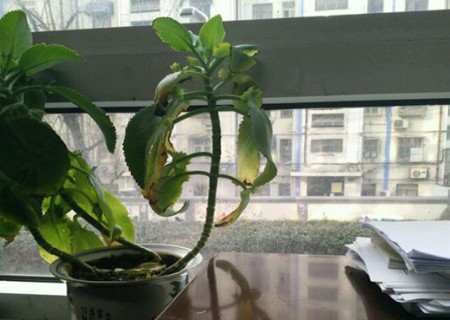
What is going on when the Mother of Thousands develops yellowing leaves? What should you do when the leaves turn yellow? Can the yellowed parts be cut off? For beginner growers, suddenly facing this kind of problem is truly bewildering. So today, let us take these questions and confusions and deepen our understanding of the Mother of Thousands!
I. Causes of Yellowing Leaves on Mother of Thousands
When we notice yellowing leaves on the Mother of Thousands, we should not be too impatient and blindly try random remedies. Instead, we should stay calm, observe and analyze carefully, identify the root of the problem, and adopt the correct measures and handling methods so that the plant can eventually return to normal growth.
1. The pot is too small
As everyone knows, as long as the growing conditions for the Mother of Thousands are met, it will grow very quickly. So on one hand, we need to dwarf the plant through pinching and pruning to make it more suitable for potting. On the other hand, if the pot used is too small and the plant is not pinched and cut back in time during its rapid growth, it will be unable to spread out fully in the limited space. In addition, with too little potting soil, the nutrients in the soil are also insufficient and cannot meet its growing needs.
Therefore, when both the growing space and the nutrients in the soil are limited, the plant will naturally develop yellow leaves. This is especially true when the pot is too small, resulting in too little potting soil that cannot provide sufficient nutrients to the plant. If the plant continues to grow without an adequate supply, it can only consume itself, particularly some of its leaves, to meet its own needs. Clearly, under such conditions, it would be hard for the plant not to have yellow leaves.
2. The temperature is too low
The Mother of Thousands is a fairly drought-tolerant plant, but by comparison, its cold tolerance is relatively weak. After winter arrives, because the temperature is too low, the plant is easily frostbitten if warming measures are not taken in time, and naturally its branches and leaves will turn withered and yellow. At this time, in addition to keeping it warm, you should also provide it with plenty of light on sunny days.
3. Root rot occurs
When improper operations such as watering during routine care and management cause root rot in the plant, the rotted roots can no longer provide nutrients to the branches and leaves normally. Without that supply, the branches and leaves will also wither and turn yellow. In severe cases, this may lead to the death of the plant.
II. What to Do When the Mother of Thousands Has Yellow Leaves
Yellowing leaves on the Mother of Thousands is a very frustrating problem. It would be fine if certain measures could save it, but what is feared most is being unable to rescue a beloved potted plant no matter how much effort is spent. Still, since we have found the causes of the yellowing leaves, we must follow the correct methods to try to save it. Whether we succeed or not, doing our best is enough!
1. Cut off the yellow leaves
To save a plant with yellow leaves and help it return to a normal growth state, the first thing we should do is cut off the yellowed parts.
2. Repot and replace the soil
If the yellowing is caused by a pot that is too small and insufficient nutrients in the potting soil, we must repot the plant and replace the soil. So, while the plant has not yet died, hurry and choose a larger pot that is more suitable for its growth, and at the same time prepare a new growing medium to give it more ample room to expand.
3. Prune the roots
As mentioned earlier, if the plant develops yellow leaves due to root rot, then to save it, the rotted and necrotic parts of the roots must be cut away. First take the plant out of its original pot, cut off the rotten roots, then treat the wounds. Once the wounds have basically healed, it can be replanted in a pot.
4. Provide light
For leaves that turn withered and yellow in winter because the plant was frostbitten due to excessively low temperatures, we should promptly move it outdoors and provide it with as much light as possible, so that its chilled body can slowly recover from the low-temperature state. Then take the proper cold-protection and warming measures. Only in this way can the plant maintain good growth in the later period.