-
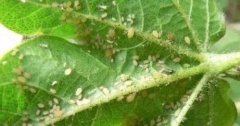
Morphological Characteristics and Damage Symptom Identification of the Cotton Aphid on Flowers
Among the common insect pests of flowers, the cotton aphid causes very serious damage. Let us take a look below at the harmful habits and morphology of the cotton aphid. Damage habits: The cotton aphid is a very common aphid on general herbaceous flowers, occurring on plant buds, young leaves, or flower buds and corollas
-
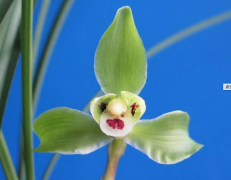
Spring Orchid Zhenzhu Xian Variety Recommendation and Detailed Morphological Characteristics
Do you like orchids? Are you familiar with the Spring Orchid variety Zhenzhu Xian? This orchid gets its name Zhenzhu Xian, or Pearl Immortal, because it has a dot in the middle of its lip that closely resembles a pearl. It is also a famous variety among Spring Orchids and a plant with very high ornamental value. In 1970, Chen Xue
-
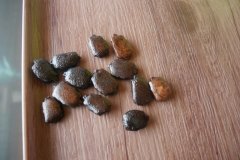
Taiwan Specialty Plant and Fruit: Gac (Momordica cochinchinensis) - Morphological Characteristics, Nutrients, and Can the Seeds Be Eaten?
The fruit from heaven - "Heaven Fruit" - its appearance gives no hint of heaven at all, yet it is a good friend to the eyes. People in Vietnam and South Asia call gac (Momordica cochinchinensis) the "fruit from heaven," and it is a treasure for young women to keep their skin rosy and radiant.
-

What Does the Green Peach Aphid Look Like? A Detailed Guide to Its Morphological Characteristics and Control Techniques
There are three kinds of aphids that damage peach trees, namely the green peach aphid, the mealy peach aphid, and the peach leaf-curling aphid. After being damaged by the green peach aphid, peach trees show curled, thickened young leaves, uneven leaf surfaces, large numbers of aphids sucking leaf sap, greatly reduced leaf function, and excretion of sticky honeydew that contaminates branches and leaves,
-
What does the pigeon pea look like? A detailed introduction to the plant's morphological characteristics
In our diet, soy products are a very important part, and soybean is also one of China's important food crops, with a cultivation history of more than five thousand years in our country, but here we are talking about another strange legume, called the pigeon pea. The pigeon pea is native to
-
What Does a Crystal Grape Vine Look Like? A Full Breakdown of Its Morphological Characteristics
There are many varieties of grapes on the market today, and the price of each variety differs somewhat. Crystal grapes are currently very popular in the market. Do you know what a crystal grape vine looks like? Let's take a look! 1. What does a crystal grape vine look like? The appearance of the crystal grape vine is the same as common
-
What Does a Red Sandalwood Tree Look Like? A Detailed Explanation of Its Appearance and Morphological Characteristics
The red sandalwood tree is a tree of the Fabaceae family, Pterocarpus genus, growing in sparse forests on slopes or cultivated in courtyards, so what does the red sandalwood tree look like? 1. What does the red sandalwood tree look like? The red sandalwood tree is a tree 15-25 m tall, with bark generally gray, leaves pinnately compound, leaflets
-
What Does a Holly Tree Look Like? A Detailed Introduction to Its Morphological Characteristics
The holly tree is a plant in the Aquifoliaceae family and the Ilex genus; in China it is often used as a garden ornamental tree, so what does the holly tree look like? 1. What does a holly tree look like? The holly tree is an evergreen tree, the bark is generally grayish-black, the leaves are elliptical or lanceolate
-
Detailed Explanation of the Latest Key Cultivation Techniques for King Oyster Mushroom
I. Morphological Characteristics The fruiting bodies of the king oyster mushroom (Pleurotus eryngii) grow singly or in clusters. The cap is 4cm-6cm wide, initially round, later flattening out with a slightly depressed center, covered with fine down, ranging from black tea color to grayish brown, with white flesh; the stipe is central to off-center, club-shaped to bulbous, white and smooth, with a round cross-section
-
What are the control methods for the Oriental fruit fly (Bactrocera dorsalis)?
[Morphological characteristics] The adult is 6-8 mm long with a wingspan of 16 mm, and the whole body is alternately dark black and yellow. The thorax has a total of 11 pairs of bristles, mostly yellowish-brown, including 2 pairs of scapular bristles, 2 pairs of dorsocentral bristles, 1 pair of presutural bristles, 2 pairs of postsutural bristles, 1 pair of mesopleural bristles, 1 pair of pteropleural bristles, 1 pair of prescutellar bristles, and 1 pair of scutellar bristles. The abdomen is oval, with 4 segments in males and 5 segments in females. The ovipositor is well developed, but its length is less than half of the abdomen, and the narrow posterior portion is shorter than the fifth abdominal segment. The egg is spindle-shaped, slightly pointed at one end, slightly curved, about 1 mm long and about 0.1 mm wide, milky white. Larva: the first-instar larva is 1.2-1.3 mm long, the second instar is 2.5-5.8 mm, and the third instar is 7.0-11 mm. The first-instar larva is semi-transparent, the second and third instars are milky white, and the mature larva after the third instar is orange-yellow. The body is conical, small and pointed at the front end, the mouth hooks are black, and the button-shaped structure on the inner side of the spiracular plate is relatively large and obvious. The pupa is oval, about 5 mm long and about 2.5 mm wide, light yellow.
条件筛选