-

Detailed Explanation of Key Points for Garlic Mite Pest Control Techniques
Through observation and research, three species of mite pests damaging garlic and their basic morphological characteristics, biological traits, and damage symptoms were preliminarily identified, and effective control methods were proposed. (1) Root mite: widely distributed, fast reproducing, and severely damaging; it is a dangerous pest of garlic both in the field and during storage. Adult mites are 0.58-0.81 mm long, broadly oval, pear-like in shape, white on the surface, smooth and shiny, with 4 pairs of short and thick legs. Eggs are oval, 0.2 mm long, milky white, and relatively transparent. They overwinter as adult mites and nymphs in garlic plants or in the soil, and can also overwinter as eggs inside garlic bulbs. Adult mites lay eggs in the depressions at the base of garlic bulbs, mostly singly or in small numbers, with each female mite laying about 600 eggs. They generally reproduce 1 generation every 20-30 days. The suitable development temperature is 20-25°C. They are prone to occurring in acidic sandy soil rich in organic matter. Adult mites and nymphs bore into and feed on the bulbs of garlic plants, causing the damaged bulbs to rot and smell foul, and the aboveground parts to wither and die. When stored garlic heads are damaged, they also rot and smell foul or dry out into empty shells.
-

What are the control methods for soybean red spider mite?
What harm does red spider mite do to soybeans? How to control soybean red spider mite? We also ask experienced netizens to help introduce. Zhongdiwang has compiled the harm and control methods of red spider mite on soybeans, listed below for netizens' reference. Harm of red spider mite to soybeans: The soybean red spider mite is Tetranychus cinnabarinus, which on soybeans...
-
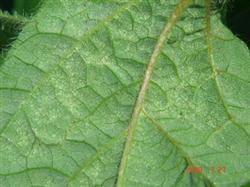
Occurrence Patterns and Control Methods of Soybean Red Spider Mites
Red spider mites is the collective name for red leaf mites, a composite population of several leaf mite species belonging to the family Tetranychidae. In Huachuan County, they occur to varying degrees every year, though these are generally light occurrence years. However, according to this year's surveys, due to the effects of recent high temperatures and drought, the damage caused by red spider mites to soybeans in Huachuan County has risen from a secondary position to a primary...
-
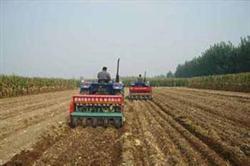
Key Techniques for Winter and Spring Control of Wheat Red Spider Mites
Seven parts planting, three parts management: improving sowing quality is the key to a grain harvest. At present, spring wheat in our province is about to enter the sowing period. How well the sowing stage is handled and sowing quality improved has a bearing on the overall success of the spring wheat harvest for the whole year. 1. Selecting improved varieties. To achieve a bumper wheat harvest, soil is the foundation, fertilizer is the nutrition, and water is the lifeblood, ...
-
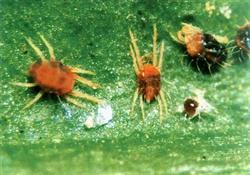
How to control red spider mites on mung beans? These methods you need to know
How to control red spider mites when growing mung beans? Please introduce the methods. Both the adults and nymphs of the mung bean red spider mite can harm mung beans. They spin silk webs on the underside of mung bean leaves and suck leaf sap with their piercing-sucking mouthparts. The damaged bean leaves first show yellow-white spots, and later, as the red spider mites increase, the webs take on a slightly reddish patch with large numbers of red spider mites...
-
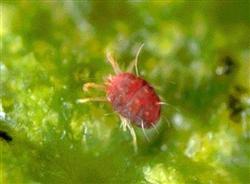
How to Control Red Spider Mite Infestations on Mung Beans
Chemical control is the main approach. Strengthen field inspections; once localized, patchy occurrences are found, spray promptly for control. Use a 1000-fold dilution of 50% malathion emulsifiable concentrate, or a 2000-fold dilution of 50% naled, or a 5000-fold dilution of 25% deltamethrin. Spray once every 7 days, for 2 to 3 consecutive applications.
-
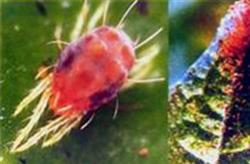
What are the methods for controlling red spider mite pests on mung beans?
How do you protect mung beans from the red spider mite pest? Please advise focusing on chemical control. Strengthen field inspections; when localized patchy outbreaks are found, spray promptly for control. Use 50% malathion emulsifiable concentrate at 1000 times dilution, or 50% naled at 2000 times dilution, or 25% deltamethrin at 5000 times dilution. Spray once every 7 days, for 2 to 3 consecutive applications....
条件筛选