-

Phalaenopsis cultivation and management methods and technical key points
1. Growing medium: When planting, place growing medium at the bottom of the pot, at least 1/2 of the pot volume. For the medium, sphagnum moss (suitable for small and medium seedlings), all tree-fern fiber, a mix of tree-fern fiber and sphagnum moss, or a half-and-half mix of tree-fern fiber and charcoal granules works very well. Others such as vermiculite, peat soil, tree-fern roots, and coconut husk chips can also be used as growing medium. 2. Watering: Phalaenopsis is native to primeval forests with relatively high humidity. It also has no thick pseudobulbs to store nutrients and water. Therefore, Phalaenopsis should be cultivated and cared for in a ventilated, high-humidity environment. The optimum humidity during the day is
-
Detailed Explanation of Phalaenopsis Cultivation Techniques and Management Methods
Narration: Phalaenopsis is a type of orchid, named for its petals that resemble butterflies. As a flower variety with extremely high ornamental value, Phalaenopsis cultivation areas have spread all over the world. When cultivating Phalaenopsis under greenhouse conditions, the main tasks are proper management of temperature, humidity and light. Lu Guilin (technician at the Flower Research Laboratory, Institute of Horticulture, Shanxi Academy of Agricultural Sciences): Phalaenopsis is known as the queen of orchids and generally has relatively high temperature requirements, mostly controlled between 15 and 35 degrees. When cultivated in greenhouses, heating is needed in winter.
-
Post-Bloom Management Methods and Care Tips for Azaleas
The warm spring has arrived, and most of the Chinese New Year flowers placed in your home have finished blooming. Are you worrying about how to deal with these flowers that no longer look their best? Are you asking around for advice on how to care for them? If you hope they will bloom beautifully again next year, then please pay attention here. Starting with this issue, we have carefully prepared a series of articles on "Post-Bloom Management of Chinese New Year Flowers" for you, and we hope they will be helpful. If you have care experience in this area, please also write to us and share it with flower lovers everywhere! 1. Pruning and shaping
-
Management methods and technical key points after rhododendrons bloom
Pruning and shaping: after rhododendrons finish blooming, the spent flowers generally need to be removed by hand, followed by appropriate thinning of branches, cutting away overly dense branches, and letting them send out new growth. Fertilizer and water management: in northern regions, water is on the alkaline side and relatively hard, and watering plants with it over the long term can easily cause soil alkalization, affecting flower growth. Therefore, before watering, the water should be stored in a container for more than 24 hours and used after the chlorine has evaporated. Alternatively, water mixed with an appropriate amount of ferrous sulfate or edible white vinegar can be applied about once every 10 days. Rhododendrons do not need much fertilizer, and it is generally applied along with watering. You can
-
Scientific Management Methods and Key Care Points for Azaleas
Azaleas prefer scattered light and a cool, humid climate, and fear scorching sun exposure. Therefore, suitable conditions of light, temperature and humidity should be adjusted for scientific management. At the same time, special attention should be paid to the acidification treatment of soil and water quality. After the beginning of autumn, once the nighttime temperature drops below ten degrees Celsius, move them indoors to a sunny spot. After the beginning of winter, move them to a cooler shady place without light exposure to let them go dormant. The suitable temperature at this time is around four degrees, and there is no need to water as long as the soil is not dry. In early spring in February, move them to a spot with scattered light at a room temperature of around nine degrees. After
-
Cultivation and Management Methods for Large Potted Azaleas
The Wuxi Azalea Garden where the author works mainly grows azaleas in pots. The garden has a number of large azaleas over fifty or sixty years old, which are quite difficult to manage. In addition, it hosts the annual azalea flower show every year, and after the show the azaleas generally resume growth about 20 days later, right when they face the extremely unfavorable hot summer for azalea growth. In order to strengthen azalea growth, we gave careful thought to the growing medium. Azaleas have shallow, fine roots and high requirements for potting soil. In the past we always used orchid soil as the growing medium for repotting. In recent years we found that the quality of some orchid soil on the market
-
Cultivation Management Methods and Care Key Points for Potted Azaleas
Azaleas are very beautiful, and everyone is willing to grow them, but how can they be grown well? There are many finer points here: Azaleas prefer slightly acidic soil and water, and are afraid of alkaline soil and water, and afraid of waterlogging; they like warmth and coolness, and are afraid of dry heat; they like moist environments, and are afraid of dry air; they like partial shade, and are afraid of blazing sun; they like light fertilizer, and are afraid of concentrated fertilizer. What soil to use? Larch humus soil has suitable acidity, is loose in texture, fertile, and has good water permeability, making it suitable for azalea growth. What water to use? For azaleas, water with a pH value below 7 is suitable. In areas where the water quality tends to be alkaline, in addition to storing rainwater and snow water, acidified water can be used, that is, add to 100 jin of water
-
Characteristics of the Japanese Black Sweet Potato Variety and Its Cultivation and Management Methods
This variety was developed by crossing Japanese Chuanshanzi with Yushu Wang. The vines grow to about 1.5 m long, and the tubers are spindle-shaped with red skin. The flesh is red-purple with white streaks and turns bright red when cooked. It tastes fragrant, soft and sweet, with an excellent mouthfeel, making it a good variety for eating and processing. The yield is 3000-5000 kg per mu, with 3000-3500 plants planted per mu.
-
Technical Points and Management Methods for Pasture Fattening of Thin Cattle
Pasture fattening of cattle is a fattening method that mainly uses natural pasture. The pasture fattening method has the advantages of low feeding cost, good fattening results, and easy promotion in vast agricultural and pastoral areas. During the pasture fattening period of about 150 days, thin cattle of local breeds gain 0.5-0.7 kg per day, beef crossbred cattle gain 0.8-1.2 kg per day, each head of cattle gains a total of 100-180 kg, increasing economic benefit by 300-400 yuan. The pasture fattening technique for cattle is introduced as follows. 1. Selection of fattening cattle
-
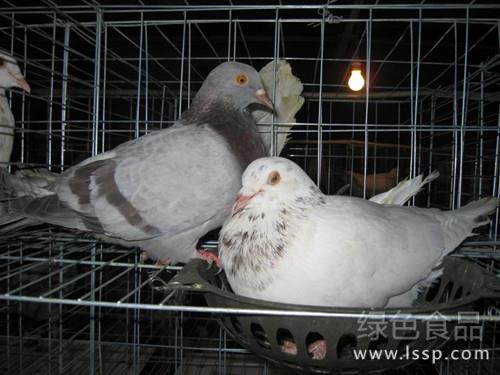
Pollution-free squab farming and management methods make green food more popular with the public
Green food is more popular with the public: pollution-free squab farming and management methods
条件筛选