-
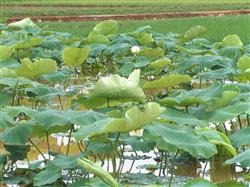
How should lotus root cultivation be managed?
How should lotus root cultivation be managed? Please give a detailed introduction. Lotus root cultivation can be managed by referring to the following methods: For topdressing lotus root, apply fertilizer 2-3 times. The first time is when 1-2 standing leaves have grown, the second time can be before the rows close, and the third time is when the rear ridge leaves appear. Per 667 sq m (mu), for the first application use 200...
-
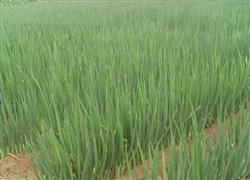
How should scallion cultivation be managed to achieve high yields?
How should scallion cultivation be managed to achieve high yields? Please provide an introduction to the methods. After scallions are planted between Grain in Ear (early June) and Minor Heat (early July), to obtain high-yield, high-quality marketable scallions, in addition to selecting good soil, crop rotation, and varieties, field management is especially important. Here are a few points: 1. Watering During the seedling recovery stage of scallions...
-
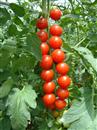
How should cherry tomatoes be managed at each stage of cultivation?
How do you manage small tomatoes at each stage of cultivation? Please give a detailed introduction. For managing small tomatoes at each stage of cultivation, you can refer to the following methods: seed soaking, germination, sowing: soak the seeds in clean water for 4-6 hours, then disinfect with 800-fold chlorothalonil for 10-15 minutes (stirring constantly), then rinse with clean water, put them into a sand cloth bag...
-
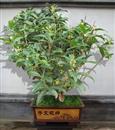
How should osmanthus be managed when kept in an apartment building?
How should osmanthus be managed when kept in an apartment building? Please provide guidance on methods. For urban residents living in apartment buildings, cultivating osmanthus is very difficult, mainly because after osmanthus is transplanted from its native habitat to the city, its growing environment and conditions undergo great changes. Therefore, necessary measures must be taken in the cultivation and management of osmanthus...
-
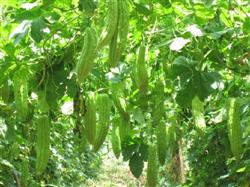
How should bitter melon be managed during cultivation to achieve high yields?
How should bitter melon be managed during cultivation to achieve high yields? Please provide an introduction to the management methods. The bitter melon root system prefers moist conditions and dislikes waterlogging. Normally, care should be taken to dig drainage ditches clear, and if a rainstorm occurs, standing water in the field should be drained promptly. Water use can be adjusted according to soil moisture conditions. Generally, on sunny days with strong sun and high evaporation, moisture disappears quickly,...
-
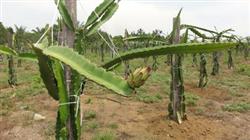
How should dragon fruit be managed after planting?
How should dragon fruit be managed after planting? Please explain the management methods. Post-planting management of dragon fruit has a great impact on seedling survival rate and growth, and directly affects early fruiting and high yield. Post-planting management mainly includes the following aspects: 1. Soil, fertilizer and water management. After dragon fruit is planted, water once every 3 to 5 days. Once it survives, adjust the watering frequency as needed. Although dragon fruit stems have a relatively thick epidermis and strong drought tolerance, if irrigated regularly when winter temperatures are relatively low, it grows extremely quickly. Fertilizer can use liquid fertilizer that promotes the growth of branches and leaves, applied 2 to 3 times per week, to promote branch growth. When growing seedlings in pots, fertilizer can be applied once survival is confirmed. Compound fertilizer can be used, but it must not be applied too much to avoid fertilizer damage. Applying organic fertilizer has a better effect. If human urine is used, it needs to be left to stand for 10 days, diluted 10 times, and then applied. Fertilization once or twice a month is appropriate.
-
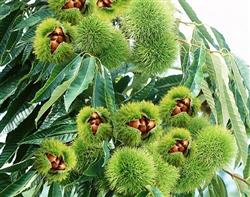
How should chestnuts be planted and managed to achieve a high yield?
How can chestnuts be made to yield heavily? Please explain the methods. To make the chestnut trees you plant yield heavily, you can refer to the following methods: 1. Close planting. Reasonable close planting can not only increase early yields and obtain economic benefits as quickly as possible, but also facilitate intensive management of the orchard. Planting density: the spacing between plants and rows is generally 2m x 4m, 3m x 4...
-
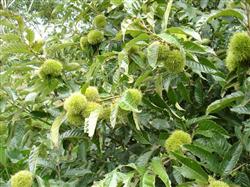
How should chestnut trees be managed to achieve a high yield?
How should chestnut trees be managed for a high yield? Please give guidance. Chestnut trees can be managed by referring to the following methods: 1. Fertilization. In spring, before flowering, apply 300-400 g of urea and 200-300 g of superphosphate per tree, and broadcast 6-7 g of borax per sq m of ground. In July, during the fruit burr swelling stage, apply fruit-swelling fertilizer and a three-element compound fertilizer at 0.7-...
-
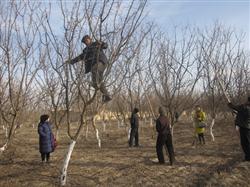
How should apricot trees be managed in winter to achieve high yields?
How should apricot trees be managed in winter for high yields? Please explain in detail. In winter, apricot trees can be managed by referring to the following methods: Pruning and shaping: Winter pruning of apricot trees is especially important. The focus is on removing diseased and weak branches and dead, dry branches to encourage flower buds to form as early as possible. At the same time, according to the terrain, the tree shape should be made favorable for sunlight, and its angles should be opened up for ventilation. After pruning...
-
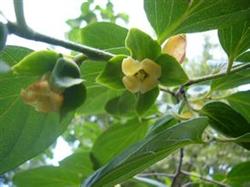
How should persimmon trees be managed before and after flowering?
Management of persimmon trees before and after flowering. Persimmon trees are light-loving crops, and in dense planting, attention should be paid to solving ventilation and light penetration, which is the main measure for high-yield management. Persimmon trees bear fruit from axillary buds, so thinning out vigorous growing branches and strengthening nutrient accumulation in the branches and trunk are very important. Before flowering, attention should be paid to applying amino acids to the trunk to promote flower bud differentiation and overcome alternate...
条件筛选