-
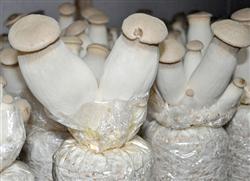
Detailed Explanation of the Method and Technique for Making King Oyster Mushroom Bags
King oyster mushroom (Pleurotus eryngii) is a premium edible mushroom variety with relatively ideal production returns, and in recent years it has attracted many mushroom growers to join the ranks of king oyster mushroom cultivation. However, many growers have reported by phone and letter that they have limited grasp of high-yield cultivation techniques for king oyster mushroom. For this reason, our newspaper has organized this special page on king oyster mushroom cultivation, hoping it will be of some help...
-
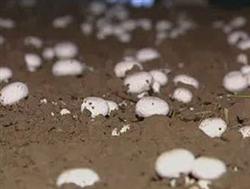
Methods for making organic fertilizer from spent mushroom substrate of button mushrooms, oyster mushrooms, and similar waste
Haidian District in Beijing has more than 80,000 mu of rice paddies. Aside from a portion of the rice straw that is used, most of it is burned, which both pollutes the environment and wastes resources. In light of this situation, we studied 9 mushroom species and ultimately determined that the straw-decomposing fungus button mushroom (Agaricus bisporus) is one of the ways to utilize rice straw. The key cultivation techniques for button mushrooms are as follows. 1. ...
-

Detailed Guide to Making Edible Mushroom Fresh-keeping Bags
1. Materials: hypophosphorous acid (50% aqueous solution), aluminum silicate (with an alumina content of 28%), gauze bags. 2. Making: ① Prepare the fresh-keeping agent: mix 1 part hypophosphorous acid and 1.2 parts aluminum silicate evenly, dry with hot air (a hot air blower may be used), then grind and pulverize, and finally pass through a 200-mesh sieve to obtain the fresh-keeping agent. ② Bagging: put the required amount of fresh-keeping agent into gauze bags (dosage 0.2-2 grams/bag) and seal them to obtain edible mushroom fresh-keeping bags. ③ Storage: fresh-keeping bags or fresh-keeping agent not used temporarily should be sealed and stored away from light.
-
Detailed Explanation of a Simple Method for Making Mushroom Mother Cultures
For making mushroom mother cultures, PDA or PSA and their improved media are mostly used, but in some remote areas or for small-scale production, the raw materials in the formula are relatively expensive (generally analytical grade) and are not easy to buy in rural areas, delaying production. Here are several simple methods. 1. Gelatin-type medium. Gelatin refers to edible gelatin, generally sold in food and chemical shops, and the price is relatively low. Gelatin used in food production as a coagulant or solidifying agent can replace agar (bacteriological agar, agar-agar) as a coagulant in mother culture production. The author conducted experiments in the early 1990s and used it in production, proving the effect is good, but the purchased product needs to be tested for coagulating properties. After finally determining the amount to use per 1000 mm, it is necessary to keep using that brand and not change it at will. The general production formula is: 200 grams of potato, 30 grams of wheat bran, 20 grams of white sugar, about 50 grams of gelatin, and 1000 milliliters of water. 2. Raw grain-type medium. That is, grain medium. @#@245@#@, corn, beans, etc. can all be used as mother culture media, and the production effect is very good. The method is: corn and soybeans need to be cracked so that their size is similar to wheat grains, soaked until there is no white core, boiled with boiling water, then quickly rinsed with cold water, taken out and immediately mixed with an appropriate amount of wheat bran, and then put into test tubes. When using this medium, it is recommended to switch to large test tubes; generally 20×200 or 25×200 specifications can be used, which is convenient for operation and correspondingly increases the quantity produced at one time, and is cost-effective in both economic and time terms. 3. Potato-type medium: choose large, smooth potatoes, peel them, and cut them into wedge-shaped strips. The potato strips are 12-15 cm long, with the two ends respectively 13 cm and 0.2 cm thick, and the width is determined according to the diameter of the test tube, generally below 2 cm, and they should be made as semicircular as possible so that the rounded edge is close to the test tube wall. Put them into test tubes and carry out routine sterilization and other operations. 4. Pumpkin strip medium: after pumpkins mature in autumn, pumpkin strips can be directly cut as a mother culture medium by referring to the potato-type medium, and the preparation is the same as above. 5. Apple puree medium: peel and core ripe apples, grind them into puree, put them into test tubes, and sterilize routinely. The only thing is that when inoculation is needed, use a sterilized wooden stick to press the puree into a long strip shape, making it similar to ordinary medium, and then carry out routine inoculation. 6. Carrot strip medium: this can be done by referring to the potato medium.
-
Detailed Guide to Making Mother Culture Media for Edible Mushrooms
1. 800 g corn, 20 g glucose, 20 g agar, 1.5 L rice washing water. First cook the corn kernels in dilute rice washing water until a small number of kernels burst, then scoop them out and filter. Take the filtrate and continue heating (if the filtrate is less than 1 L, add clean water to make up the volume), add the agar and glucose, stir until the agar is completely dissolved, then dispense into test tubes, and after sterilization take them out and slant them to set. 2. 200 g fresh oyster mushroom or mushroom stipes, 20 g glucose, 20 g agar, 1 L water. The preparation method is the same as for potato dextrose agar medium. 3. Bran 2
-
Detailed Guide to Making Shredded Shiitake Mushrooms: Easily Make Delicious Shredded Shiitake Mushrooms
Soak the broken mushroom stems to remove impurities and diseased or rotted parts, put them into clean water weighing twice their weight, add an appropriate amount of vinegar, soak for 24 hours, then take them out and tear them into shreds. Wash them in a trough with running water, then filter them through a bamboo sieve and drain well. Dry the shredded shiitake mushrooms in a ventilated, sunlit place. Where conditions permit, they can be placed in a drying room and baked at 50-55°C until their moisture content drops below 18%, then take them out for later use. Prepare the powder coating in the proportions of 80% starch, 10% white sugar, 4% refined salt, 3% pepper powder, 2% fresh chili powder, and 1% monosodium glutamate
-
A Detailed Guide to the Simple Method for Making Dried Shiitake Mushrooms
Shiitake mushrooms are rich in nutrients, and the dried product easily absorbs moisture, causing it to mold or become infested by insects. Using charcoal as a moisture absorbent to preserve shiitake mushrooms not only maintains their color, aroma and flavor, but is also easy to carry out and simple to popularize. The specific method is as follows. A large wooden barrel or vat (1.6 m high, 1.3 m in diameter) is lined on its inner wall with cotton paper pasted on, then dried. A layer of charcoal is placed at the bottom, covered with kraft paper, then a 30 cm thick layer of shiitake mushrooms is added, and above the mushrooms another layer of paper is placed, followed by charcoal of the same thickness as the first layer. In this way, alternate layers of shiitake mushrooms and charcoal fill the container, which is then covered and sealed.
-
Detailed method for making shiitake mushroom seasoning
This seasoning has both the unique fragrance and flavor of shiitake mushrooms, moderate acidity, and contains appropriate proportions of alcohol, sugar and amino acids, making it quite convenient to use. Production method 1. The raw materials for this seasoning sauce are shiitake mushroom mycelium (dried shiitake mushroom powder can also be used), rice koji (enzyme) and water (neutral or slightly alkaline clean water); use 2 liters of fresh koji juice at a concentration of 8-10 Baume as the culture medium, put it into a long-neck flask, use sterilized silk cotton as the stopper, and finally place it in a small pot and boil to sterilize for 30-40 minutes. 2. Then, the
-
Detailed Explanation of the Method for Making Shiitake Mushroom Seasoning MSG
1. Raw material formula (%). Shiitake mushroom concentrate juice 25-50, sodium chloride 8-12, maltodextrin 12-18, fine sugar powder 15-30, vinegar 1.6-3.2, baijiu 3-6, vegetable oil 0.3-0.6, capsaicin 0.01-0.05. 2. Key production points. ① Wash the shiitake mushroom material, cut into pieces, extract with hot water at 40-55°C for 4-6 hours, mushroom-to-water ratio of 1:10, filter after extraction to obtain the first filtrate. Add water to the filtrate and boil for 1 hour, filter to obtain the second filtrate.
-
Method for making shiitake mushroom (Lentinula edodes) spawn in plastic bags
The method for making spawn using 17 cm × 33 cm polypropylene plastic bags has already been described in the production of spawn for block cultivation. In recent years, substitute-material shiitake mushroom production has developed rapidly in northern China. Due to differences in climatic conditions and other factors, most northern regions adopt large-bag cultivation. Since large-bag cultivation also uses plastic bags as containers for spawn production, its operational precautions and technical key points are the same, but some specific operations differ. Large-bag cultivation uses low-pressure high-density polyethylene plastic tube bags, 0.5-0.6 mm thick and 22-25
条件筛选