Detailed Explanation of the Method and Technique for Making King Oyster Mushroom Bags
King oyster mushroom (Pleurotus eryngii) is a premium edible mushroom variety with relatively ideal production returns, and in recent years it has attracted many mushroom growers to join the ranks of king oyster mushroom cultivation. However, many growers have reported by phone and letter that they have limited grasp of high-yield cultivation techniques for king oyster mushroom. For this reason, our newspaper has organized this special page on king oyster mushroom cultivation, hoping it will be of some help...
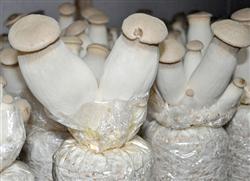
King oyster mushroom (Pleurotus eryngii) is a premium edible mushroom variety with relatively ideal production returns, and in recent years it has attracted many mushroom growers to join the ranks of king oyster mushroom cultivation. However, many growers have reported by phone and letter that they have limited grasp of high-yield cultivation techniques for king oyster mushroom. For this reason, our newspaper has organized this special page on king oyster mushroom cultivation, hoping it will be of some help to everyone.
1. Basic raw and auxiliary materials
King oyster mushroom belongs to the wood-rotting fungi and prefers relatively hard substrate materials. In general production, cottonseed hulls are mostly used as the main material, or combined with broadleaf sawdust. In recent years, due to the excessive rise in cottonseed hull prices, growers in some areas have used corncobs and other straw-type materials as substitutes, with acceptable results. Auxiliary materials are mostly organic materials such as wheat bran and rice bran, with a moderate addition of some inorganic materials as supplements, and three-dimensional nutrient essence is used to supplement trace elements, giving very good production results.
2. Substrate bag preparation
1. Basic formulas. Formula 1: cottonseed hulls 200 kg, sawdust 30 kg, wheat bran 20 kg, soybean cake 2 kg, lime powder 3 kg, compound fertilizer 2 kg, gypsum powder 2 kg, edible mushroom three-dimensional nutritional essence (mixing type) 120 g. Formula 2: sawdust 160 kg, cottonseed hulls 40 kg, wheat bran 30 kg, corn flour 20 kg, soybean cake 4 kg, lime powder 4 kg, gypsum powder 3 kg, compound fertilizer 3 kg, edible mushroom three-dimensional nutritional essence (mixing type) 120 g. When using sawdust as a raw material, it should be piled and left to sit after mixing, for as short as a few hours or as long as about 3 days, to allow it to absorb water and soften.
2. Bagging the substrate. Generally, bags with a flat width of 16-20 cm are suitable, with each bag holding about 400-500 g of dry material. When fruiting from one end, bottom-folded bags can be chosen; when fruiting from both ends, polypropylene tubes can simply be cut to length. The bag opening can be fitted with a plastic neck ring and cotton plug, or directly tied closed. Filling must be uniform with consistent tightness; it must not be loose in some places and tight in others, otherwise the mycelium at loose spots is prone to breaking and side-wall mushrooms are likely to occur, while at tight spots the permeability is poor, which easily leads to uneven colonization, uneven fruiting and difficulty in unified management. It is recommended to use a bagging machine operated by a dedicated person so as to keep it under control. Another advantage of using a bagging machine is higher work efficiency, allowing the task to be completed in a relatively short time so that the sterilization process can begin as soon as possible, avoiding the substrate bags being left under high-temperature conditions for a long time without sterilization, which would cause the substrate to spoil, delay production and cause waste.
3. Sterilization. High-pressure sterilization is preferred, or high-pressure steam with atmospheric-pressure sterilization, but most producers do not have such equipment; therefore, atmospheric-pressure sterilization can be used in production. Generally, after the substrate bags reach 100°C, maintaining that temperature for 6-12 hours is sufficient. If it is not a continuous-flow operation, they can be kept warm overnight for a better sterilization effect.
3. Inoculation and colonization
1. Inoculation operation. When the substrate bags have cooled to below 30°C, they are moved into the inoculation room, and after 40 minutes of chemical fumigation sterilization, inoculation can proceed. Generally, each 500 ml bottle or 750 ml bottle of spawn can inoculate about 15 bags; when using bottom-folded bags for single-end inoculation, about 30 bags can be inoculated. The spawn should be taken in blocks as much as possible, reducing fine crumbly spawn, so as to accelerate germination, allow the mycelium to cover the substrate surface as quickly as possible, minimize contamination to the greatest extent and increase the success rate of colonization.
At present, inoculation purification machines are mostly used for inoculation operations; inoculation can proceed 10 minutes after the machine is turned on. This abolishes the traditional practice of chemical fumigation, reduces production costs, eliminates harm to the human body and residues from chemicals, and greatly improves the work efficiency of inoculation operations.
2. Colonization management. Before the culture room (shed) is put into use, strict disinfection work should be carried out. Generally, Baibingsha and Saibai 09 can each be sprayed once, and it should be kept sealed for 2 days. Doors, windows and ventilation holes should all be fitted with insect-proof netting to prevent insects from entering. After the inoculated bags are moved in, they are placed on culture racks in 3-5 layers; they must not be stacked too high, especially when temperatures are high, and strict precautions must be taken against heat generation by the bags during colonization. Methods such as watering the floor and spraying water on walls and in the air space are used inside the room (shed) to lower the room temperature as much as possible; during winter colonization, the room temperature should be raised as much as possible and kept stable. Generally, the temperature should be regulated within the range of 15°C-30°C, with 25°C being optimal; humidity at about 70%, with a small amount of ventilation. Although king oyster mushroom mycelium can tolerate relatively high concentrations of carbon dioxide, fresher air is still more favorable for mycelial development. In addition, keeping the culture room (shed) sealed so that the bags colonize under dark conditions is not only a physiological requirement of the mycelium but also one of the effective measures to prevent pest entry. Generally, after about 40 days, the mycelium can fully colonize the entire bag.
3. Post-ripening culture. After the bags are fully colonized, lower the temperature as much as possible and maintain the mycelial culture period for about another 15 days to achieve mycelial post-ripening and lay a good material foundation for fruiting.