-

Main Diseases of Edible Mushrooms and Their Control Measures
What are the main diseases of edible mushrooms? Control measures for the main diseases of edible mushrooms
-
What are the control methods for the main diseases of edible fungi?
How to control the main diseases of edible fungi
-
What are the main reasons for watermelons having little flesh
What are the main reasons for watermelons having little flesh
-
What are the main pest and disease control methods for edible fungi?
Main pest and disease control methods for edible fungi
-
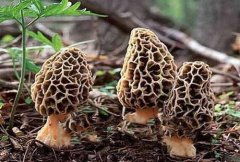
Who should not eat morel mushrooms? Raw-eating poisoning risks and main production areas
The morel mushroom gets its name because its shape closely resembles a sheep's stomach, so it is called morel. Wild morels are distributed in China's Shaanxi, Gansu, Qinghai, Tibet, Xinjiang, Sichuan, Shanxi, Jilin, Jiangsu, Hebei, Beijing, Hunan, Guizhou and other regions. Now
-
What mushroom production strains are used in China? Introduction to the main varieties
Since China began developing mushroom production, about several dozen strains have been used for cultivation, among which some were introduced from abroad and some were bred domestically. In the past, more strains were introduced, but as China's mushroom breeding work has deepened, the number of introduced strains has gradually decreased. At present, the most widely used strain in China is Ag2796, bred by the Fujian Provincial Institute of Light Industry, as well as As3003; introduced strains include S130, F56, and others.
-
What are the main symptoms of mushroom Verticillium disease?
Verticillium disease is also called dry bubble disease, dry rot disease, black spot disease, etc. It belongs to the fungal phylum, Deuteromycotina, Hyphomycetes. Moniliales, Moniliaceae. In addition to harming mushrooms and oyster mushrooms, it also infects silver ear fungus. [1]Symptoms: It generally does not infect the mycelium, only the fruiting bodies, but it can spread along the mushroom rhizomorphs. Dry rot spreads very quickly and has a strong infective ability against fruiting bodies. If damaged before primordium differentiation, it forms relatively dry grayish-white tissue masses that cannot differentiate to form stipes and caps, and later do not exude juice or have a foul odor. Young mushrooms
-
What are the main cultivated mushroom varieties in China?
1. Mushroom strain 27962796: The mushrooms are round and regular, with no scales, a semi-membranous partial veil ring, thick caps, and medium-thick, fairly straight and short stems. The tissue is firm, the gills are tightly packed and pale in color, and there is no stem detachment. Each kilogram contains 90-100 mushrooms, and the fresh mushrooms have a relatively high water content, with a pre-cooking yield of 65%. This strain is suitable for cultivation on a double-fermented compost. The mycelium growth rate is medium to fast. It is relatively tolerant of fertilizer, moisture, and high temperatures. Its fruiting period is 3-5 days later than that of common mushroom strains. The mycelium has strong soil-creeping ability and strong knotting ability, and the mushroom formation rate is high. The mushrooms are basically solitary.
-
Detailed Guide to Identifying and Controlling the Main Diseases and Pests of Oyster Mushrooms
The most serious damage is contamination by foreign molds. Common contaminating molds include Trichoderma, green mold, yellow mold, Rhizopus, and others. The main control methods are: choose materials free of mold, compost and ferment the substrate and sterilize it, strictly disinfect the cultivation site, and promptly remove any contaminated material. Provide proper ventilation to prevent excessively high temperatures and humidity. Oyster mushroom cultivation also frequently shows physiological disorders: ① Partial death of small mushrooms: when there are too many small mushrooms, some will die, mainly from "starvation" due to insufficient nutrients; spraying water too early or excessively high humidity can also cause small mushrooms to die.
-
What are the main pest and disease control methods for mushroom sheds?
With the development of the vegetable basket project, the demand for edible fungi has increased accordingly, but pest damage inside mushroom sheds has created major obstacles to the development of edible fungi. To alleviate this contradiction, the main pests in mushroom sheds and their control methods are introduced here. 1. Mushroom flies The larvae, also called fungus maggots, mainly feed on the fruiting bodies, creating tunnels that affect quality, and the wounds they cause are also very easily infected by pathogens, leading to rot. Different methods should be used to control mushroom flies at different stages. If large numbers of fungus maggots occur before mushroom emergence, dichlorvos can be used at 0.90 kg
条件筛选