-
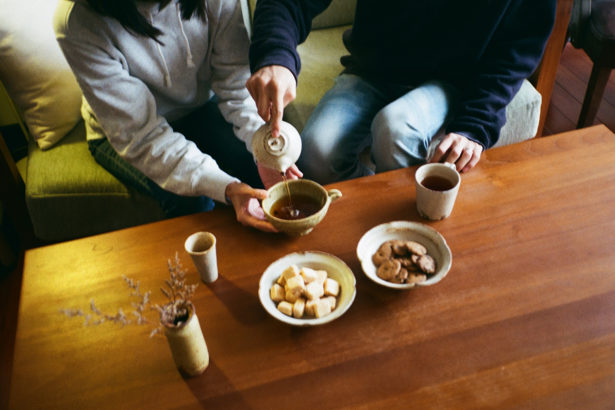
Food Vessels and Objects 07: A pot and a cup reveal the ultimate pursuit of freedom | 82 Made
Food Vessels and Objects 07 | In a pot and a cup, see the ultimate pursuit of freedom | 82 Made
-

How is reagent-grade starch made from potatoes?
Using potatoes, reagent-grade starch can be produced with low cost and high economic benefit. Production method 1. Washing and making potato pulp: Wash the potatoes with water 2 to 3 times, remove all mud and sand, and cut away potato pieces with hoe injuries and rotten holes. Start the crusher, feed in the washed potato pieces, and the potato pulp will flow out immediately. Because fresh potatoes themselves contain about 75% water, no additional water is needed when pulping. 2. Filtering the pulp and rinsing the starch: Filter the potato pulp by machine or by hand, and store the starch milk (water containing starch) in a tank to clarify. Wait for the starch in the tank to settle to the bottom
-
How Thai Fish Sauce Is Made and the Detailed Steps
In Thailand, everyone knows the delicious taste of fish sauce; it is one of the seasonings commonly used by Thai people when cooking dishes. Fish sauce tastes salty, extremely savory, with a slight fishy smell of fish and shrimp. It is rich in calcium, iodine, protein, fat and other minerals, and is used in the same way as soy sauce. Thailand has a long history of making fish sauce. The earliest consumption of fish sauce in Thailand began during the reign of King Narai of the Ayutthaya Dynasty (1656-1688 AD). It is said that because Thailand has so many fish, many small fish are extremely
-
What are the common mistakes made in mushroom cultivation?
Cultivating strawberries in small plastic tunnels keeps the plants growing vigorously, allows them to mature 19-22 days earlier, extends the harvest period by 13 days compared with open-field cultivation, and increases the total yield by 17% compared with open-field cultivation. The key cultivation techniques are as follows: 1. Building the tunnel. A small plastic tunnel can generally be set up according to the width of 2 cultivation beds (about 3 m wide). Insert the two ends of bamboo strips or wooden poles into the outer edges of the bed ridges on the north and south sides respectively, inserting 1 every 0.5 m along the length of the bed, and properly bury upright posts in the middle bed ridge for support, so that the arched height in the middle of the tunnel frame is 1 m. The tunnel length should preferably be 10-20 m,
-
Madeira vine
1. How to identify Madeira vine? Madeira vine is also known as foreign Ceylon spinach, Madeira vine potato, vine child sanqi, chuanqi, etc. It is a perennial climbing plant of the genus Basella in the family Basellaceae. It is cultivated in Yunnan, Sichuan, Hubei, Taiwan, China and other provinces, and its bulbils and leaves are eaten. Madeira vine is a small fleshy vine, with round stems; young stems are green and turn brown after growing, and adventitious roots easily form at the internodes. The leaves are alternate, thick and fleshy, heart-shaped, smooth and hairless, with short petioles. Its appearance is very similar to white Ceylon spinach (that is, green Malabar spinach). The difference from Ceylon spinach is
-
Differences Between Madeira Vine, Tian Sanqi and New Vine Vegetable
Aliases: Tian Sanqi, tofu vegetable, new vine vegetable. Family and genus: Basellaceae, perennial herbaceous plant. Distribution: Cultivated in Yunnan, Sichuan, Hubei, Taiwan, China and other provinces, with bulbils and leaves used as food. Morphological characteristics: Madeira vine is a perennial succulent small vine of the Basellaceae family, with a well-developed root system; half a year after planting, tubers can form underground. The stem is round, the young stem is green, and the mature stem turns brown; adventitious roots easily form at the nodes. The leaves are alternate, heart-shaped, 8-15 cm long, 9-16 cm wide,
-
What are the key cultivation techniques for Madeira vine (Anredera cordifolia)?
Cultivation season and cultivation methods 1) Open-field cultivation. Because the climate in the south is warm, open-field cultivation is mostly practiced. Open-field cultivation can also be carried out in northern regions, generally raising seedlings from March to April, transplanting to the open field in May, with the harvest period from June to September. 2) Protected cultivation. In northern regions, to obtain high quality and a long-term supply, solar greenhouse cultivation can be used. In a greenhouse, because perennial cultivation is possible, one planting can yield multiple harvests. It can be planted all year round, but spring and autumn planting are better. Cultivation techniques 1) Propagation methods. ①
-
Detailed Explanation of Key Points for High-Yield Cultivation Techniques of Madeira Vine
1. Seedling raising: Madeira vine can be propagated by cuttings and bulbils, but cuttings are generally the main method. After new branches sprout in spring, cut healthy branches and insert them into a seedbed; loose sandy loam is best for the seedbed soil. Keep moist for about 20 days, and they can take root and become seedlings. 2. Planting: Before planting, apply sufficient base fertilizer first. Generally, apply 3000 kg of organic fertilizer per mu (667 sq m), plus 30 kg of superphosphate, then plow deeply, rake level, and make flat beds. For open-field cultivation, the planting period is mid-to-late April, with a plant spacing of 30 x 60 cm, and 66
-
Detailed Explanation of Key Points in Madeira Vine Planting and Management Techniques
(1) Set up a trellis or stakes: when the seedlings reach 30 cm in height, set up a trellis promptly to let them climb, and pinch off the growing tips to promote the sprouting of lateral buds. (2) When cultivating in the open field, shade with a shade net in summer, which can inhibit flower bud differentiation, keep the plants in continued vegetative growth, inhibit summer flowering, achieve the goal of producing leaves year-round, and increase yield. (3) Fertilizer and water management: Madeira vine has strong growth vigor and a high water requirement. Although it is drought-tolerant, to grow plump, large leaves and achieve high yield, it needs frequent watering, and after every 2 leaf harvests, apply a topdressing of compound fertilizer.
-
What are the key cultivation techniques for Madeira vine? Explained in one article
Madeira vine, also known as Ceylon spinach, belongs to the Basellaceae family and is a perennial climbing plant native to Brazil. It is grown in many regions of China, especially in the south. It is easy to cultivate, has few pest and disease problems, is highly nutritious and good-tasting, and is rich in vitamin A and vitamin C. It has effects such as nourishing the body, strengthening the waist and knees, dissipating phlegm, promoting blood circulation, and protecting the stomach and liver. It is a natural green health food and medicinal food, and is well worth promoting, cultivating and eating.
条件筛选